
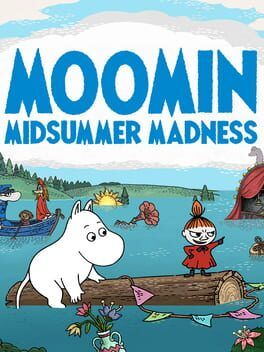

Shochiku Games and Crossbridge Game Studios have confirmed an autumn 2026 launch window for Moomin: Midsummer Madness on PC, Switch, and Switch 2, with a physical Switch edition planned.
Image: IGDB
Store links: Moomin Midsummer Madness on Steam
Moomin’s summer story is now an autumn 2026 game
Moomin: Midsummer Madness now has a confirmed autumn 2026 release window for PC, Nintendo Switch, and Nintendo Switch 2. Publisher Shochiku Games and developer Crossbridge Game Studios announced the timing on Moomin’s Day, the annual celebration tied to author and artist Tove Jansson’s birthday, according to the official Games Press release and reports from MonsterVine and COGconnected.
That timing gives the project a neat seasonal contradiction: a game based on Moominsummer Madness, Jansson’s 1954 novel about flood, theater, displacement, and family, is currently aiming for fall rather than summer. GoNintendo called out the oddity directly, noting that a “Midsummer game” is “not releasing until fall.” For cozy game players, though, autumn is often prime wandering, reading, and blanket-season territory. On paper, this is exactly the kind of small, gentle licensed adventure that can benefit from a quieter seasonal lane, especially on Switch.
The confirmed platforms are PC, Nintendo Switch, and Nintendo Switch 2. IGN’s trailer page specifies PC via Steam. Shochiku’s release also says a physical edition on Nintendo Switch will be available at launch, while GoNintendo reports a physical Switch and Switch 2 version with more details to come later. Since the publisher language supplied through Games Press only clearly confirms a physical Nintendo Switch edition, the Switch 2 physical situation should be treated as unclarified until Shochiku or Crossbridge details packaging, compatibility, and retail plans.
A point-and-click adaptation built around flood, theater, and two leads
Moomin: Midsummer Madness is being pitched as a cozy point-and-click adventure starring Moomintroll and Little My. The setup, repeated across the publisher release, MonsterVine, COGconnected, and IGN, begins with Moominvalley submerged by a great flood. The family’s journey leads to a mysterious floating theater filled with familiar faces.
The adaptation is not a straight page-to-screen conversion based on the source material supplied so far. Shochiku’s release says the game will blend iconic scenes from Moominsummer Madness with new stories made for the game. That distinction matters for players coming in as readers. The hook is familiarity, but the game is also being sold as a new adventure rather than a static retelling.
Mechanically, the confirmed structure is approachable adventure-game territory. Players will solve puzzles through dialogue, exploration, area interaction, and mini-games, according to MonsterVine and the publisher material. A built-in hint system is also confirmed, with the stated goal of keeping the game relaxing and accessible for players of different ages. GoNintendo describes the puzzles as beginner-friendly, which fits the broader positioning but should still be read as preview language rather than a tested difficulty assessment.
The Switch fit is obvious, but the details still matter
A Moomin game on Switch has an immediate audience: handheld players who use the system for shorter, softer games, younger players sharing a console with family, and indie fans who treat the eShop as a discovery shelf. Moomin: Midsummer Madness lines up cleanly with that crowd because the confirmed design avoids high-pressure systems. It is dialogue-led, puzzle-led, and built around character switching rather than twitch difficulty.
The Switch 2 listing is also notable. Shochiku and Crossbridge are committing to both Nintendo’s current and newer hardware families for the autumn 2026 window, which should reduce the platform anxiety that often follows late-cycle Switch releases. What has not been announced is equally important: there is no stated price, no exact release date, no performance target, no file size, no PC system requirements, and no word in the supplied sources about cross-buy, upgrade paths, or whether the Switch 2 version differs technically from the Switch version.
For a cozy game, technical polish still matters. Point-and-click adventures live and die on readability, cursor behavior, UI scale, loading rhythm, and whether small interactable objects remain clear in handheld mode. The sources confirm hand-drawn or hand-painted art inspired by Jansson’s original illustrations, but they do not yet answer how the interface will handle docked versus portable play. That is the practical question I would want answered before calling the Switch version the default choice.
The art direction is the main craft promise
The strongest creative promise in the announcement is visual fidelity to Jansson’s Moomin work. The official release describes hand-drawn art that stays true to the original aesthetic, while IGN calls the game a charming, hand-painted adventure. MonsterVine names locations such as the Moominhouse and the floating theater as spaces designed to stay close to the classic books.
That kind of art direction can carry a small adventure if the interactive layer supports it. In point-and-click games, backgrounds are not scenery in the passive sense. They are maps, memory aids, puzzle boards, and tone-setters. A richly illustrated Moominhouse or theater only works if players can parse what is decorative, what is clickable, and what has changed after a conversation or character swap.
The announced character-switching feature gives Crossbridge a useful way to make that world feel active without making it stressful. The publisher says players will switch between characters and use their traits to advance the story. The sources do not specify how Moomintroll and Little My differ in play, so any deeper mechanical reading has to wait. Still, Little My is an especially smart co-lead for a gentle adventure because mischief can create puzzle logic without turning the whole game into slapstick.
A short runtime may help it stand out among cozy games 2026
One useful detail appears in the Games Press release as a reviewer’s note: Moomin: Midsummer Madness should take about 4 to 6 hours to complete. That is not a consumer-facing store promise in the supplied material, but it is still a meaningful signal for expectations.
A 4 to 6 hour cozy adventure has a different pitch than a life sim or open-ended crafting game. It suggests a contained story, a weekend playthrough, and a lower risk of repetition. For players tracking cozy games 2026, that could be a strength. The genre label has become broad enough to include farming, decorating, narrative exploration, puzzle games, and low-combat adventures. Moomin: Midsummer Madness appears to sit closer to classic storybook point-and-click design than to the forever-game model.
That may also help it among new indie games 2026, especially if the final release keeps its puzzle language clear. Short, warm, licensed adventures can be fragile when they lean too hard on recognition, but the confirmed hint system, mini-games, and character switching point toward a game designed for participation rather than simple brand tourism. The unanswered part is how much texture the new story material adds around the novel’s famous theatrical setup.
Who should wishlist it, and who should wait for more information
Based on confirmed information, Moomin: Midsummer Madness is easiest to recommend watching if you want a relaxed story adventure, a family-friendly Moomin game Switch option, or a short point-and-click built around literary adaptation rather than combat or optimization. The Steam page is linked through the publisher and MonsterVine coverage, and IGN lists PC as Steam, so PC players can already treat it as a wishlist candidate if the art and premise land for them.
Switch collectors have a stronger reason to pay attention because Shochiku has confirmed a physical Nintendo Switch edition at launch. However, the exact contents, regional availability, price, and any Switch 2-specific physical plan remain unannounced in the supplied sources. If you are buying specifically for a physical copy, the sensible move is to wait for retailer listings or a publisher follow-up rather than assuming every version will be treated the same.
For everyone else, the Moomin Midsummer Madness autumn 2026 window gives a clear timeframe without locking buyers into a date yet. The next useful update would be precise release timing, platform comparison details, and a closer look at puzzle flow. For now, the appeal is clear and modest in the best way: a hand-crafted Moomin adventure with a flood, a floating theater, two playable personalities, and enough structure to feel like a finished story rather than an endless checklist.