
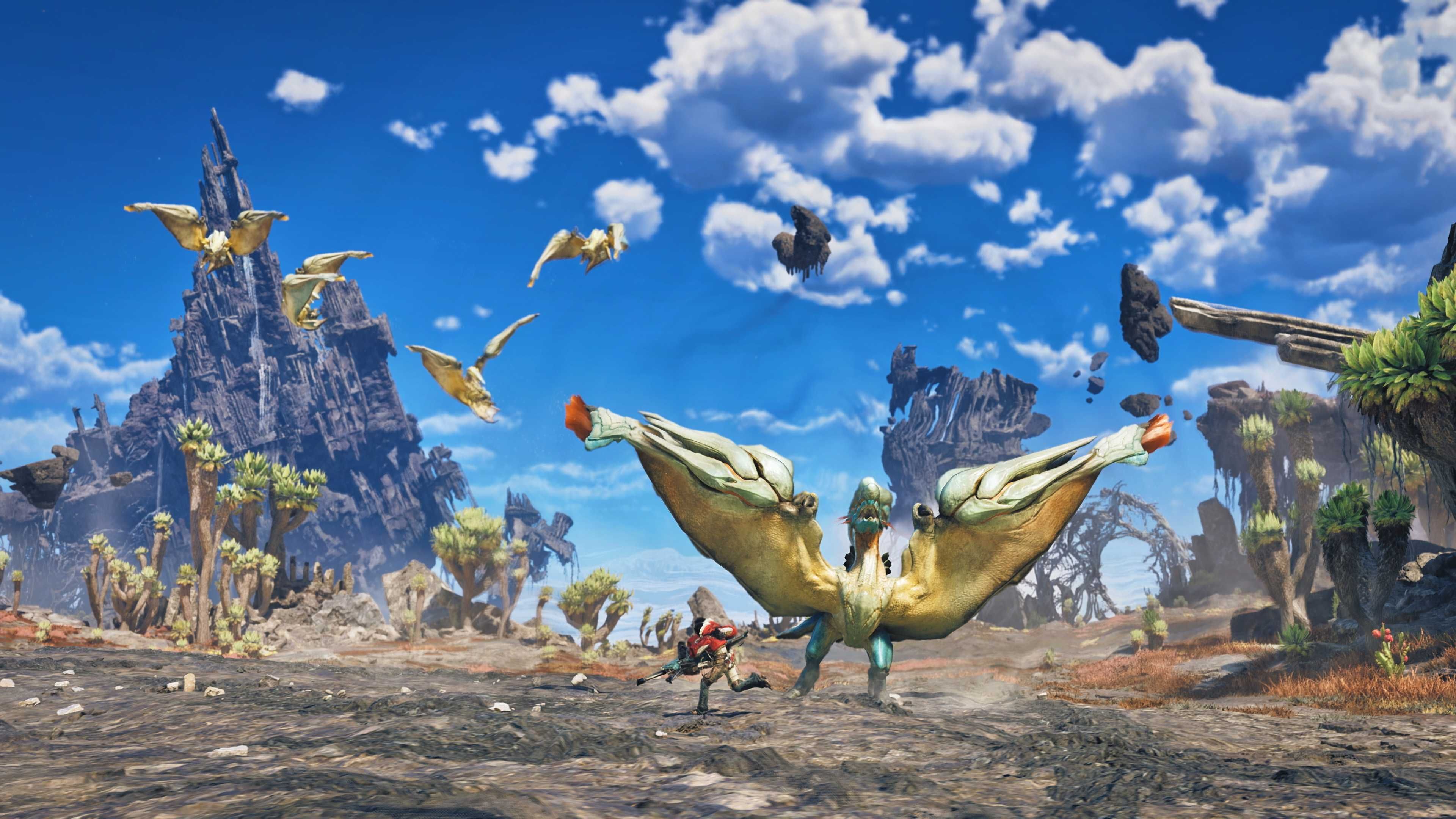
Datamined Monster Hunter Wilds Switch 2 settings reportedly reference 1080p to 1440p docked output, 720p to 864p handheld play, DLSS, and 30 to 40 FPS targets. Here is what that suggests for hunters who plan to play on TV or portable.
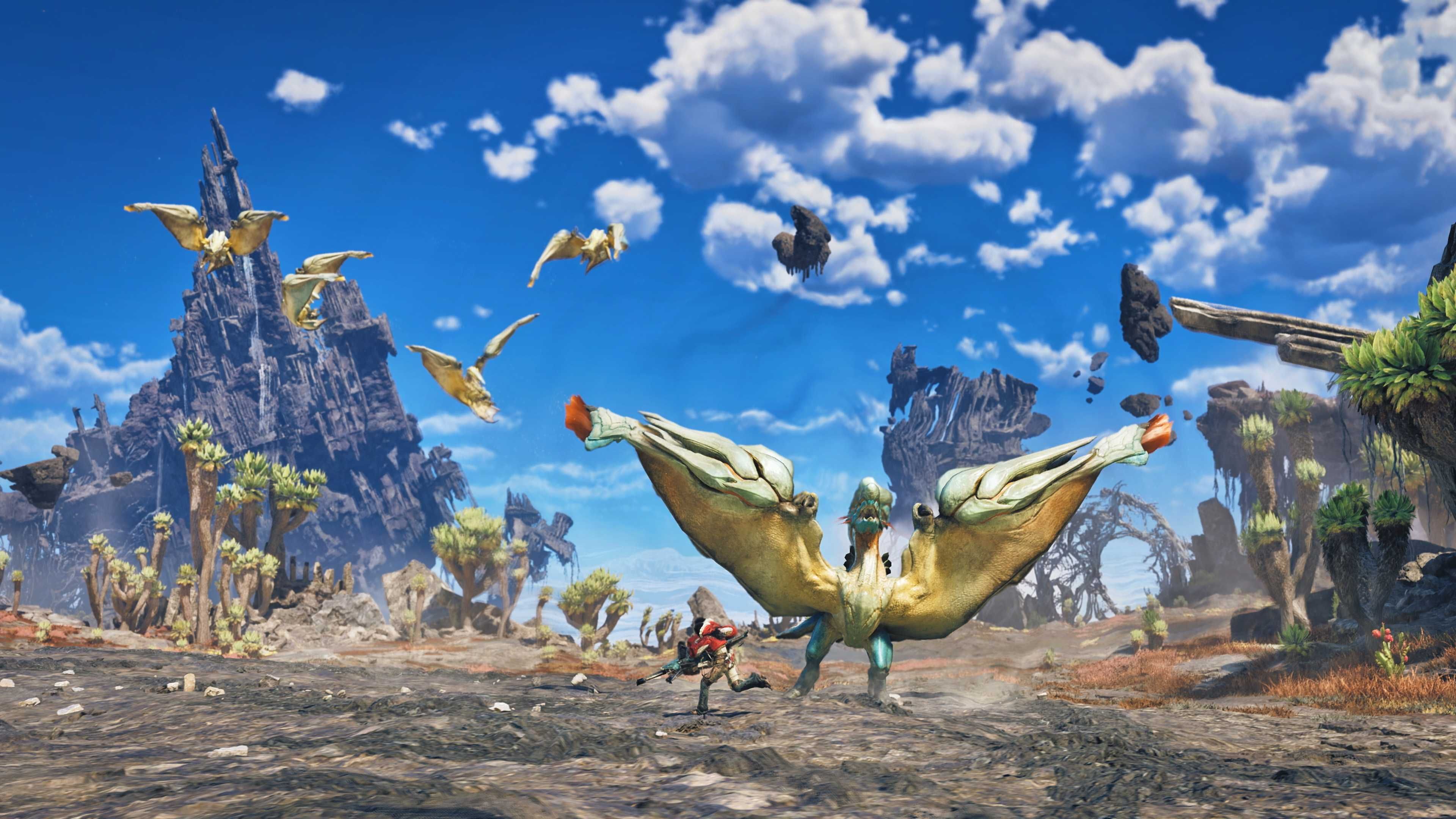
Image: gamerant.com
Datamined Switch 2 profiles put the performance question back in front of hunters
The newest Monster Hunter Wilds Switch 2 rumor is unusually specific: recent datamining reportedly found display and performance profiles pointing to dynamic resolution ranges of 1080p to 1440p in docked mode and 720p to 864p in handheld mode, with frame-rate targets around 30 to 40 FPS. GamingBolt attributes the finding to Reddit user Lener30 on the Monster Hunter Leaks subreddit, while My Nintendo News, Wccftech, Notebookcheck, and GameGPU all report the same broad resolution ranges from the latest update files.
That does not make the numbers official. Capcom has not publicly detailed Monster Hunter Wilds performance on Nintendo Switch 2 in the provided source material, and there is no announced release date in those reports. The confirmed part, according to GamingBolt, Notebookcheck, and GameGPU, is that Capcom officially confirmed a Switch 2 version in June. The unconfirmed part is the technical target now circulating from the datamine.
The tension is clear for anyone who plays Monster Hunter as a long-session game rather than a benchmark clip. A 1440p docked output would be a strong headline for a demanding RE Engine hunt, but Wilds has carried performance concerns on other platforms. My Nintendo News notes that Monster Hunter Wilds performance “hasn’t been the best on any platform,” and Notebookcheck points to continued player reports of stutters and blurry visuals on PS5, Xbox, and PC despite updates. For Switch 2 players, the practical question is less whether a settings file contains 1440p and more whether Capcom can make that target stable enough for chaotic hunts, multiplayer sessions, and late-game farming.
The 1440p docked claim appears tied to dynamic resolution, not a locked native image
The docked-mode language matters. GamingBolt reports that the datamine includes references to “NSW2_DISPLAY_MODE_DOCK,” with apparent resolution values ranging from 1080p through 1260p up to 1440p. My Nintendo News summarizes the docked range as 1080p to 1440p, and Notebookcheck says the newly discovered code lists available settings for Switch 2 with dynamic resolution across that same range.
In other words, Monster Hunter Wilds 1440p should be treated as an upper bound in the rumor, not a promise that every hunt will render at 1440p from start to finish. GamingBolt specifically says the files point to dynamic resolution being used to keep frame rates smooth. Wccftech also frames 1440p as something the game may hit in less demanding sequences, with NVIDIA DLSS likely helping by upscaling from lower internal base resolutions.
That distinction is important because Monster Hunter Wilds is visually busy in ways that matter during play. The game’s value is in tracking, positioning, monster tells, terrain readability, and the ability to parse overlapping effects without losing your next input. A dynamic 1080p to 1440p docked profile could make the TV experience cleaner than many players feared, but it also means image quality may shift during high-load moments. If the resolution drops when a hunt gets crowded, that is the system doing the job the profile was designed for. The question is whether those shifts are subtle or distracting.
Handheld numbers suggest a portable-first compromise, not parity with TV play
The handheld claim is more modest and more revealing. GamingBolt reports handheld values of 720p, 810p, and 864p, while My Nintendo News and Notebookcheck describe the range as 720p to 864p. Wccftech adds that this would fall short of the Switch 2 display’s native resolution, though it describes the range as still notable for a demanding title.
For portable hunters, that points to a version designed around battery, thermals, and consistent input feel rather than matching docked output. A 720p to 864p dynamic window is plausible as a handheld target because Monster Hunter asks the player to read animation timing constantly. Losing a few pixels is less damaging than losing a dodge window, a guard point, or a clean punish opportunity after a monster’s recovery.
There is also a screen-size reality here. Handheld play can hide some softness that would be obvious on a large TV, especially if DLSS reconstruction is being used. Notebookcheck cautions that image quality can suffer if the native resolution is too low before upscaling, which is the tradeoff to watch closely. Text clarity, UI sharpness, distant monster silhouettes, and fine environmental detail will tell players more about the handheld version than the top number in a datamined range.
Wccftech reports that the files suggest up to 40 FPS and argues that portable play could feel smoother because of Variable Refresh Rate support on the Switch 2 display, while also saying the system does not support VRR in docked mode. That VRR angle comes from Wccftech’s reporting and remains tied to the broader unconfirmed performance picture. Still, it is exactly the kind of difference handheld players should care about if Capcom is targeting a frame rate between traditional 30 FPS and 60 FPS.
A 30 to 40 FPS target would shape the feel of every weapon class
Across the reports, the frame-rate target sits below the 60 FPS many action players prefer. GamingBolt says the datamined numbers indicate Capcom is aiming for frame rates between 30 and 40 FPS on Switch 2. My Nintendo News describes the frame rate as roughly 30 to 40 FPS. GameGPU says the leaked target values indicate 30 to 40 FPS in both device modes, while Notebookcheck says the new datamine hints at 30 to 40 FPS when mobile and notes that 60 FPS docked is unclear.
For Monster Hunter, that range is not a trivial spec. Weapon identity is built on tempo. Great Sword players live by commitment and charged timing. Long Sword, Charge Blade, and Lance players care about counters and guard windows. Bow and Dual Blades players feel frame pacing in sustained movement and stamina management. A stable 30 FPS can be playable if frame pacing is disciplined, but an uneven 30 to 40 FPS can feel worse than the number suggests if the game wobbles during monster attacks, camera swings, or four-player effects.
That is why the DLSS and dynamic resolution references matter together. GamingBolt reports that the dataminer noted the numbers include technologies such as DLSS, and Notebookcheck says earlier leaks suggested Capcom would rely heavily on DLSS upscaling, as it has in other Switch 2 games such as Pragmata. If Capcom is using a lower internal resolution and reconstructing upward, the system may be able to preserve responsiveness while presenting a sharper output. The risk is that aggressive reconstruction can make motion look smeared or unstable, particularly around foliage, particles, fur, scales, and fast camera movement.
The best-case scenario for Monster Hunter Wilds performance on Switch 2 is not a brag-worthy 1440p screenshot. It is a consistent hunt where input timing remains predictable, the monster remains readable, and the resolution scaler does its work without pulling attention away from the fight.
Capcom’s timing leaves several practical questions unanswered
The reports agree on one major business point: the Switch 2 version is in development, but its launch details are still not pinned down. GamingBolt says Capcom announced in June that it had begun work on a Nintendo Switch 2 version of Monster Hunter Wilds. Notebookcheck says the publisher has not narrowed down a Switch 2 release date. GameGPU also says the release date has not been officially announced.
There are differing tones around timing. Wccftech argues that the new information makes the game seem “not too far from launch.” Notebookcheck says a holiday 2026 debut may be realistic, while clearly presenting that as an estimate rather than an announced date. GameGPU says the release was postponed due to additional technical optimization, but the provided material does not include a specific prior date, so that should be treated carefully. The safer reading is that Capcom has confirmed the port, but has not given players a public date in the cited reports.
The expansion schedule adds another layer. GamingBolt says Capcom unveiled Monster Hunter Wilds: Ascendance in June, with the expansion planned to introduce Master Rank difficulty. According to GamingBolt, Master Rank quests and the new story become available after players complete the 7-star Assignment “Awakening From a Dream.” The same report says Ascendance adds the Boost Bracer, a gauntlet that can augment attacks regardless of equipped weapon, along with a new Skybound Eyrie locale made of floating islands and ancient-looking ruins. Notebookcheck notes Ascendance is set for 2027.
For Switch 2 buyers, that timing matters. If the port arrives before Ascendance, early adopters may be joining Wilds after other platforms have already received substantial updates but before the Master Rank expansion lands. If it lands closer to the expansion, Capcom may have an opportunity to position Switch 2 as a catch-up platform for players who waited out the first wave of technical issues. The source material does not confirm pricing, edition structure, save transfer, cross-play, or whether expansion content will be bundled.
Local play references could matter as much as resolution for the Switch audience
Performance is the headline, but Notebookcheck points to another prior code reference that may be just as important for Monster Hunter’s Nintendo audience: local wireless multiplayer. Notebookcheck says previous code referenced local wireless multiplayer and notes that the feature was popular among Japanese players in Monster Hunter Rise on Switch.
That is still a code-reference signal, not a confirmed Switch 2 feature for Wilds. Capcom has not announced local wireless details in the provided material. Even so, the possibility changes how to read the port. Monster Hunter on Nintendo hardware has historically benefited from portable group play, and a Switch 2 version that runs acceptably in handheld mode could serve a different use case than PS5, Xbox, or PC. It would be the version you can take to the couch, commute, meetup, or local hunt night, if Capcom supports the right multiplayer options.
This is where the handheld numbers become less disappointing than they may look in isolation. A 720p to 864p portable range with a 30 to 40 FPS target is not glamorous next to 1440p docked, but it may be the version’s defining mode if local play materializes. Monster Hunter progression is repetition with purpose: carving routes, armor goals, decoration hunts, weapon experiments, and helping friends clear walls. If Switch 2 can make those loops portable without severe stutter or visual noise, the port’s value will not rest entirely on matching the sharpest console output.
The sensible move is to wait for Capcom’s footage, especially if handheld is your main mode
Right now, the Monster Hunter Wilds Switch 2 rumor gives players a useful outline but not a buying decision. The reported profile suggests dynamic 1080p to 1440p docked output, 720p to 864p handheld output, DLSS involvement, and a likely 30 to 40 FPS target. Those are encouraging figures for a demanding hunt, but they are still datamined claims rather than published performance specifications from Capcom.
Players who mostly hunt on a TV should look for future footage that shows resolution stability during storms, large monsters, multiplayer effects, and busy base areas. Players who expect to live in handheld mode should pay closer attention to frame pacing, UI clarity, and how DLSS handles motion on the portable screen. If Wccftech’s VRR point applies as described, handheld could have a smoother feel than the raw frame-rate target implies, but that needs direct testing.
There is no confirmed release date, price, upgrade path, or bundle information in the provided reports. There is also no official statement here on 60 FPS, cross-save, cross-play, cartridge details, or whether local wireless multiplayer will make the final feature list. For now, the safest expectation is a Switch 2 version built around adaptive resolution and reconstruction rather than brute force.
For a series where a single hunt can swing from careful tracking to a full-screen scramble in seconds, that design choice is sensible. The question Capcom still has to answer publicly is whether the scaler, DLSS, and frame pacing can hold together when the monster, the party, and the environment all start fighting the hardware at once.