
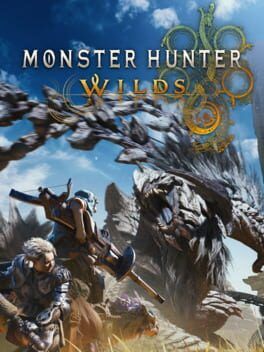
New datamined assets from Monster Hunter Wilds point to a Nintendo Switch 2 version with wireless local multiplayer and Tempered monster variants, and they line up neatly with Capcom’s wider platform strategy for the series.
Monster Hunter and Nintendo have been tied together for over a decade, so the idea of Monster Hunter Wilds landing on Nintendo’s next system has always felt more like “when” than “if.” The latest Wilds datamine has now pushed that conversation from wishful thinking into something that looks uncomfortably close to a leak.
Recent digging into the PC files has turned up a promotional-style image that explicitly depicts players hunting together on what is labeled and framed as a Nintendo Switch 2. Combined with earlier strings referencing “nsw2” and tweaked performance settings that look tailor‑made for weaker hardware, fans now consider this the strongest evidence yet that a Switch 2 version of Monster Hunter Wilds is real.
The datamined Switch 2 promo image
The most eye‑catching new find is an in‑game asset that looks like official promotional art. It shows characters playing Monster Hunter Wilds together on handheld devices, with the surrounding UI and framing making it clear this is meant to illustrate local co‑op on Nintendo’s next hardware.
What makes this especially notable is timing. Earlier title updates had already scrubbed most direct references to “Switch 2” from the data, but this one image survived the clean‑up. That suggests it was part of a planned marketing or tutorial flow rather than throwaway test material. It is not confirmation from Capcom, but it is also far from a random mod or fan creation. The art sits alongside other official UI elements and uses the same pipeline, which is why dataminers immediately flagged it as significant.
The image fits with long‑running reports that Nintendo’s successor system will continue to emphasize portable play and local co‑op. A Monster Hunter that lets a group of friends sit in the same room with their own handhelds and link up wirelessly is exactly the kind of scenario both companies have pushed in the past.
Wireless local multiplayer and the handheld hunting fantasy
Beyond the image itself, text references associated with the asset explicitly call out local multiplayer. Previous datamines had already uncovered strings tied to wireless play, but without clear platform context those could have been generic hooks. Seeing them live next to an image of multiple Switch 2 units effectively links the feature to Nintendo’s console.
For Monster Hunter, this is more than a technical bullet point. Portable, ad‑hoc co‑op is a core part of the series’ identity, especially in Japan. The PSP era with Monster Hunter Freedom Unite and later the 3DS and Switch entries like Monster Hunter 4 Ultimate, Generations Ultimate and Rise all thrived on friends grouping up in person. A Switch 2 version of Wilds that can recreate that “meet up and hunt over lunch” vibe would reconnect the big, cinematic flagship with the side of the franchise that made it a social phenomenon.
Capcom’s modern RE Engine scales surprisingly well across hardware, but tailoring data streaming and enemy behavior to support multiple handheld clients over local wireless is still work. The presence of explicit local multiplayer strings in the Wilds files hints that this effort has already been scoped, and that Nintendo’s hardware is part of that plan rather than an afterthought.
Technical hints: “nsw2UpgradeEdition” and performance tweaks
The promo image is only the latest domino. Earlier updates left a trail of more technical clues that dataminers have been stitching together for months.
The biggest is a function name buried in the executable: via.store.Native.nsw2UpgradeEdition. “via” is a common prefix for RE Engine components, while “nsw2” has been widely interpreted as shorthand for Nintendo Switch 2. The name reads like a store‑side hook for upgrading from one version to another, which mirrors how some games handled cross‑gen entitlements in the PS4 to PS5 transition.
That single function is not proof of anything, but paired with the image it starts to look like part of an internal build targeting Nintendo’s storefront. It implies Capcom is at least planning for a platform transition pathway for players who may already own Wilds elsewhere or on an earlier Nintendo system.
More interesting from a design standpoint are the performance‑related settings. Dataminers previously discovered new asset‑culling logic and vastly reduced endemic life spawn rates in certain configurations, with roughly one fifth the usual number of small creatures populating the environment. Initially taken as a sign that Capcom was tuning the game for weaker hardware, those same optimizations later shipped broadly on PC, PlayStation 5 and Xbox Series X|S.
That recontextualizes the tweak as a two‑for‑one move. Capcom can ship smarter culling everywhere to smooth out performance spikes in Wilds’ large, reactive maps while also using the same tech to make a Switch 2 port viable without redesigning zones from scratch. In practice it means fewer decorative critters and ambient life in performance‑constrained modes, but the core monster encounters remain untouched.
Rumors tied to these discoveries have suggested a Switch 2 build that targets 30 frames per second with some form of DLSS‑style upscaling, outputting up to 1080p in docked graphics mode. Shadow quality in that configuration is said to surpass the PC version’s very low preset. None of this is confirmed, but these numbers line up with expectations for a portable‑first device that leans on modern scaling tech to close the gap with stationary consoles.
Tempered monsters and high‑end content in the same leak
The latest datamine did not just touch hardware. Hidden in the same batch of files are references to Tempered versions of Gogmazios and Zoh Shia, two monsters whose existing hunts already sit near the top of Wilds’ difficulty curve.
In Monster Hunter, Tempered monsters are souped‑up variants that hit harder, soak more damage and often introduce slightly altered move sets. They are designed as repeatable endgame challenges for players who have already cleared the main story and existing post‑launch monsters like Savage Omega Planetes. Seeing internal markers for Tempered Gogmazios and Zoh Shia strongly hints that Capcom’s promised large‑scale expansion, or at least a substantial free title update, will push Wilds’ ceiling even higher.
On paper, this has nothing to do with Switch 2. In practice it matters because it suggests a long tail of support timed with potential new platform launches. Capcom has a pattern of pairing expansions with fresh platforms to reignite interest, as seen when Monster Hunter World’s Iceborne era dovetailed with late‑generation console sales and PC growth, or when Rise’s Sunbreak helped extend Switch momentum while also anchoring the PC release.
A Wilds expansion full of Tempered elder dragons and new map variants arriving around the same window as a Switch 2 port would give Capcom a natural excuse to market the game all over again, this time to a broader audience that includes players who skipped current consoles entirely.
How a Switch 2 port fits Capcom’s Monster Hunter strategy
Taken together, the evidence paints a picture that dovetails neatly with Capcom’s broader approach to Monster Hunter over the last two generations.
On one side you have big, cinematic flagships designed primarily around stationary hardware and high‑end PCs, like Monster Hunter World and Monster Hunter Wilds. On the other you have portable‑first entries like Generations and Rise that dial back some spectacle in exchange for lower power requirements and pick‑up‑and‑play structure.
World never came to Switch, which left Nintendo players to live in a separate ecosystem centered on Rise. That split helped Capcom tailor each game more cleanly to its audience, but it also fragmented the community and meant some fans had to buy into multiple platforms if they wanted to experience the full series.
A Switch 2 that is closer in power to PS5 and Xbox Series X|S gives Capcom a shot at unifying those tracks. Instead of building a separate portable Monster Hunter, Capcom can bring the mainline flagship to Nintendo’s system with selective compromises in density and effects. That would let the company:
Keep one content roadmap. Rather than juggling parallel update schedules, Capcom can ship the same title updates and expansions across PC, PlayStation, Xbox and Switch 2, with only performance presets and visual toggles differing.
Maximize global reach. Wilds has already crossed 11 million sales on existing platforms. Adding Nintendo’s next system taps into a huge audience that historically buys Monster Hunter in big numbers, particularly in Asia.
Lean on RE Engine scalability. Capcom has spent years proving RE Engine scales from Switch to high‑end PC through games like Monster Hunter Rise and multiple Resident Evil ports. A Switch 2 Wilds would be another showcase of that tech strategy.
From a business angle, this also aligns with Capcom’s recent messaging about growing its IP globally and pushing multi‑platform releases. Monster Hunter is one of the publisher’s most important brands, and keeping it tied exclusively to Sony and Microsoft boxes at a time when Nintendo may be launching fresh hardware would be leaving money on the table.
Managing expectations: rumor versus reality
Despite how tidy all of this sounds, nothing in these datamines equates to an official announcement. Internal function names can reference canceled experiments, and placeholder art can be cut before launch. The removal of many Switch‑related references in recent patches also shows Capcom is actively trying to minimize leaks.
Still, the pattern is hard to ignore. A named “nsw2UpgradeEdition” hook, explicit local multiplayer strings, scalable performance presets that benefit weaker hardware and now an in‑engine promo shot of players on Nintendo’s next device all point in one direction. For a series that has historically followed hardware transitions closely, that direction looks very much like Monster Hunter Wilds joining the launch‑window slate for Switch 2, or at least arriving not long after.
Until Capcom or Nintendo speaks up, the only responsible stance is cautious optimism. But for hunters who have been dreaming of roaming Wilds’ brutal storms and shape‑shifting biomes on a new Nintendo handheld, this latest datamine feels less like wild speculation and more like a glimpse at plans already in motion.