
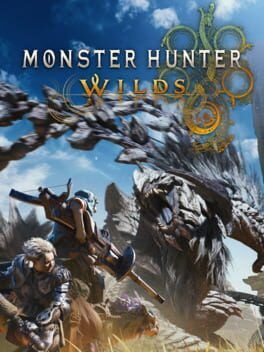
Title Update 4 for Monster Hunter Wilds quietly added references to Nintendo’s next system. We break down what the Switch 2 strings actually imply, the technical hurdles of a port, and how it fits Capcom’s long history with Nintendo hardware.
Monster Hunter Wilds just picked up Title Update 4, and buried inside the new build is something that has the community buzzing: new strings that appear to reference Nintendo’s next system. After several dataminers flagged terms like “ns2UpgradeEdition,” speculation erupted that Capcom is quietly preparing a Switch 2 version of its flagship 2025 release.
Nothing in the files is a smoking gun. There is no “Switch 2 exclusive” logo or a clean reference to a specific SoC. What we do have is enough to sketch out what Capcom is at least considering for Monster Hunter Wilds, and how that fits both the studio’s tech strategy and its long relationship with Nintendo hardware.
What the Monster Hunter Wilds Title Update 4 datamine actually shows
Title Update 4 is mainly about new quests, balance tuning and more performance polishing on PlayStation 5, Xbox Series X|S and PC. The surprise came once players dug into the updated data tables and configuration files.
The now widely discussed findings revolve around new identifiers that were not present before the patch. Dataminers reported entries such as “ns2UpgradeEdition” alongside existing SKU and platform tags. The “ns” naming convention is commonly used internally for Nintendo Switch across engines and storefronts, so seeing “ns2” in parallel immediately caught attention.
Crucially, these strings sit in the same neighborhoods as edition definitions and entitlement flags rather than in a throwaway debug message. That suggests Capcom’s build pipeline is being prepared for some kind of additional platform or edition beyond the currently announced trio.
At the same time, the data is incomplete. There are no finalized file paths, no specific graphics presets labeled for a Nintendo profile and no separate executable markers. What we are looking at is more like scaffolding inside the build system than a finished product profile.
Breaking down “ns2UpgradeEdition” and similar strings
So what does “ns2UpgradeEdition” actually imply in practical terms?
First, it reads like a product or entitlement tag. Modern games ship with multiple editions and upgrade paths, and publishers build these as separate SKUs inside their backend. A label like “ns2UpgradeEdition” points to a hypothetical package that would exist on a Nintendo system, most likely representing a premium or deluxe edition, or an upgrade from a base digital version.
Second, the “2” strongly implies a next generation Nintendo device rather than the current Switch. Within Capcom’s own catalog, internal strings for native Switch builds have typically used “NS” or “NSW.” Introducing “ns2” alongside them lines up with how publishers separate generations in their pipelines. It is not conclusive proof of final hardware, but it shows someone expects a second Nintendo profile distinct from the 2017 system.
Third, the fact that this appears in a live build rather than a closed dev-branch is important. It means that whatever Capcom is preparing has at least progressed far enough to be merged into production data, even if it is dormant. Companies do not lightly complicate live pipelines with fake SKUs, since that risks breaking entitlements when storefronts are updated.
On the other hand, these strings could be part of a shared framework that Capcom plans to reuse across multiple titles. A generic “ns2UpgradeEdition” SKU could be defined now for internal testing, then later attached to whichever Monster Hunter project actually ships on the platform.
In other words, the data suggests intent and planning rather than a locked-in, shipping build of Monster Hunter Wilds on Switch 2.
Why this is not a guarantee of a Switch 2 version
Despite the compelling naming, there are several reasons to be cautious about equating the datamine with a confirmed port.
Publishers often future proof their build systems. They create placeholder SKUs and platform entries well before a project is fully greenlit for that hardware. This allows them to test entitlement flows, DLC structures and cross progression while licensing and marketing are still being negotiated.
Developers also reuse internal frameworks between projects. If Capcom is standardizing around a new generation of platform identifiers, it is natural that Monster Hunter Wilds, as a flagship RE Engine title, would be one of the first to carry those stubs, even if another Monster Hunter ends up being the game that actually launches first on Switch 2.
Finally, plans can and do change. Performance targets, memory constraints or business deals might push Capcom toward a different strategy, such as a bespoke Switch 2 Monster Hunter built from the ground up instead of a direct Wilds port.
The datamine is best read as a look inside Capcom’s planning and technical preparation, not as a de facto announcement.
The technical mountain of bringing Wilds to Switch 2
If Capcom is indeed working toward Wilds on Nintendo’s next system, the technical challenges are non-trivial. Monster Hunter Wilds is built for the RE Engine in its current-gen configuration, targeting PS5, Xbox Series X|S and PC. These platforms offer powerful CPUs, large memory pools and fast SSDs that the game leans on heavily.
A Switch 2, based on current reports and developer chatter, is expected to be a big step up from the original Switch but still below the sheer raw power of a PS5 or Xbox Series X. That gap shapes what a port would need to tackle.
The first challenge is CPU and memory bandwidth. Monster Hunter Wilds uses larger, more seamless environments with more active creatures, weather simulation and systemic interactions than earlier entries. To run well on portable class hardware, Capcom would likely need to aggressively manage AI update rates, cut down background simulation complexity and stream data in even finer chunks.
Next is GPU power and image quality. On current systems, Wilds expects enough headroom for higher resolution rendering, modern effects and more detailed materials. A Switch 2 version would almost certainly target a lower native resolution with dynamic scaling and rely on an upscaling solution. If Nintendo’s hardware includes a modern upscaler or tensor style blocks in its SoC, Capcom could lean on that to preserve clarity in both handheld and docked modes.
Storage speed is another key factor. Wilds is designed around streaming vast environments quickly, which current consoles handle with NVMe SSDs. A hypothetical Switch 2 with a more modest storage subsystem would push RE Engine’s streaming tech hard. Capcom has experience here from getting Resident Evil games and Monster Hunter Rise running on the original Switch, so they know how to aggressively package assets, prioritize texture streaming and mask loads without obvious hitches.
Finally, there is power and thermal management in portable use. Features like dense foliage, physics driven capes, volumetric effects and complex monsters all stress the GPU. Portable hardware needs to stay within tight power budgets, which almost always translates to cuts in draw distance, foliage density, shadow quality and similar visual luxuries. The challenge for Capcom would be finding the balance where the hunting fantasy stays intact even as the rendering budget shrinks.
None of these problems are unsolvable. Capcom already demonstrated on Monster Hunter Rise that it can design content and technology around Nintendo-first hardware. The question is whether it wants to retrofit a very current-gen focused Wilds to that profile, or design a different Switch 2 entry from the start.
How a Switch 2 version fits Capcom’s Nintendo strategy
The datamined strings become easier to interpret when you set them against Capcom’s history with Nintendo systems. Monster Hunter has repeatedly pivoted toward whichever platform is rising in Japan, and Capcom has often used Nintendo hardware as the centerpiece of a generation of Monster Hunter.
On PSP, the series exploded. When that audience began to move, Capcom shifted hard to Nintendo handhelds, making Nintendo the effective home of the franchise for years. Monster Hunter Tri on Wii, followed by 3 Ultimate on Wii U and 3DS, cemented the idea that a Nintendo platform could host the mainline experience. Monster Hunter 4 and 4 Ultimate on 3DS pushed this further, leaning into portability and local co-op.
Later, Monster Hunter World and Iceborne pulled the focus back to PlayStation, Xbox and PC, bringing the series into high definition in a big way. Yet even in that era, Capcom came back to Nintendo with Monster Hunter Rise on Switch, again tailoring both tech and design to the hardware’s strengths. Rise felt like a spiritual successor to the PSP and 3DS era, built around pick up and play hunts and easy portable multiplayer, then later expanded with a more powerful PC version and eventually a current-gen console release.
From that pattern, a Switch 2 Monster Hunter is not a matter of if but when. The only open question is which project carries that torch. Is Monster Hunter Wilds intended to bridge the gap, offering a scaled down but feature complete version on Nintendo’s new hardware? Or will Capcom build a Nintendo focused follow up that leans more heavily into portability, as Rise did after World?
The “ns2UpgradeEdition” entry hints that Capcom wants Wilds to at least be compatible with Nintendo’s next system at the level of product planning. It suggests cross platform parity as a goal, where players on PlayStation, Xbox, PC and a Nintendo device all share in the same core release window and content roadmap rather than waiting years for a bespoke spin off.
It also aligns with Capcom’s broader strategy of putting RE Engine at the center of its portfolio. The more platforms RE Engine supports with shared tools and SKUs, the easier it becomes to launch big games everywhere. Adding Switch 2 to that matrix, even as a work in progress profile, is consistent with how Capcom has operated in the World and Rise era.
What this could mean for Monster Hunter’s future on Nintendo
Even if Monster Hunter Wilds never ships on Switch 2, the datamine is revealing. It confirms that Capcom is already aligning its backend and tooling around Nintendo’s next generation hardware. That is good news for anyone who prefers to hunt on a portable system or in the Nintendo ecosystem.
If Wilds does arrive on Switch 2, expect a version that trades raw visual fidelity for the flexibility of playing anywhere, much as Rise did compared to World on high end platforms. Performance targets might land around a lower resolution and 30 frames per second in handheld, with higher dynamic targets when docked. Co-op, cross play and cross save would become key questions for how Capcom keeps the community unified across very different hardware tiers.
If Wilds stays off Switch 2, the groundwork hinted at by “ns2UpgradeEdition” still sets the stage for a dedicated Nintendo focused Monster Hunter within a few years of the new system’s launch. The historical pattern points strongly toward Capcom wanting a flagship hunting experience anchored to whatever portable hardware dominates in Japan.
Either way, the strings lurking in Monster Hunter Wilds’ Title Update 4 tell us that Nintendo’s next system is firmly on Capcom’s radar, technically and commercially. For hunters who grew up on Tri, 4 Ultimate, Generations and Rise, that may be the most important takeaway of all.