
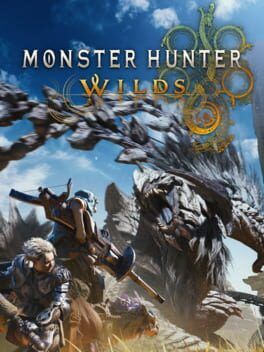
Title Update 4’s mysterious “ns2UpgradeEdition” strings have Monster Hunter fans dreaming about a Switch 2 version of Wilds. Here’s what the datamine actually suggests, why a port would be tough on Nintendo hardware, and how it fits into Capcom’s Monster Hunter history on Switch.
Monster Hunter Wilds just dropped its massive Title Update 4, and hidden in the patch files is a tiny string that has sparked a huge debate: references like via.store.Native.ns2UpgradeEdition and similar tags that appear to point toward Nintendo’s next system.
On paper, a Monster Hunter Wilds release on “Switch 2” feels almost inevitable. In practice, the evidence is thin, and the tech mountain Capcom would have to climb is steep.
Here is what the datamine really suggests, why a Switch 2 port would be so challenging, and how it compares to Capcom’s past Monster Hunter strategy on Nintendo hardware.
What the “ns2UpgradeEdition” Datamine Actually Shows
Dataminers digging into Monster Hunter Wilds Title Update 4 surfaced several store-related strings that mention an “ns2” platform, usually in the context of an “UpgradeEdition.” Outlets like Nintendo Life, The Escapist and Notebookcheck all highlight variants of the same find: entries along the lines of via.store.Native.ns2UpgradeEdition sitting alongside similar tags for existing platforms.
At face value, that looks like classic platform flagging inside Capcom’s in–game store and entitlement system. The engine already tracks different “editions” and content bundles per platform for PlayStation, Xbox and PC. Adding a new entry with “ns2” fits the pattern of preparing hooks for another system.
There are a few key takeaways here:
First, “ns2” is almost certainly shorthand for a next–generation Nintendo system rather than the current Switch. Wilds has never been announced for the original Switch, and the current hardware is too far below the baseline the game targets.
Second, the wording “UpgradeEdition” suggests some kind of cross–generation SKU behavior. In other words, the string looks less like a standalone “Monster Hunter Wilds NS2 Edition” and more like a configuration for unlocking content or discounts when users move between platforms or editions. That could mean:
A path from a base digital version to a deluxe version on the same system.
An entitlement that carries over if Capcom participates in a broader upgrade program on Nintendo’s new store.
A generic template re-used from other projects where “ns2” is a placeholder tag the pipeline expects.
Third, this is not a build target, executable, or settings profile. So far, dataminers have not turned up standalone graphics or CPU configuration blocks marked explicitly for a Nintendo system, which is one of the first things you tend to see when a real port is in active development.
In other words, the strings are interesting, and they do show someone at Capcom is at least thinking about an “ns2” platform at an account or store level. They stop short of being proof that a Switch 2 build of Monster Hunter Wilds is up and running.
How Much Evidence Is This, Really?
Datamined store flags sit in a grey zone of reliability. Historically, they have correctly foreshadowed platforms or editions more than once, but they are also prone to representing:
Placeholder or template data that survives from internal test branches.
Canned platform definitions shared across multiple Capcom projects regardless of what actually ships.
Experiments or evaluations that never graduate into a real product.
Nintendo Life and The Escapist both stress this caution. Neither outlet treats the ns2UpgradeEdition strings as anything more than smoke. Notebookcheck goes a step further and frames the find against the ongoing performance drama around Monster Hunter Wilds and other heavy third–party ports believed to be in development for the Switch successor.
If you zoom out, the most reasonable conclusion is that Capcom has laid some groundwork in its commerce backend for a possible “platform 4” alongside PlayStation, Xbox and PC, and that the dev team is at least evaluating what an “Upgrade Edition” flow might look like on that system. That is a meaningful signal, but it is still far from an announcement.
The Technical Challenge: Can Wilds Realistically Run On Switch 2?
Speculation only gets you so far without understanding what Monster Hunter Wilds actually demands from hardware.
Capcom built Wilds on its modern RE Engine tooling, tuned for PlayStation 5, Xbox Series X|S and contemporary PCs. Even there, the game is CPU heavy, with large seamless environments, dynamic weather, complex monster AI, and dense ecosystems all running at once. Early PC players have reported notable CPU bottlenecks and inconsistent frame pacing, and Xbox Series S already takes a tangible visual and performance hit compared to its more powerful siblings.
To land cleanly on a Switch successor, several hurdles would need to be cleared.
CPU And Worlds Built Around It
Monster Hunter Wilds is structured around its living, changing maps. Sandstorms reshape routes, migrating herds change the monster food chain, and large setpiece encounters often chain into one another without discreet loading breaks.
That world simulation taxes the CPU just as much as the GPU. If Switch 2 is indeed roughly around PlayStation 4.5 to Xbox Series S territory in handheld–capable silicon, as a lot of informed speculation suggests, Capcom would still be squeezing an open, streaming environment and lots of concurrent AI into a much tighter power envelope.
To compensate, a Switch 2 port would have to:
Dial back background simulation, reducing how many creatures, physics interactions and ambient systems are active at once.
Shorten or hide some streaming transitions, potentially adding more obvious loading gates or travel shortcuts.
Simplify AI behaviors and scripting for smaller hunts, which risks changing how certain monsters feel to fight.
The recent datamine chatter outside the mainline news sites already speculates about more aggressive “culling” on a potential Switch 2 specification, which aligns with the sort of concessions a portable chip would require.
GPU, Resolution, And Visual Effects
Visually, Monster Hunter Wilds leans heavily on dynamic lighting, thick particles and volumetric weather. Storms and dust can dramatically obscure visibility, and monsters throw out layers of transparencies, fog and elemental effects.
On Switch 2, sustaining those visuals at any reasonable resolution and frame rate is nontrivial. There is a good chance Capcom would need to:
Cut the resolution scale more aggressively, especially in portable mode, using reconstruction techniques to clean up the image.
Lower or disable some volumetric effects in storm conditions.
Reduce the density of foliage and environmental detail.
The crucial question is how capable Nintendo’s DLSS–style upscaling solution is, assuming the reports of Nvidia–based hardware with some form of AI or tensor acceleration hold true. If Nintendo and Nvidia really do ship an upscaler in the same quality ballpark as DLSS 2 or DLSS 3 frame generation, it could offset a lot of brute force GPU weakness.
Notebookcheck’s coverage points out that other heavy hitters said to be targeting Switch 2, like Elden Ring: Tarnished Edition and Borderlands 4, have already slipped back over performance snags. That strongly suggests that squeezing a modern open–world RPG into a small form factor is still a balancing act, even with smart upscaling.
Monster Hunter Wilds is not uniquely doomed compared to those games, but it does sit near the top of the scale in terms of how much work the engine asks from both the CPU and GPU at once.
Storage, Memory, And Streaming
Capcom’s RE Engine is highly scalable, but a handheld hybrid comes with tight memory and bandwidth budgets.
A Switch 2 version of Monster Hunter Wilds would likely require:
Aggressive texture compression and lower texture sets compared to other consoles.
A different caching strategy for large maps, potentially forcing extra streaming pauses when a player moves quickly across the landscape.
Careful tuning of audio and cutscene data, which adds surprisingly large overhead in modern AAA games.
If some of the rumors about Switch 2 SSD–class storage speed are true, that would help, but RAM capacity and bandwidth remain the key constraints for a title of Wilds’ scope.
Capcom’s Monster Hunter Strategy On Nintendo Hardware
Monster Hunter on Nintendo systems has always been about tradeoffs. Capcom tends to tailor one mainline experience per era around the strengths and limitations of Nintendo’s hardware, rather than simply down–porting the current flagship from PlayStation and Xbox.
On Wii, Monster Hunter Tri was built as a ground–up console take for modest hardware, with heavy online emphasis and more modest visuals compared to what a high–end PC could push at the time.
On 3DS, Monster Hunter 4 and Generations doubled down on portable hunting with segmented zones, lower–fidelity but highly readable visuals and mechanics tuned for shorter bursts. Those games defined the franchise for millions of players who never touched a Sony system.
On Switch, Monster Hunter Rise and its Sunbreak expansion were clearly engineered around the hybrid’s constraints. The RE Engine was refitted to scale down to 720p–1080p, maps were open but relatively compact, and some of the cinematic spectacle of Monster Hunter World and Wilds was traded for a snappier feel, Wirebug movement and faster quest cadence. The result was a title that ran remarkably well for the hardware and became a major hit.
Across all these generations, Capcom has usually offered Nintendo a “pillar” Monster Hunter that is designed for the system instead of a blunt port of whatever the latest PlayStation and Xbox showpiece happens to be.
From that perspective, it is not a given that Switch 2’s Monster Hunter flagship has to be Monster Hunter Wilds. There are three plausible scenarios.
Wilds eventually arrives on Switch 2, but later and heavily optimized, perhaps with content parity but lower targets for resolution and effects.
Switch 2 gets its own custom Monster Hunter project, spiritually closer to Rise, that leverages the new hardware without chasing every single visual flourish of Wilds.
Capcom blends the two, using Wilds as the base template but carving out a semi–distinct version for Switch 2 that sits somewhere between a port and a reimagining.
The persistent success of Monster Hunter World and Rise across platforms, along with the scale of Nintendo’s audience, makes it almost unthinkable that Switch 2 goes through its life without a mainline Monster Hunter. The question is which of these paths Capcom chooses, and how many compromises it is willing to accept if it insists on full parity with Wilds.
How To Read The Datamine As A Player
Given the history and the technology, how should you interpret the ns2UpgradeEdition find?
It is a meaningful signal that Capcom is at least mapping Monster Hunter Wilds into its platform matrix for Nintendo’s upcoming hardware at a store level.
It is not confirmation of an active, fully resourced Switch 2 port. There is no public build, no announcement, and no other configuration data clearly labeled for Nintendo hardware yet.
It sits inside a wider pattern of third–party publishers exploring ambitious Switch 2 ports that keep bumping into performance walls.
Looking back at how Capcom handled Monster Hunter Rise on the current Switch, the most realistic expectation is this. If Switch 2 becomes a major success and if its hardware is close enough to Series S class performance, Capcom will almost certainly bring a mainline Monster Hunter to it. Whether that is Monster Hunter Wilds, a Wilds–adjacent spin built with more modest technical ambitions, or a completely new entry is the real unknown.
Until Capcom or Nintendo formally say the words “Monster Hunter Wilds is coming to Switch 2,” the ns2UpgradeEdition tag should be treated as what it is: a tantalizing breadcrumb, not a binding promise.