
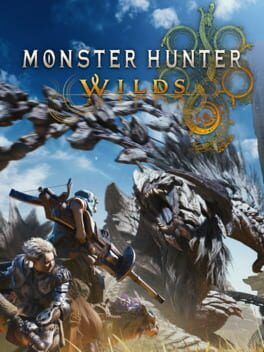

Capcom wants Monster Hunter Wilds sales to surpass Monster Hunter World over the medium to long term, but the gap depends on which World benchmark is used and whether performance fixes, a lower price, Ascendance, and Switch 2 can rebuild momentum.
Image: IGDB
Store links: Monster Hunter Wilds on Steam, Monster Hunter Wilds: Ascendance on Steam
Capcom has set an ambitious Wilds target after a sharp slowdown
Capcom is still treating Monster Hunter Wilds as a long-term pillar. In a Q&A tied to its first-quarter fiscal year 2026 results, the publisher said it plans to keep improving the game’s technical performance as it tries to “drive its total unit sales beyond those of Monster Hunter: World over the medium to long term,” according to the Capcom investor material cited by GamingBolt, Eurogamer, Wccftech, Twisted Voxel, and PC Gamer.
That is the strongest concrete development here: Capcom is publicly tying the future of Wilds sales to a World-sized benchmark, rather than settling for the game’s already large launch number. The tension is obvious. Wilds opened extremely fast, with Twisted Voxel reporting more than 8 million copies sold in its first three days and GamingBolt reporting more than 10 million within the first month. But later updates from outlets citing Capcom’s sales data put Wilds at around 11.4 million units, a much smaller increase over the following year.
For a normal blockbuster, 11.4 million would be a victory lap. For a mainline Monster Hunter successor chasing the franchise’s modern standard-bearer, it creates a strategy problem. Capcom is no longer trying to prove that Wilds had a huge launch. It is trying to create the long sales tail that made World a fixture in the company’s catalogue for years.
The Monster Hunter World comparison is bigger than one headline number
The Monster Hunter Wilds Monster Hunter World comparison depends on the sales yardstick being used, and the source material does not present a single clean benchmark. Wccftech frames World at 22.10 million units sold, calling it Capcom’s best-selling game ever in that context. GamingBolt, Eurogamer, PC Gamer’s syndicated text, and Video And Board Games point to World having passed 30 million units, with GamingBolt specifically noting that this figure factors in the Iceborne Master Edition.
That distinction changes the scale of Capcom’s Monster Hunter Wilds sales goal. If the target is the 22.10 million figure cited by Wccftech, Wilds at 11.4 million would need roughly another 10.7 million units. If the relevant comparison is the over-30-million figure cited by GamingBolt, Eurogamer, and PC Gamer’s syndicated version, the gap is closer to 18.6 million units and growing.
The higher comparison is especially difficult because World is still moving. Video And Board Games, republishing PC Gamer’s report, says Monster Hunter: World sold more than 780,000 copies in the latest quarter despite being over eight years old. Eurogamer also notes that World was at 25 million as of 2024 and, based on the newer 30 million figure, deduces that it sold another 5 million copies over the past two years. In other words, Wilds is not chasing a frozen record. It is trying to catch a game that remains a viable entry point for new players.
Capcom’s first lever is repair, not expansion
Capcom’s investor answer starts with performance, which is telling. The publisher said “ongoing enhancements to the technical performance of Monster Hunter Wilds have led to sales for the game improving,” according to the Q&A quoted across the reports. Eurogamer connects that to the game’s slower-than-desired post-launch trajectory, citing ongoing performance issues and a delayed endgame as factors that hurt early momentum.
The strategy logic is straightforward. A Monster Hunter game relies on long sessions, repeat hunts, multiplayer stability, and the confidence that a new gear grind will remain worth the time investment. Performance problems do not only affect frame rates. They reduce the chance that a lapsed squad returns, that a demo player converts, or that a veteran recommends the game as the next shared hobby.
Capcom appears to understand that the sales funnel has to be rebuilt from the technical floor upward. Eurogamer points to significant updates for Wilds, including a so-called final base-game update that it says was notable for performance fixes and quality-of-life improvements. PC Gamer’s syndicated report similarly says Capcom has seen improvement after long-awaited performance fixes in early 2026. Those are still reported outcomes, not public proof that every platform concern is solved, but Capcom’s own investor language makes technical repair central to its sales plan.
The demo and price cut are a conversion play
The next part of the Monster Hunter Wilds sales plan is more practical: lower the risk of trying the game. Wccftech reports that Capcom released a Prologue demo with the opening hours playable in Offline Mode, character creation, all 14 weapon types, and story content up to the beginning of Chapter 1-3, “To the Forest.” Eurogamer says the demo is available on PS5, Xbox Series, and Steam, covers the first three chapters, and lets players transfer their save to the full game if they buy it afterward.
That demo matters because it lets Capcom make a direct argument to skeptical buyers: test the current version instead of judging the launch reputation. The save transfer also removes a common barrier. Players can sample weapon feel, character creation, early story pacing, and current performance without treating the demo as wasted time.
Capcom is pairing that with pricing measures. GamingBolt reports that the base game now costs $40 after a permanent price drop, while Wccftech lists the new price as $39.99. Capcom’s investor answer also mentions “related pricing measures” alongside the response to Ascendance. Price cuts do not fix reputation by themselves, but they can change the math for players who were waiting for patches, a sale, or a reason to coordinate with friends. For Capcom, the aim is likely to turn Wilds from a launch-window purchase into a lower-friction platform that can be sold again when the expansion cycle begins.
Ascendance is the real momentum test
Capcom’s biggest chance to change the narrative is Monster Hunter Wilds: Ascendance, the first paid expansion. GamingBolt reports that Ascendance is planned for 2027, though it currently has no release date. The same outlet says it will add Master Rank quests, a new region called the Skybound Eyrie, a story focused on Elder Dragons, and returning fan favorites including Lao-Shan Lung. Wccftech adds that the Skybound Eyrie is described as a chain of floating islands and ancient ruins, and reports that a Boost Bracer tool will add new attacks, combos, and mobility options across all 14 weapon types.
This is where Capcom’s medium to long term phrasing becomes important. Monster Hunter expansions have historically acted as reputation resets as much as content drops. Eurogamer notes that Monster Hunter World: Iceborne attracted 5 million sales in its first six months. Twisted Voxel reports that Iceborne has exceeded 15 million units, while Rise’s Sunbreak expansion has reached 10.4 million. Those numbers explain why Capcom is putting Ascendance at the center of the Wilds recovery plan.
The risk is that expansion content usually sells best into an engaged base. Master Rank, new gear, and weapon-system changes can bring veterans back, but the larger sales gap requires new buyers too. Ascendance therefore has to serve two audiences at once: it needs enough endgame depth to convince the current community that Wilds is worth returning to, and enough visible improvement to persuade outsiders that the base game plus expansion is now the right entry point.
Switch 2 could open another lane, but performance remains the gatekeeper
A Nintendo Switch 2 version is another part of the long-tail strategy. GamingBolt says a Switch 2 version of Monster Hunter Wilds is inbound, while Wccftech says it is officially in development. That matters because Nintendo hardware has a large Monster Hunter audience, and a new platform can create a second launch window if Capcom times it well.
The available source material is more cautious on technical specifics. GamingBolt says datamining suggests the Switch 2 version may perform well. Wccftech’s headline and related coverage refer to 1440p docked and 40 FPS claims, but those details are presented through reporting around tests and datamining rather than a final public platform specification from Capcom in the supplied material. Until Capcom announces final modes, resolution targets, frame-rate targets, and feature parity, Switch 2 should be treated as confirmed direction with unconfirmed technical detail.
The strategic upside is clear, but so is the danger. If Wilds launches on Switch 2 in a strong technical state, it gains a fresh audience and a reason for existing players to revisit the ecosystem. If it arrives with visible compromises or uncertainty, it risks reinforcing the very performance concerns Capcom is trying to move past. For a game whose sales recovery is explicitly tied to technical enhancements, the Switch 2 version cannot afford to be perceived as a shaky port.
What Wilds needs next to regain sales momentum
The path to surpassing Monster Hunter World is not a single patch, discount, or expansion announcement. Based on Capcom’s own investor comments and the sales comparisons reported by the outlets, Wilds needs a sequence: stable technical improvement, a demo that proves those improvements, a price that lowers hesitation, an expansion strong enough to restart the community, and a platform expansion that reaches players who skipped the first wave.
From a strategy angle, the most important short-term metric is not whether Wilds immediately jumps toward 30 million. It is whether Capcom can restart the cadence that creates durable Monster Hunter habits. That means players need reasons to return before Ascendance, confidence that their preferred platform runs well, and a clear sense that Master Rank will arrive into a healthier game than the one many judged at launch.
For readers deciding whether to buy now, the practical guidance is simple within the confirmed details. The Prologue demo is the safest first step on PS5, Xbox Series, and Steam, especially because Eurogamer and Wccftech report save transfer into the full version. The lower $40 or $39.99 base price makes entry cheaper than at launch, but players mainly interested in Master Rank may reasonably wait for Ascendance details, including its final 2027 date and pricing. Switch 2-only players should wait for Capcom’s final technical disclosures rather than treating datamined performance claims as guaranteed.
Capcom’s Monster Hunter Wilds target is achievable only if the game stops being defined by its launch curve and starts building the kind of long tail World still enjoys. The company has named the right levers. The hard part is pulling them in the right order, without losing another year of momentum.