
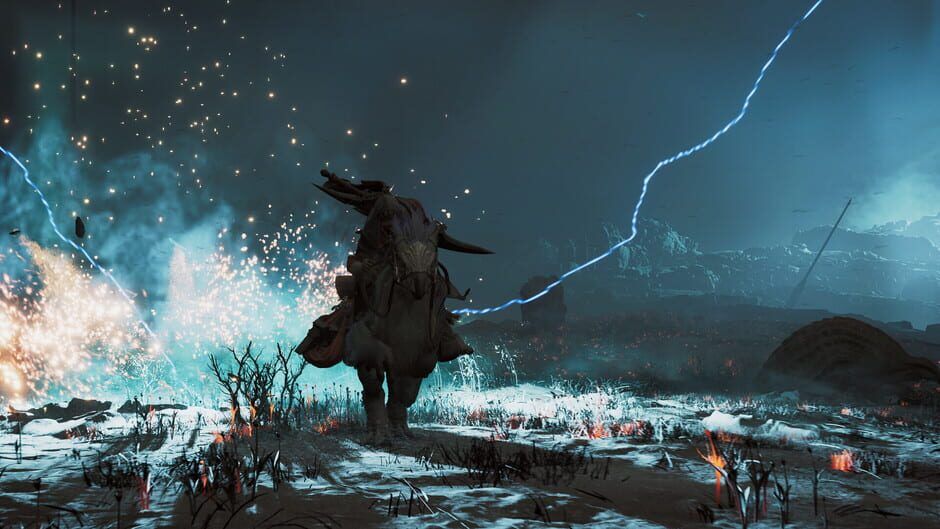

Capcom’s new Black Flame monster art for Monster Hunter Wilds has fans buzzing about lore and visuals, but it also reignited long‑running worries about performance, PC optimization, and quality‑of‑life on current‑gen hardware.
Capcom’s latest Monster Hunter Wilds tease, a striking piece of concept art spotlighting the so‑called Black Flame in the Oilwell Basin, has done exactly what the studio likely wanted and something it probably did not. Visually and thematically the reveal is a hit. In the replies and community threads that followed, though, the conversation very quickly slid from “this looks incredible” to “please fix your games before the next hunt.”
Black Flame and the Oilwell Basin: Why this art hits so hard
The new art shows a colossal, cephalopod‑like monster rearing up from pools of dark, viscous oil in the Oilwell Basin. Its silhouette mixes octopus and classic leviathan energy with vents and sacs that suggest combustible tar or gas. That is where the “Black Flame” moniker starts to make sense. The creature appears to weaponize the environment itself, spewing ignitable black secretion across the arena and turning the basin into a living powder keg.
From a player’s point of view the art does a few important things. First, it sets the tone for Wilds’ harsher, more volatile ecosystems. Capcom has been selling Wilds on the idea that maps are alive and shifting. A monster that literally manipulates the oil fields to control the battlefield fits perfectly into that pitch. You can already imagine hunts where the safest place to stand one moment becomes a flaming trap the next time the beast ruptures a tar vein.
Second, it gives theorycrafters something to chew on. Longtime hunters are already talking about how Black Flame gear could lean into fire and blast, maybe even mixing in new status twists tied to tar buildup or movement penalties. Monster Hunter gear design tends to mirror monster anatomy, so tentacle‑like plates, flowing cloak pieces, and oil‑sheened textures feel like a given. There is also early speculation that a monster this visually distinct is destined for crossover media or a potential Stories‑style spin off appearance.
Finally, it quietly deepens Wilds’ worldbuilding. The Oilwell Basin name hints at a region defined by natural resources, extraction, and risk. A monster that embodies that danger frames the locale as more than just another hot map. It suggests an ecosystem that is unstable on both geological and biological levels, which lines up with Capcom’s broader messaging that the world in Wilds is dangerous even before a colossal beast enters the scene.
How Black Flame fits into Wilds’ broader worldbuilding
Wilds has been marketed as a game where the environment is as much an enemy as any flagship monster. The Black Flame art doubles down on that premise. This is not just a dragon dropped into a generic wasteland. The monster and the map are intimately tied. Oil pools feed its attacks. The terrain likely shifts as black tar ignites and cools. Wind and weather could spread burning slicks to new ground without warning.
That tight coupling of monster and biome recalls some of the best fights in World and Iceborne, like Xeno’jiiva reshaping the arena or Velkhana icing over surfaces mid‑hunt, but with a harsher, more industrial flavor. You are not just in a wildland, you are in a region that looks like nature and resource exploitation have collided.
Even Capcom’s outside collaborations underline this focus. The Monster Hunter Wilds x Hololive Gen 5 merchandise line puts the VTubers in armor clearly inspired by Wilds’ gear silhouettes, leaning into layered plates, flowing fabrics, and that rugged frontier aesthetic. When marketing art, collab outfits, and in game design all pull in the same direction, players start to get a clear mental picture of what kind of world they will be hunting in.
The hype gap: incredible art, shaky trust
If the story stopped at gorgeous concept work and fun speculation, the reaction would be simple hype. It is not. Underneath the excitement, there is friction that has been building since Monster Hunter World and resurfaced around Wilds’ PC and console performance.
Replies to the Black Flame reveal quickly filled with reminders of long loads, unstable frame rates, and inconsistent experience across platforms. Players praised the art, then followed it up with some version of “this looks amazing, but will it actually run well?” It is a sentiment you see repeated in discussion threads too. The community is not indifferent. It is wary.
A lot of that wariness comes directly from how people experienced recent Monster Hunter releases. World’s PC port launched with CPU bottlenecks that made the game stutter even on strong hardware and it took multiple patches before performance felt truly stable. Rise on PC improved things but introduced its own quirks with how it handled higher frame rates and resolution scaling. Wilds, with its larger, more dynamic maps and heavier effects, is already pushing hardware harder, which makes past missteps matter even more in people’s minds.
There is also frustration around quality of life issues that linger through entries. Hunters still bring up clunky weapon sheathing for certain moves, finicky input buffering, and long standing requests for clearer build tools, better decorations management, and more transparent hitbox feedback. When someone sees Black Flame emerging from a perfectly composed oil field, they are not just thinking about their first hunt. They are remembering all the times a performance hitch or UI friction got in the way of what should have been a clean moment.
What players are worried about technically
Current community worries group into a few themes.
Performance and stability sit at the top. On PC, players worry about how Wilds will scale across different CPUs and GPUs, especially mid range cards like the 4060 and equivalent. Monster Hunter is a game where reaction windows, animation priority, and monster patterns matter, so inconsistent frame pacing can feel worse than in more forgiving action titles. There is lingering anxiety that whatever backend systems Capcom bolts on for DLC, anti cheat, or online services might quietly drag down performance.
On the console side the focus is on solid, predictable modes. With PS5 and Xbox Series X|S, players expect a true 60 FPS option with minimal tearing, even if that means some visual compromises. Wilds’ massive environments and violent weather shifts look spectacular, but they will fall flat if sandstorms, lightning, and oil fires cause frame rate troughs right when a monster is enraged. Hunters still remember frame drops in crowded fights or in heavily detailed zones in earlier titles, and the Oilwell Basin art looks like the kind of place where the engine will be stressed.
Then there is online reliability. Monster Hunter is at its best in co op, but connection drops, session errors, and matchmake hiccups have been a recurring complaint across recent games. Players reading about a new apex predator want reassurance that a disconnect will not rob them of rewards halfway through a tense Black Flame hunt.
Finally, input and responsiveness matter more as the games grow more visually dense. With so much particle work, physics, and AI running in the background, players are understandably worried about input latency creeping up in busy moments. A missed wirebug‑style reposition or a guard point that triggers a frame late can mean a cart. In a game that demands precision, even subtle delays stand out.
What Capcom has actually said so far
Capcom has not used the Black Flame reveal itself to talk about performance, but across interviews, blogs, and platform store pages there are a few consistent points about Wilds on current gen hardware.
The game is built natively for PS5, Xbox Series X|S, and modern PCs, so last gen support is off the table. That matters, because dropping PS4 and Xbox One lets the team design around faster CPUs and SSDs. Capcom has emphasized more seamless zones, fewer immersion breaking transitions, and dynamic environments that shift in real time, all of which benefit from that hardware baseline.
On consoles, Capcom has talked in broad strokes about offering visual options that let players favor performance or resolution. While hard numbers have been left for closer to launch or post launch technical breakdowns, the implication is that a 60 FPS target will be available, at least on PS5 and Series X. Exactly how consistent that target will be in the wildest weather or in effects heavy fights like Black Flame in a blazing Oilwell Basin is still an open question.
For PC, Capcom’s messaging has mostly focused on feature checkboxes. Wilds supports the usual suspects like high resolution options, uncapped frame rates, and modern upscalers, with the promise of scalable settings for foliage, shadows, and effects to help players tune the game to their rigs. What they have not done yet is offer deep technical dives on CPU threading, background checks, or the kind of low level optimization details that performance focused players are keen to hear.
Quality of life is where the messaging is more concrete. Capcom has highlighted improved UI readability, faster gear and decoration management, and tweaks to how quests are joined and followed. There is a clear awareness that friction in lobbies, SOS systems, and build crafting wore people down in past titles. The studio has been positioning Wilds as a smoother day to day experience, without spelling out every subsystem change.
What Capcom has not addressed clearly yet
The gaps in communication are almost as important as what has been said. Capcom has not laid out platform by platform performance targets in detail, nor has it given players a frank breakdown of how dynamic systems like weather and environmental destruction affect frame rate and latency.
There has also been little direct talk about how online infrastructure is changing to support Wilds. Hunters have been told to expect co op on current gen hardware, but there is not yet a convincing, plain language description of what has been done behind the scenes to reduce disconnects and smooth out matchmaking.
On the PC front, there is still no exhaustive explanation of what background systems run during play and how they impact performance. After years of stories about aggressive checks or third party layers affecting frame times, players are looking for proactive transparency rather than reactive patch notes.
Finally, while Capcom has promised better quality of life broadly, there is not yet a public, detailed list of weapon specific fixes and mechanical overhauls. This matters when players raise concerns about long standing issues with particular weapons or combos. Seeing big new monsters with complex move sets is exciting. Knowing that your favorite weapon will feel crisp and reliable while fighting them is just as important.
Where Black Flame leaves the community
The Black Flame art reminds everyone why Monster Hunter retains such a passionate audience. The creature design is inventive and tightly linked to a dangerous new locale. It sparks imagination around gear, story context, and how Wilds’ ecosystems might function in practice.
At the same time, the community’s split reaction shows that visual brilliance is no longer enough on its own. Hunters want to believe that when they finally face Black Flame in the heart of the Oilwell Basin on PS5, Xbox Series, or PC, the only thing they will be fighting is the monster, not their frame rate, netcode, or UI.
Capcom has made some reassuring moves by committing to current gen only development, scalable PC options, and improved quality of life. Until the studio pairs those broad promises with transparent, platform specific details and consistently strong performance in updated builds, though, every new piece of concept art will come with the same two part reaction. First, awe at the artistry. Second, the now familiar question: will this hunt actually feel as good as it looks?