
Circana’s weekly engagement chart is surfacing a new wave of multiplayer and live‑service climbers. Here’s how Monster Hunter Wilds, Arc Raiders, Marvel Rivals, Battlefield 6, Expedition 33 and others are jostling for attention, what Circana is actually measuring, and why these moves matter.
Circana’s weekly engagement charts have become one of the clearest ways to understand what people are actually playing, not just what they are buying. For live‑service and multiplayer‑heavy titles, that distinction is huge. A boxed copy sale only captures day one. Engagement data shows which games are building habits weeks or months after launch.
At a high level, Circana tracks the top 15 games by player engagement across Xbox and PlayStation each week. The company aggregates anonymized data from participating platforms and breaks it down by daily active users and playtime, then ranks games by how consistently they pull players back. It is not a pure hours‑played list and it is not a revenue chart. Instead it is a snapshot of which games are holding an audience inside the ecosystem.
Because the data is platform‑wide, it tends to favor titles with strong cross‑platform or console presence. That is exactly where live‑service and multiplayer games thrive. They may not always top monthly spending charts, but they often dominate engagement because one good session can pull a whole friend group back in.
Recently, Circana’s weekly chart has started to tell a clear story about “engagement climbers” in the multiplayer and service space. These are games that were either not in the top 15 at all or were sitting low on the list, then surged upward as updates, events, or word of mouth hit. While evergreen mainstays like Fortnite, Call of Duty, and Roblox rarely leave the upper half of the chart, the most interesting movement is happening a little further down where new contenders are gaining ground.
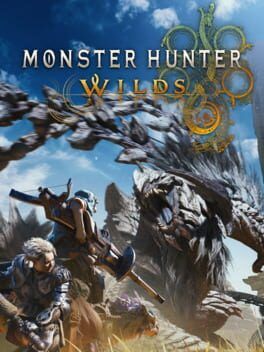
Monster Hunter Wilds is a perfect example of a game built to convert sales into sustained engagement. Capcom’s pitch is simple but powerful: a living, dual‑nature world where environments can transform suddenly and violently, forcing you to adapt on the fly. Unlike many traditional Monster Hunter entries that start slow, Wilds is clearly tuned with modern engagement in mind. Co‑op drop‑in works more seamlessly, traversal is faster, and hunts are designed around explosive, event‑like phases that feel tailor‑made for shareable clips and social hooks.
From an engagement chart perspective, Monster Hunter Wilds has all the ingredients you expect from a long‑tail climber. It is strongly co‑operative, which encourages return play with a fixed hunting group. It is built around large, repeated encounters that reward mastery, so a single monster can occupy players for dozens of hours as they climb through gear tiers. And it is backed by Capcom’s now proven cadence of free title updates, which add new monsters and variants that spike returning player numbers and re‑ignite lapsed hunters.
Early positioning on the chart reflects that loop. Launch week pushes it high thanks to sales and hype, but weeks two through six are where Monster Hunter lives or dies in the engagement rankings. When those periods show only a modest drop instead of a freefall, it is a sign that players are settling into a rhythm of nightly or weekly hunts. For Circana, that means Monster Hunter Wilds behaves more like a service title than a traditional boxed RPG.
If Monster Hunter Wilds is the co‑op anchor of this current wave, Arc Raiders represents the opposite path: a free‑to‑play, live‑service shooter built specifically to live on engagement charts. Embark’s co‑op experience drops players into a retro‑future Earth where mechanized invaders crash from orbit and must be dismantled piece by piece. Structurally, it is closer to a looter shooter or extraction‑lite game, with players repeating missions, gathering materials, and climbing a gear ladder.
For Circana’s engagement math, Arc Raiders benefits from three key design choices. It is free, so there is very little friction for players to at least try it and potentially pull in a squad. It is session‑based, which fits neatly into nightly play habits and makes it easy to jump back in for a quick run. And it is structured around seasonal events and limited‑time challenges, which create predictable spikes on the weekly chart every time new content arrives.
When Circana’s top 15 starts to show Arc Raiders moving from a mid‑tier slot into the top half, it usually lines up with a new season or a major balance pass that gets attention from streamers and core shooter communities. Even a few percentage points of additional daily active users can translate into a noticeable climb on a platform‑wide ranking when most of the top ten are remarkably stable. In other words, a modest but well‑timed event can push Arc Raiders to rub shoulders with the biggest franchises in the business.
Marvel Rivals, on the other hand, is pushing into the hero shooter space where competition for engagement is brutal. NetEase’s game leans on 6v6 objective play, hero synergies, and of course an enormous Marvel roster. From an engagement data standpoint, its biggest weapon is the IP itself. Familiar heroes lower the barrier to experimentation, and a Marvel skin on competitive play helps it cut through the noise of crowded digital storefronts.
What Circana’s chart tends to reveal is whether that initial curiosity is translating into stickiness. A launch week appearance is almost guaranteed for a Marvel multiplayer title, but the weeks that follow tell us if it can carve out a consistent player base. If Marvel Rivals slides quickly off the top 15, that suggests players tried a few matches and drifted back to their established favorites. If it stabilizes in the lower half of the chart and hovers there, that indicates a core community forming that returns with each balance patch, hero release, or ranked season reset.
One of the more interesting storylines in recent Circana write‑ups involves Battlefield’s return to form with the latest entry, broadly referred to as Battlefield 6 in analyst chatter. For a franchise that has historically peaked at launch and then faded as technical issues or content gaps piled up, seeing Battlefield regain chart traction signals something different. Improved launch stability, a more focused map rotation, and a clearer live‑service plan have all contributed to keeping players engaged beyond the honeymoon period.
On the chart, that shows up as Battlefield 6 reappearing or climbing back up during large‑scale events, free weekend promotions, and big content drops that refresh the map and mode pool. Circana’s engagement ranking is particularly relevant here because Battlefield is a premium title competing with free‑to‑play giants. When it elbows its way into the top tier of engagement anyway, it means players are not just buying it for a few weeks of novelty. They are actually logging in regularly instead of defaulting back to their usual shooters.
Clair Obscur: Expedition 33 does not look like a conventional live‑service rival at first glance. It is a turn‑based, painterly JRPG‑inspired adventure built around a striking French art‑fantasy world and a finite story campaign. Yet it has started to show up in the extended conversation around engagement climbers, largely because it has captured a dedicated niche audience that is spending serious time inside it.
In Circana terms, a game like Expedition 33 punches above its raw unit sales weight when enough players are sticking with it for long sessions over several weeks. That can briefly push it onto or near the bottom of the top 15 even if it is not anywhere near the top spenders chart. Strong word of mouth, replayability through optional challenges, and post‑launch difficulty or challenge updates all nudge its engagement footprint up, enough to register alongside the bigger names for a time.
Looking across these examples, Circana’s engagement chart is increasingly a scoreboard for how well a game’s live design is working rather than just how big the marketing campaign was. Monster Hunter Wilds shows the power of a polished co‑op loop that behaves like a live‑service even if it is sold as a premium package. Arc Raiders demonstrates how a free‑to‑play co‑op shooter can ride seasonal content spikes into relevance. Marvel Rivals is testing whether recognizable IP and hero‑based design can carve out a consistent foothold in a crowded PvP arena. Battlefield 6’s rebound hints at a franchise rediscovering the fundamentals of retention. Expedition 33 quietly proves that even focused, mostly single‑player games can chart if they grip players long enough.
For players, watching these week‑to‑week movements is a way to see where communities are actually active, which matters if you are deciding where to invest time in a new squad game. For developers and publishers, it is a live stress test of their retention strategies. Circana’s engagement top 15 does not just tell us what sold. It shows which games are turning curiosity into commitment, and which new climbers might be the next fixtures in the multiplayer landscape.