
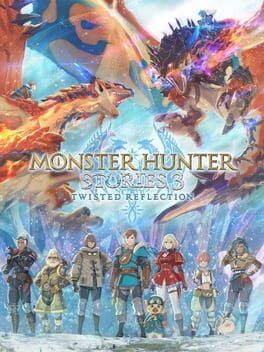
Capcom’s turn-based spin off returns with twin Rathalos, warring kingdoms and a darker mirror of the mainline series – here’s how Twisted Reflection builds on the first two Stories games and why it’s the narrative counterpoint to Monster Hunter Wilds.
Monster Hunter is having a split personality moment. On one side you have Monster Hunter Wilds chasing cinematic, systems heavy co op hunts. On the other, Monster Hunter Stories 3: Twisted Reflection quietly sets up to be the series’ big story play for 2026, doubling down on turn based combat, character driven drama and the monster bonding that helped the first two Stories games build a devoted following.
With Capcom giving Stories 3 a fresh spotlight alongside Wilds in its latest Monster Hunter Showcase, it is clear this is not just a side dish. Twisted Reflection looks like a full scale RPG that pushes the spin off into darker territory, while sharpening almost every idea from Monster Hunter Stories and Monster Hunter Stories 2: Wings of Ruin.
Building on Stories and Wings of Ruin
The original Monster Hunter Stories reimagined Capcom’s hunting universe as a Saturday morning anime style adventure. You played as a Rider who bonded with Monsties, hatched eggs, mixed and matched genes in a light tactical system and battled in a simple but satisfying rock paper scissors style turn order. It was approachable, colorful and quietly smart beneath the surface, but its world design and presentation were constrained by its 3DS origins.
Wings of Ruin on Nintendo Switch and PC blew the doors open. Environments grew more expansive, the gene system became deeper, and the story embraced heavier themes as you traveled with Razewing Ratha, a monster prophesied to bring ruin. Its success proved there was real appetite for Monster Hunter as a narrative RPG, not just an action grind.
Monster Hunter Stories 3: Twisted Reflection looks like the natural evolution of both. Set generations after earlier conflicts, it keeps you in the Rider role, exploring wide regions on Monstie back, but increases the sense of scale through a broader view of the world and more detailed environments. Early hands on reports talk about a larger draw distance and more seamless exploration, which helps the turn based spin off feel closer in scope to the mainline games while keeping its own pace and structure.
Mechanically, Stories 3 keeps the familiar Power, Speed and Technical triangle that defines combat in the series, along with the focus on double attacks when Rider and Monstie target the same enemy. What Capcom is teasing is refinement rather than reinvention. Expect expanded skill interactions, more ways to manipulate enemy behavior and a denser set of build options through gene tweaking, rather than a complete combat overhaul.
Crucially, Twisted Reflection brings back the sense of traveling with a small cast of companions instead of the looser party structure of the mainline hunts. Relationships with Monsties and fellow Riders are again central to progression, reinforcing that this is the emotional counterpart to the loot forward Wilds.
The ‘Twisted Reflection’ hook: twin Rathalos and mirrored kingdoms
The subtitle is not just flavor. Twisted Reflection is built around the idea of doubles, mirrors and nations that cannot quite face what they have become.
The story is set across two neighboring countries, Azuria and Vermeil, both threatened by a spreading crystal encroachment that corrupts landscapes and wildlife. Centuries of tension and a long buried conflict have left both kingdoms on the brink of collapse. When hope seems spent, a mysterious egg is discovered containing a creature everyone thought was gone forever: Rathalos, the iconic Monster Hunter wyvern believed to be extinct.
Except this time there are two of them. Promotional material leans hard on the image of twin Rathalos born from a single egg, a literal twisted reflection at the heart of the narrative. One is positioned as a symbol of destruction, the other as a chance at salvation, and where earlier Stories games focused on one “world ending” Monstie, this duality sets up a more ambiguous moral space. You are not simply protecting a misunderstood creature from fearful humans. You are navigating a world that cannot agree on which reflection of the truth to believe in.
Capcom’s story synopsis hints at layers of political intrigue beneath the usual Rider coming of age arc. Characters from both Azuria and Vermeil are pulled into an expedition to the northern frontier, chasing rumors of a way to halt the crystal spread. Among them is Eleanor, whose own sister rules Vermeil, and whose doubts about her nation’s intentions point toward internal conflict as dangerous as any monster.
The crystal encroachment, too, plays into the reflection motif. Environments increasingly mirror each other in corrupted and uncorrupted states, and monsters you have known across the series now appear in distorted variants. Trailers show familiar wyverns encased in crystalline armor that changes their attack patterns and resistances, echoing the Deviant and Variant monsters of mainline games but reframed as a narrative force of decay.
It all gives Stories 3 a darker tone than its predecessors without abandoning their warmth. You are still hatching eggs, customizing your Monstie party and watching goofy campfire scenes, but the central mystery is more existential. What happens when the bonds Rider and Monstie rely on are no longer enough to keep a collapsing world together?
A deeper Rider fantasy
While the mainline Monster Hunter games cast you as a largely silent Hunter whose personality comes through gear and playstyle, Stories is about who you are to the monsters and people around you. Twisted Reflection seems determined to push that Rider fantasy further.
The twin Rathalos are positioned as an extension of your choices. How you develop their abilities, which quests you pursue and how you respond to major story beats all look set to influence how people in both kingdoms see you. Capcom has not detailed a full branching narrative, but early descriptions talk about side stories that can change certain village outcomes or character fates, giving more weight to your travels than simply unlocking the next hunting ground.
The world design also reinforces your role. The regions of Azuria and Vermeil appear more layered, with vertical routes, hidden caverns and large scale vistas visible from far away. Exploring on Monstie back no longer feels like hopping between compact hubs, but traveling through spaces that breathe in a similar way to Wilds’ dynamic sandstorms and shifting ecosystems, just filtered through a turn based framework.
For returning players, Monstie management is where the hours will disappear. Stories 3 keeps the gene grid system introduced in Wings of Ruin, which lets you slot inherited traits to build specialized monsters, but it appears to extend it with more cross species inheritance and combo skills. If the second game let you build a Swiss Army knife Rathalos, Twisted Reflection wants you crafting highly tuned duos around the twin flagships and their mirrored traits.
Turn based comfort next to Wilds’ kinetic chaos
Capcom’s recent messaging has often paired Monster Hunter Stories 3 with Monster Hunter Wilds, and that is not a coincidence. Wilds is pitched as the next big leap in real time hunting, with giant dynamic maps, multi phase monsters and heavy emphasis on cooperative play. It is the spiritual successor to World and Rise, designed for players who want to improvise claw hooks, wirebugs or mantles in the chaos of a live hunt.
Stories 3, by contrast, is the place where you can live with these monsters instead of simply surviving them. Its combat is turn based, readable and methodical. You study tells, predict enemy type choices, exploit weaknesses and use skills at the right timing, but you do it from a comfortable, menu driven space that lets you think without the pressure of perfect reactions.
For fans of JRPGs or players who bounced off mainline Monster Hunter’s real time demands, Twisted Reflection is the welcoming door into the universe. You still learn monster behaviors, still care about elemental matchups and parts breaking, but in a way that feels closer to Pokémon or Dragon Quest than to Wilds’ intense arena brawls.
Positioned alongside Wilds, that makes Stories 3 feel less like a spin off and more like the second pillar of the franchise. One pillar is about skill expression in the moment. The other is about long term attachment to your party, watching a Rathalos you hatched limp away from a brutal fight only to return stronger after some time at the stable.
And for long time hunters already locked in for Wilds, Stories 3 is shaping up as a complementary rhythm. Wilds will likely be the game where you log in for weekly events and tough new monsters. Twisted Reflection looks like the one you sink into on quieter nights, chasing side quests, genetics projects and story threads.
Why turn based and narrative focused fans should keep an eye on it
As Capcom’s latest showcase made clear, Monster Hunter’s future is not resting on a single game. Monster Hunter Wilds is the headline, but Monster Hunter Stories 3: Twisted Reflection is the bet that this universe can sustain a full blown narrative RPG series alongside the core hunts.
For players who care more about characters than clear times, this is the Monster Hunter project to watch. It builds on the solid combat and gene tinkering of Wings of Ruin, widens the world and deepens the dramatic stakes with its twin Rathalos and mirrored kingdoms, and carves out a space where turn based tactics and emotional storytelling sit right next to the franchise’s loudest action game to date.
In other words, if Wilds is Monster Hunter at its most primal and explosive, Twisted Reflection is the reflective half of that identity: slower, more deliberate, and laser focused on what it means to share a life with creatures everyone else just calls monsters.