
How twin Rathalos, a darker tone and turn-based battles position Monster Hunter Stories 3 as the series’ next major story-driven pillar.
Monster Hunter is entering 2026 with an unusual kind of flagship. Monster Hunter Wilds will handle the prestige hunt-a-thon, but it is Monster Hunter Stories 3: Twisted Reflection that looks set to carry Capcom’s big narrative ambitions for the brand.
Stories has always been where Capcom experiments with character drama, world-building and emotions that sit just out of frame in the mainline games. Twisted Reflection looks like the boldest statement yet that “Monster Hunter” can be as much a JRPG epic as it is a co-op boss rush.
What We Know So Far About Twisted Reflection
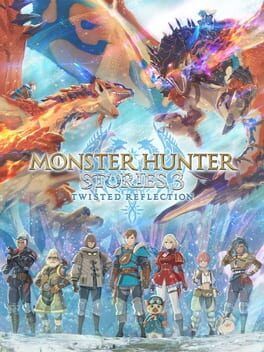
Capcom officially unveiled Monster Hunter Stories 3: Twisted Reflection during a Nintendo Direct, with a 2026 release window and a simultaneous launch across Nintendo Switch 2, PlayStation 5, Xbox Series X|S and PC. It is a fully fledged sequel, not a side chapter, and it returns after a four year gap since Stories 2: Wings of Ruin.
The initial trailer paints a world on the brink. The story is set across the crystal-scarred nations of Azuria and Vermeil, two neighboring lands still haunted by a war that broke out centuries ago. The scars of that conflict are literal: jagged crystal growths stab out of mountains and forests, a visual echo of the blight-like phenomena that have shaped both earlier Stories titles.
At the center of it all is a single trembling egg. From it hatch twin Rathalos, long thought extinct and, within the game’s lore, an omen of catastrophe. Their appearance is treated not as a miracle, but as a prophecy fulfilled. The birth of these twin Monsties is what reignites the drums of war between Azuria and Vermeil, and it is the catalyst for everything else the player will do.
Producer Ryozo Tsujimoto has flagged Stories 3 as one of the key focuses of Capcom’s dedicated Monster Hunter showcase, underscoring how central this spin-off has become to the series’ plans. With Monster Hunter Wilds increasingly framed around evolving ecosystems and live updates, Twisted Reflection is positioned to be the self-contained, story-first counterpart in 2026.
Twin Rathalos And A Darker Monster Hunter Story
The hook for Monster Hunter Stories 3 is right in its subtitle. Twisted Reflection signals a narrative about mirrors, duality and the darker image staring back at you.
The twin Rathalos are the clearest embodiment of that idea. Where Monster Hunter Stories 1 framed its bond between Rider and Rathalos as a hopeful answer to fear, and Stories 2 explored the burden of a single “Ratha of legend,” Stories 3 splits that destiny in two. These twins are born from the same egg but appear to be pulled toward opposing paths, suggesting that the familiar “Monstie as partner” concept will be tested in new and uncomfortable ways.
Visually, the game leans harder into contrast than its predecessors. Sunlit villages and verdant plains are still present, but they are bisected by regions swallowed in shadow and pierced by unnatural crystal formations. Trailers highlight not just radiant blue skies, but burning horizons and battlefields shrouded in violet miasma. It is a Monster Hunter world that remembers war rather than merely hunting.
That thematic shift builds directly on how the first two Stories games gradually darkened their tone. The original Monster Hunter Stories on 3DS and mobile was almost pastoral, focused on childhood friendship, village life and the joy of riding a Rathalos across open fields. Stories 2: Wings of Ruin kept the Saturday morning anime energy, but layered in heavier questions about prophecy, sacrifice and the weight of being feared by the people you want to protect.
Twisted Reflection looks poised to push that maturation further. The premise of two nations eyeing each other across crystal-blighted frontiers, with the twin Rathalos treated as a casus belli, suggests a narrative less concerned with village festivals and more with the politics of survival. Where previous games asked whether Riders and Hunters could coexist, this one seems ready to ask how societies twist legends and living creatures into weapons.
Building On The First Two Stories Games
To understand why Stories 3 is exciting, it helps to see how it evolves the formula laid down by its predecessors.
The first Monster Hunter Stories turned the core series upside down: rather than crafting armor from monster parts, you hatched monsters from eggs and traveled as their Rider. It introduced the Monstie system, where bond levels, riding skills and kinship attacks channeled the thrill of Monster Hunter hunts into something closer to a classic creature-raising RPG. Its story was straightforward, but it dared to imagine the world from the other side of the Great Sword.
Stories 2: Wings of Ruin expanded that blueprint on more powerful hardware. Set in a new region with new companions, it layered a larger mystery around Razewing Ratha and a worldwide calamity. Battles became deeper with more layered turn-order manipulation and party synergies. The game also did important groundwork on tonality, proving that Stories could be charming and bright while still carrying tragedies and dilemmas that resonated with older players.
Monster Hunter Stories 3 builds on both foundations. The return of Rathalos as a narrative keystone ties it back emotionally to the first game’s Rider-and-Ratha bond, while the continental stakes and crystalline disasters stretch the scope in the fashion of Wings of Ruin. The notion of twin Rathalos may even allow Capcom to riff on player choice in a way previous entries could not, placing narrative weight on how you raise, fight alongside and possibly even oppose your own Monsties.
Mechanically, early impressions suggest that Twisted Reflection is not discarding the turn-based template, but thickening it. Capcom has spoken about more complex team compositions, an expanded weapon triangle and heightened emphasis on exploiting monster behavior patterns through tactics rather than twitch reflexes. The core remains the familiar rhythmic dance of power, speed and technical attacks, but now framed by a story that treats each battle as part of a broader war.
All of this sets up Stories 3 as a culmination of ideas. It is a chance for Capcom to refine the Monstie system, revisit beloved monsters, and finally tell a Monster Hunter story where the emotional climax is not a cutscene at the end of a hundred-hour grind, but the center of the experience.
Why Turn-Based Stories Matter To The Monster Hunter Brand
On paper, Monster Hunter Stories exists in the long shadow of the mainline series. The hunting games command the sales records and streaming moments, while Stories lives in the niche of turn-based JRPG fans. Yet for Capcom’s long-term ambitions, this spin-off line might be just as important.
First, Stories gives Monster Hunter a narrative spine. The main games sketch fascinating cultures and ecologies, but their storytelling is intentionally light. They are built for repetition, experimentation and long-term progression. Stories, by contrast, can commit to defined protagonists, evolving party members and character arcs that begin and end within forty to sixty hours. That makes the series more approachable for players who value closure as much as loot.
Second, the turn-based format broadens the audience. Hunting in real time, learning animation tells and optimizing builds can be intimidating. Stories abstracts those ideas into readable systems: speed beats power, power beats technical, elements and status matter and monster behavior can be learned without the stress of execution. It acts as a bridge for younger players or RPG fans who are curious about Monster Hunter’s world, but not yet ready to commit to its core action loop.
Third, the spin-off lets Capcom experiment with tone and theme. The mainline games cannot stray too far from their identity as cooperative action titles about overcoming towering beasts, and often avoid darker or more complex moral questions. Stories has the latitude to ask what it means to turn living creatures into partners or weapons, or to show how politics and legend can distort the natural order. Twisted Reflection, with its warring nations and omen-born twins, looks like the boldest use of that latitude yet.
Finally, a turn-based JRPG pillar gives Monster Hunter something every big franchise covets: multi-genre presence. Resident Evil has third-person shooters and first-person horror; Final Fantasy spans MMOs and gacha spin-offs. With Stories, Monster Hunter can exist both as a precision action series and as a narrative RPG brand. That diversifies risk for Capcom and deepens the universe for fans.
In that light, Monster Hunter Stories 3 is not just a side project slotted into a quiet part of the calendar. It is a deliberate move to claim 2026 not only with a new era of hunts, but with a full-bodied Monster Hunter saga that speaks to why people fell in love with this world in the first place.
As the upcoming Monster Hunter showcase shines a spotlight on Twisted Reflection, expect Capcom to lean into that positioning. If Wilds is the game about surviving in a living ecosystem, Stories 3 is shaping up to be the one about living with the consequences of that world’s history, legends and the monsters that embody them.