
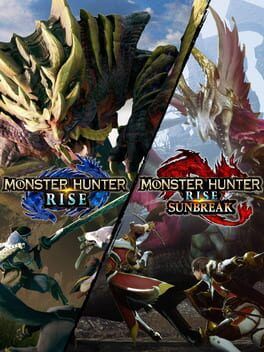

Monster Hunter Rise has passed 20 million sales worldwide, extending Capcom’s Switch-to-PC success story years after launch and amid continued franchise expansion.
Image: IGDB
Store links: Monster Hunter Rise on Steam
Monster Hunter Rise reaches 20 million, with one sales-data wrinkle
Monster Hunter Rise has passed 20 million units sold worldwide, according to Capcom’s latest public celebration of the milestone. Gematsu reports that Capcom announced the figure this week, while RPG Site also cites Capcom’s Monster Hunter social channels as confirming 20 million copies sold across all platforms. Capcom’s English message, quoted by RPG Site, says the game has “hit the magnificent milestone of 20 million copies sold” and thanks “hunters of Kamura” alongside commemorative artwork.
That is the concrete news: Monster Hunter Rise 20 million sales is now the latest public marker for Capcom’s 2021 hunt. The tension is that sales reporting around the milestone is not perfectly clean. Gematsu and RPG Site both say Rise was last reported at 19.3 million units as of June 2026, which makes this a roughly 700,000-unit gain in the months since that update. Nintendo Life, however, also states that Capcom’s official website lists base-game sales at 22.40 million units as of June 30, 2026. That figure conflicts with the new 20 million announcement and with the 19.3 million June figure cited by Gematsu and RPG Site. Based on the provided sources, the discrepancy cannot be fully resolved, so the safest reading is to treat Capcom’s current celebratory 20 million announcement as the confirmed milestone while noting that at least one outlet’s comparison figure appears inconsistent with the rest of the available reporting.
A Switch-first hunt that kept finding new arenas
The Monster Hunter Rise milestone lands because the game did not stay frozen in its original launch moment. OtakuKart reports that Rise first launched for Nintendo Switch in March 2021, while RPG Site notes that it debuted on Switch and was followed by a PC port soon after. Gematsu’s platform listing now includes PlayStation 5, Xbox Series, PlayStation 4, Xbox One, Switch, and PC via Steam and Microsoft Store.
That platform path matters because Rise began life as a Nintendo hardware showcase, built around quick hunts, vertical movement, and a combat tempo that felt tuned for short sessions without losing the series’ weapon discipline. The Wirebug system gave battles a sharper rhythm than the older, heavier village-to-field loop, and the game’s set pieces were designed around sudden aerial recovery, repositioning, and fast monster pressure. Its commercial life, though, became broader than its Switch identity. PC brought the game to another major audience, and Nintendo Life notes that Xbox and PlayStation versions followed in 2023.
For Capcom, that staggered rollout created multiple sales beats instead of a single launch spike. The first wave served Switch players, the PC version opened a second front, and the later PlayStation and Xbox versions let Rise re-enter the conversation for players who skipped the hybrid-console release. The 20 million figure is the result of that layered availability as much as the original launch.
Sunbreak helped turn a hit into a long-running platform
The sources do not provide a separate sales number for Monster Hunter Rise: Sunbreak, but they do connect the expansion to the base game’s sustained momentum. Nintendo Life writes that base game sales were likely bolstered over the years by the Sunbreak expansion, and OtakuKart similarly says Sunbreak helped maintain interest in the title. Those are outlet assessments rather than a fresh Capcom breakdown, but they fit the visible structure of Rise’s tail: an action RPG with a major expansion can keep selling because the full package grows more attractive over time.
Sunbreak matters to the story because Monster Hunter is built on mastery. A hunter does not finish a weapon’s arc after one flagship monster or one credits roll. The loop is about learning openings, building gear, and returning to fights with a sharper sense of timing. An expansion gives that loop a new summit. It adds a reason for lapsed players to come back and gives new buyers a clearer path into a fuller version of the game.
Capcom’s own milestone message, as quoted by Nintendo Life, leans into current availability rather than nostalgia alone. The company thanked hunters for their support and said sales are underway at various digital stores, encouraging players who have not started yet to “debut as a hunter.” That framing positions Rise as an active catalog title, not an archived release being remembered only because of a round number.
Capcom’s Monster Hunter sales strategy is increasingly about the tail
Monster Hunter Rise sales now sit in the same conversation as Capcom’s larger franchise machine. Nintendo Life describes Monster Hunter as a major Capcom powerhouse and notes that the company’s current focus is Monster Hunter Wilds, while still taking time to celebrate Rise. OtakuKart reports that Wilds had sold 11.8 million units as of June 2026, while Nintendo Life cites an earlier update saying Wilds had moved more than 11 million since its 2025 arrival. The exact Wilds figure differs slightly between those reports, but both place it as another substantial entry in the series.
The important pattern is Capcom’s ability to keep older Monster Hunter releases commercially alive while new ones take the spotlight. Rise’s 20 million milestone arrives years after its Switch debut and after the release of newer franchise content. That is a different shape from a front-loaded launch that fades after a quarter. It is a long-tail action game model powered by ports, expansions, discount cycles, and a combat system that remains legible years later because the fantasy is mechanical as much as cinematic.
There is also a practical business incentive here. Once the expensive work of creating Rise, porting it, and supporting Sunbreak is done, every new platform audience and sale event can extend the return. Capcom’s reminder that digital-store sales are ongoing, quoted by Nintendo Life from the company’s message, underlines how catalog pricing can keep the hunt moving after the launch-window roar has passed.
The platform picture still leaves unanswered questions
Rise is widely available, but the current reporting also shows gaps that readers are already noticing. Gematsu lists the game on PS5, Xbox Series, PS4, Xbox One, Switch, and PC through Steam and Microsoft Store. Nintendo Life’s comments section includes a reader complaint that there is still no Switch 2 version of Rise, which is community reaction rather than an official signal. None of the provided sources report a Switch 2 upgrade, enhanced edition, or dedicated port for Monster Hunter Rise.
That absence is more noticeable because Nintendo Life reports that Monster Hunter Wilds is planned for Switch 2 in December, with an expansion called Ascendance following in 2027. OtakuKart gives a more specific Wilds Switch 2 date of December 4, 2026. Those details place Capcom’s forward-looking Nintendo strategy around Wilds rather than a newly announced Rise refresh.
For players deciding whether to wait, the confirmed information points in one direction: Rise is already available on current listed platforms, and Capcom is promoting digital-store sales now. A Switch 2 version of Rise is not confirmed in the provided material. If a player wants Rise specifically, especially for its faster hunt pacing and Sunbreak-supported endgame, the sources support buying on one of the existing platforms rather than waiting for an unannounced version.
A milestone built on pace, portability, and reach
Monster Hunter Rise was always a different kind of hunt from Monster Hunter: World. The provided sources do not offer review scores or technical comparisons, so the sales story should not be inflated into a fresh critical verdict. Still, its commercial arc is clear. Rise launched first on Switch, expanded to PC, later reached PlayStation and Xbox, and kept selling through Sunbreak, discounts, and broad storefront availability. Capcom’s announcement confirms that this path has carried the game to at least 20 million units worldwide.
The milestone also reinforces how well Rise’s design matched its platform journey. On Switch, its snappier combat cadence and portable-friendly mission structure gave Capcom a major Monster Hunter presence on Nintendo hardware. On PC and consoles, the same structure became a widely accessible catalog entry for players who wanted hunts with less sprawl and a quicker strike-and-recover rhythm.
The open question is not whether Monster Hunter Rise was successful. Capcom has answered that with the 20 million figure. The question is how long Capcom can keep stacking these overlapping Monster Hunter audiences, with Rise still selling, Wilds occupying the present spotlight, and future platform releases extending the series’ reach. For now, Rise stands as one of the clearest examples of Capcom Monster Hunter sales strength across Switch and PC, then far beyond them.