
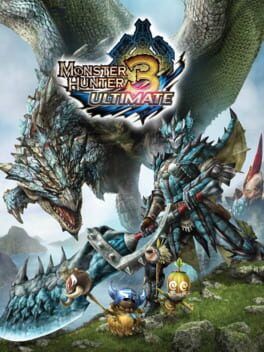

Astalos, Quematrice, Goss Harag and Riftborne Khezu headline Monster Hunter Now’s Season 8, but the real shake up is Base Defense and new weapon lines. Here is how they change the daily loop, builds and social play compared to earlier seasons.
Season 8 overview: a more structured, social Monster Hunter Now
Season 8, Interdimensional Defenders, is not just a content drop for Monster Hunter Now. With four new monsters and the introduction of Base Defense events at exploration bases, it quietly rewires how you plan walks, schedule hunts with friends, and even which weapons you invest in long term. Earlier seasons largely revolved around rotating spawn pools and short, localized events. Season 8 adds a semi raid style layer to the map that finally makes local clustering of hunters feel intentional rather than incidental.
The headline additions are Astalos, Quematrice, Goss Harag and the variant Riftborne Khezu. Alongside them come new weapon trees and armor skills themed around elemental burst damage and sustained uptime, tuned to shine in the multi wave Base Defense mode.
The new monsters and what they bring to the meta
Astalos, Quematrice, Goss Harag and Riftborne Khezu are not just four more entries in the monster log. Each nudges the meta toward sharper elemental matchups and more deliberate gearing, which matters far more now that Base Defense asks you to chew through multiple monsters in a short window.
Astalos is the obvious star. In the main series, it is a hyper aggressive flying wyvern that swings between grounded tail slams and lightning charged dives. In Monster Hunter Now it fills a similar role, forcing players to respect tracking and positioning on a touch screen. Its patterns are extremely punish heavy, so skills that reward consistent perfect evades and long strings of hits become more attractive. Early impressions from preview coverage suggest Astalos gear leans toward high raw with strong thunder elements and a perk that spikes damage when you avoid getting hit for a period of time, which slots perfectly into hit and run play in Base Defense.
Quematrice is the wild card for the mobile audience. It brings mixed elemental pressure and lingering effects that punish stationary play. For a map based game where you often fight on poor signal or in awkward real world locations, a monster that pressures you to stay mobile increases the value of lighter weapons and ranged options. Quematrice’s drops are expected to power a fire or multi element line that offers strong status application and sustained damage, a natural fit for clearing the earlier waves of a Base Defense run so that the party can save burst options for the finale.
Goss Harag rounds out the trio as a bruiser that demands respect for its enraged state. In the mainline games, shifting between ice swords and body slams, Goss Harag creates distinct windows of safety and spike danger. In Now that design pushes players to read its tells and commit to short, heavy damage openings rather than mindless face tanking. Weapons and armor from Goss Harag are positioned around ice element and survival tools, making them a natural counterpick for fire leaning seasonal rotations and for specific Base Defense patterns where ice coverage is lacking.
Riftborne Khezu is the signature twist of the season. As a riftcharged variant of Khezu, it doubles down on electric pressure and introduces a more dramatic visual identity that fits the “interdimensional” theme. Where normal Khezu already encouraged respect for line of sight and spacing, Riftborne Khezu likely adds more punishing ranged attacks and stronger shock zones. In Base Defense terms, it functions as a capstone encounter that demands coordination and good loadout planning. Its materials are tied to later stage upgrades in the thunder and raw damage weapon lines, effectively making Base Defense a progression gate if you want to fully unleash the season’s best gear.
New weapon lines and skills: built for wave based hunts
Season 8’s weapon trees are clearly tuned with Base Defense in mind. Instead of simply adding one more slightly higher attack option, the new lines are shaped around uptime, precision and elemental exploitation over the course of several encounters back to back.
Weapons derived from Astalos parts emphasize thunder damage and sustained aggression. They reward staying in the pocket without taking hits, through perks that increase damage as you maintain a combo or avoid damage for a span of time. This is a sharp break from earlier seasons where high raw and simple comfort skills were often enough. In Base Defense, a player with Astalos gear can snowball damage over multiple waves, provided they play cleanly.
Quematrice weapons lean into status and elemental layering. Their strengths are not necessarily highest single hit numbers but rather the ability to chew through mixed resistances, making them ideal first pick loadouts when you do not know the exact wave order. Shot types and attack patterns encourage constant motion and opportunistic damage, which blends well with the chaos of several hunters converging on a single Base Defense point.
Goss Harag unlocks potent ice weapons that finally give newer players a clear path into top tier ice builds without needing a deep legacy inventory. These weapons are tuned around punishing openings and exposing elemental weaknesses on specific monsters that appear frequently in winter and late season rotations. Combined with survival leaning armor skills, they enable front line players to soak more aggression in Base Defense while still contributing competitive damage.
Riftborne Khezu’s weapon line is the capstone. Its upgrades often sit behind higher tier materials you can realistically only secure through repeated Base Defense participation. In exchange, you get some of the strongest thunder or hybrid builds in the game at the moment, with traits that spike damage against riftcharged or enraged monsters. The message is clear. To stay current in the meta, you are gently pushed toward engaging with the new cooperative feature.
Compared to earlier seasons, where the best in slot choices often came from standard field hunts or timed event rotations, Season 8 ties your progression more explicitly to the new seasonal systems.
Base Defense: exploration bases become real gathering hubs
Base Defense is the structural heart of Interdimensional Defenders. Exploration bases in Monster Hunter Now were previously mild conveniences. They were places you might check in on a commute, grab some items, then move on. Season 8 rewrites that role. Bases now periodically spawn Base Defense events, multi wave showdowns where riftcharged monsters pour in and local hunters are encouraged to converge.
The practical difference is significant. In earlier seasons, your daily loop was built around sweeping your usual route, culling whatever large monsters spawned, then maybe planning around a themed spawn hour or a weekend event. Interaction with other players was opportunistic. You might see another hunter on the same Anjanath, but there was no game wide reason for everyone in a neighborhood to meet at one exact spot at one exact time.
Base Defense changes that. When an event goes live at an exploration base, it creates a timed focal point. Players nearby receive the prompt and have a shared incentive to move there if they want Riftborne materials, extra rewards or bonus carve opportunities. The mode runs through multiple monsters back to back, often showcasing the new season roster. Success depends on enough hunters participating and on loadouts tuned for sustained, low downtime damage rather than one and done nukes.
From a design point of view, this is a deliberate push toward scheduled, location based cooperation, much closer to raid hours in other location games. It makes owning an often visited base near your home, work or transit line much more important. For Niantic and Capcom, it also encourages players to check the app more often across the day to see whether a nearby base is “under attack.”
How Season 8 reshapes the daily loop
When you strip it down to behavior, Interdimensional Defenders asks you to adopt a more cyclical rhythm.
On a typical day in an earlier season, most players would open the app, scan the area, tag whatever large monsters were in reachable distance, then close the game until a specific personal goal came up, such as farming one monster for a weapon tree or clearing a research task. Events were mostly top level spawn changes rather than deeply local triggers.
With Season 8, your daily loop now includes routine checks on exploration bases along your path. You are not just asking, “Is there a Diablos nearby?” You are also asking, “Is there a Base Defense starting soon, and if so, what element do I need?” You plan your weapons more around multi encounter throughput. Potions and paintballs become resources you want to preserve for those multi wave events where the time pressure is higher and rewards more concentrated.
This has a subtle knock on effect on pacing. Instead of a smooth, constant trickle of monsters, you now experience spikes of intensity when a Base Defense window opens. Hunters detour slightly off routes to participate, much like detours for raids in other Niantic titles, then drop back into lighter, solo focused play between events.
Over the span of the season, that structure pairs neatly with the new weapon trees. Early weeks will see players investing in starter versions of Astalos, Quematrice and Goss Harag weapons to get their first viable Base Defense builds. Mid and late season play then shifts into more targeted Riftborne farming as groups refine their teams and push for final upgrades.
Social play and community impact
Season 8 is also the first time Monster Hunter Now really leans into shared, physical space as a core design pillar rather than a background fact. Previous seasons encouraged co op via shared monster instances and group hunts but did not give you many reasons to coordinate time and place with strangers.
Base Defense creates predictable rendezvous points. Communities can now say, “We meet at this exploration base during the evening window,” just as Pokémon Go communities long ago learned to meet at gyms for raids. Combined with the difficulty curve of Astalos and Riftborne Khezu, that pushes casual players to seek out local groups or online communities so they have adequate support.
The social meta also links directly to builds. A group with several strong Goss Harag weapons may volunteer to front line during particularly rough waves, while Astalos weapon users focus on uninterrupted damage. Quematrice users can help clear out more erratic monsters that give newer players trouble. In effect, the new weapon lines and monster patterns create soft roles in a game that otherwise treats everyone as generic damage dealers.
Compared to earlier seasons where social play was often “nice to have,” Season 8 makes it tangibly rewarding. Missing Base Defense means slower access to Riftborne materials and the highest tier elemental builds. Participating with others not only feels better but is mechanically optimal.
What Interdimensional Defenders means for Monster Hunter Now’s future
Interdimensional Defenders feels like a template for how Monster Hunter Now might operate going forward. New monsters and weapon lines are still the marketing hook, but they are increasingly woven into bespoke seasonal systems that reshape how and when you play.
The four headline monsters deepen elemental and mechanical diversity. The associated weapon lines tie progression to seasonal participation rather than pure grind on the open map. Base Defense, meanwhile, turns exploration bases into true social anchors, bringing the series’ cooperative DNA closer to the real world.
If Capcom and Niantic can iterate on this framework with future seasons, adding more variety to Base Defense patterns, rotating riftcharged variants and continually updating elemental gear, Season 8 may be remembered not just for introducing Astalos and Goss Harag, but for finally making Monster Hunter Now feel like a living, seasonally evolving hunting ground rather than a static monster rotation dressed in seasonal banners.