
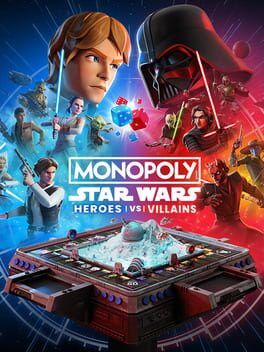

How Ubisoft and Behaviour Interactive are rebuilding Monopoly into a hero‑vs‑villain Star Wars showdown, and what it says about the new digital life of branded board games.
Monopoly and Star Wars have crossed paths plenty of times on coffee tables, but Monopoly: Star Wars Heroes vs. Villains is the first time the mash‑up looks like something fundamentally new. Rather than a simple reskin, Ubisoft and Behaviour Interactive are rebuilding the rules around team play, abilities and cinematic Star Wars moments. It is closer to a light tactical arena game wrapped around a board than a straight port of the Hasbro classic.
A classic board reimagined as a team battleground
At a glance the layout is familiar. You still circle a square board, roll dice and move a token across spaces themed after locations from across the saga, from Tatooine and Hoth to Coruscant and beyond. But beneath that surface, Behaviour is leaning into what digital design can do with Monopoly’s bones.
Matches are built around 2v2 and 3v3 teams, with one side fielding heroes and the other villains. Instead of four individual players quietly hoarding properties, you coordinate with your squad to wrest control of the galaxy. Properties act less like isolated investments and more like lanes to contest, a structure that makes every roll potentially set up a future clash between teams.
The shift to fixed teams is doing a lot of work. Traditional Monopoly tends to end in a slow economic grind where one player snowballs. Here, both coordination and timing matter more than raw ownership. A teammate’s well‑timed ability or dice challenge can flip momentum, and even a losing player can still contribute by setting up combos or drawing fire in key zones of the board.
Heroes, villains and a light hero‑shooter brain
The biggest departure from classic Monopoly is the emphasis on playable characters. Instead of anonymous tokens, you pick a specific hero or villain, then build a squad that leans into synergies. Ubisoft highlights Luke Skywalker, Princess Leia, Darth Vader and Darth Maul, with more faces expected from across the films and series.
Each character comes with a unique kit that influences how you play the entire match. A support‑leaning hero might manipulate dice challenges or bend certain rules on GO spaces, while an aggressive villain could improve the payoff for landing on contested locations or increase the pressure when opponents pass through your side of the board. The result is a ruleset that feels closer to a hero brawler translated into board game form.
The board itself reacts accordingly. Special events can trigger when you loop past GO, tilting the state of the match. Dynamic dice challenges can create mini duels as heroes and villains clash over lucrative properties or key sets, injecting bursts of direct interaction into what is traditionally a fairly solitary race to buy everything first.
Behaviour’s hand in making it feel like a video game first
Behaviour Interactive has quietly built a reputation for systems‑driven multiplayer through Dead by Daylight and a long tail of content updates and balance patches. That experience matters when you turn Monopoly into a competitive team game. Simple economic dominance is easy to design; an exciting match that stays tense for 20 to 30 minutes, across multiple platforms and input methods, is not.
What we have seen so far suggests Behaviour is steering away from lethal complexity and toward readable spectacle. Cinematic camera sweeps, animated abilities and chunky plastic‑style models give each action more weight than dropping a house model on a flat board. It looks tactile in a way that the static original box game never could, but it also signals a focus on moments of friction rather than pure math.
If that balance holds, Heroes vs. Villains could sit in an interesting middle ground. It might be approachable enough for family game night on Switch, yet layered enough that people start talking about preferred team comps, optimal property routes and which hero pairs best with which villain on the opposite side.
Star Wars and Monopoly’s crossover calculus
On paper, Monopoly plus Star Wars looks almost too obvious. Both brands are omnipresent, both skew toward broad age ranges and both lean heavily on recognition. The risk is that long‑time players tune out yet another logo swap, while new audiences dismiss it as disposable tie‑in software.
Ubisoft’s pitch tries to sidestep that fatigue by treating this as a Star Wars battle of ideals played through Monopoly’s logic, rather than Monopoly with Star Wars wallpaper. Heroes and villains are not just art on cards; they directly affect the flow of play, and the tug‑of‑war gives each roll narrative stakes.
It also helps that the game is skipping the usual mobile‑only trap and launching as a full multiplatform title across PC, PlayStation 5, Xbox Series hardware and both Switch generations. That framing makes Heroes vs. Villains feel less like a licensed afterthought and more like an experiment in how far you can push a mass‑market board game in a digital space without losing what makes it approachable.
Branded board games are quietly thriving digitally
Heroes vs. Villains is arriving in the middle of a quiet resurgence for digital board‑game adaptations. Games like Monopoly Plus, Risk, Catan and Ticket to Ride have transitioned from straight ports to more curated digital experiences, sometimes with progression systems, unlockable cosmetics and, increasingly, new rulesets that would be harder to manage at a real table.
Star Wars sits at the heart of this trend. Fantasy Flight’s X‑Wing and Armada, the various digital CCGs and multiple LEGO Star Wars titles have all shown that fans will embrace reinterpretations of familiar rules if the fantasy is strong and the design respects their time. Heroes vs. Villains is tapping the same well, but using Monopoly as the chassis.
The broader strategy from publishers like Ubisoft is to turn brands into platforms. A flexible digital Monopoly engine can be re‑themed and retuned, but a fully featured Star Wars edition that experiments with team combat and character powers doubles as a test bed. If players show up for a Star Wars‑flavored tactical Monopoly, that opens the door for other branded twists that treat the board as a battlefield instead of a spreadsheet.
Is this the future of licensed family games on console?
The early footage of Monopoly: Star Wars Heroes vs. Villains points to a future where licensed family titles are expected to carry at least a hint of modern multiplayer design. Shared objectives, complementary roles, bursty moments of direct conflict and a match structure that supports both couch co‑op and online play are all baked into this release.
Whether it lands will come down to execution. If the hero and villain kits feel meaningfully different, if events and dice challenges keep matches unpredictable without devolving into chaos, and if cross‑platform matchmaking holds up, Ubisoft and Behaviour may have found a way to give Monopoly and Star Wars new digital life at the same time.
For now, it is one of the more curious licensed projects on the horizon, a familiar board turned into a compact galactic arena where Free Parking is less important than who is standing on it.