
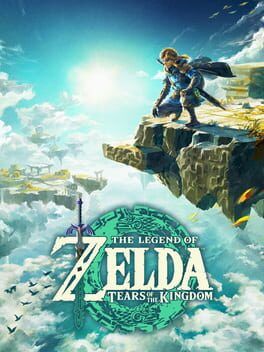

Monolith Soft’s new Zelda work archive and interview material pull back the curtain on how the Xenoblade studio supports Nintendo’s biggest projects, from world-building Breath of the Wild’s open fields to refining Ganondorf’s allure in Tears of the Kingdom.
Monolith Soft has quietly been one of Nintendo’s most important support studios for more than a decade, but only now is the scale of that work coming into focus. With the launch of a new Japanese website dedicated to its history with The Legend of Zelda, plus fresh interview material about Tears of the Kingdom’s characters, fans finally have an official window into how the Xenoblade team helps build Hyrule.
The site outlines Monolith’s support on Skyward Sword, A Link Between Worlds, Breath of the Wild and Tears of the Kingdom, presenting artwork, comments and project breakdowns that highlight its fingerprints on Nintendo’s flagship series. It is not a recruitment flyer or a marketing beat for a new game. Instead, it reads like a curated archive, a way for the studio to stake a quiet claim in Zelda’s modern identity while still respecting Nintendo’s broader branding.
For fans who track Nintendo’s development ecosystem, this matters. The new archive confirms, in one place, what has long been pieced together through credits and interviews. Monolith Soft is not just “helping out” on Zelda. It is regularly embedded in the biggest projects, especially when those games demand large, interconnected environments and complex narrative framing.
Breath of the Wild was the turning point where Monolith’s specialties were impossible to miss. Nintendo EPD set the vision for a systemic, physics-driven open world that felt hand-crafted instead of procedural. Monolith Soft, already experienced with gigantic, layered landscapes from Xenoblade Chronicles, joined to help fill that world with believable landforms, traversal routes and vistas that guide the player’s curiosity. The new Zelda archive reinforces that this collaboration continued and deepened into Tears of the Kingdom, where the challenge expanded vertically into the sky islands and the Depths.
Monolith’s world-building work in Tears of the Kingdom is not just about surface area. Hyrule’s layout subtly nudges players along arcs of discovery, from the first sight of a ruined landmark to the realization that it anchors a major quest line, or connects to an underground chasm. That kind of environmental storytelling is straight out of the Xenoblade playbook, where sweeping zones double as narrative beats and character backdrops. By contributing to layout and environmental design, Monolith helps make sure that Hyrule supports Nintendo’s puzzles and combat while also feeling like a coherent, lived-in place.
The new interview material around Ganondorf, surfaced alongside the site, pushes that influence into character work as well. Staff at Monolith Soft talk about the “alluring charm” of Tears of the Kingdom’s Ganondorf, framing him not just as an ancient evil but a presence that commands attention. His design, posture and expressions had to communicate power and menace, but also charisma. Within Nintendo, those choices are always guided by the core Zelda team, yet Monolith’s track record with expressive character work and cinematic framing in Xenoblade makes it a natural partner for these kinds of villain revivals.
Tears of the Kingdom’s Ganondorf feels like the most fully realized version of the character in years, and the archive emphasizes that this did not happen in isolation. From the shape of his silhouette to the way cutscenes linger on his face, there is an attention to staging and mood that reflects Monolith’s broader strengths. When you connect that with their environment work, you get a clearer view of how Monolith acts as a multiplier for Nintendo’s ideas, turning broad character concepts into moments that land emotionally.
What makes the new Zelda-focused website particularly interesting is how transparent it is about Monolith Soft’s support role. It does not attempt to reframe Zelda as a Monolith series, nor does it overstate contributions. Instead, it positions the studio as a specialist unit inside the Nintendo ecosystem, one that can be deployed on projects that need intricate maps, cooperative open world design and robust cinematic support. Skyward Sword and A Link Between Worlds may not have the same open-air sprawl as Breath of the Wild, but the archive’s inclusion of those titles hints that Monolith’s help predates Hyrule’s leap into full open world territory.
For fans, this adds another layer to how we read Nintendo’s credits and project timelines. When Monolith Soft spins up major support for Zelda, it can affect how much bandwidth the studio has for Xenoblade or new IP. Conversely, a new hiring push or tech initiative at Monolith can be an early sign that Nintendo is preparing another ambitious, exploration-heavy Zelda project. The new archive effectively turns the studio’s history into a public data point, a way to better understand how Nintendo allocates its internal talent.
It also highlights how modern Nintendo relies on cross-pollination between teams. Zelda’s systemic freedom owes a debt to the experimentation in games like Xenoblade X. Monolith’s experience streaming large areas on limited hardware proved valuable for Breath of the Wild’s seamless Hyrule. In Tears of the Kingdom, where Ultrahand and Fuse created even more potential strain on the engine, having a studio used to building dense, multi-level environments was a strategic advantage.
The Ganondorf interview content speaks to another kind of cross-pollination: tone and characterization. Xenoblade often leans into operatic drama, with big personalities and theatrical villains. Tears of the Kingdom tempers that style with Zelda’s more restrained storytelling, but you can still feel a shift in how antagonists are presented. Ganondorf is not just a distant calamity; he is an active on-screen force whose presence reshapes the mood of scenes. Monolith’s archive and comments give fans a way to trace that evolution instead of treating each Zelda as an isolated production.
In practical terms, the site is a curated museum of Monolith Soft’s Zelda era. It collects art, project notes and official acknowledgements that will likely become reference material for fans, historians and content creators. For those deep into the minutiae of Nintendo’s development structure, it validates the studio’s role as a backbone for large-scale projects. For more casual players, it quietly educates them that the label “Nintendo” on the box often represents a network of internal and affiliated teams.
Looking ahead, the existence of this archive inevitably feeds speculation. If Monolith is highlighting years of Zelda support work, does that signal involvement in the series’ future on whatever comes after Switch? The articles covering the site’s launch are careful to note that nothing is confirmed, and the archive itself remains focused on past and present contributions. Still, Nintendo rarely greenlights public-facing material like this without a reason. At minimum, it solidifies Monolith Soft’s public identity as more than just the Xenoblade studio.
For fans tracking how Nintendo’s biggest games come together, that is the real takeaway. Monolith Soft’s Zelda archive and interview material give shape to what used to be invisible labor: the teams that sculpt the spaces we explore and refine the villains we remember. Every time you glide over a perfectly framed valley in Tears of the Kingdom or feel the weight of Ganondorf’s glare in a cutscene, you are experiencing the product of that collaboration. Now, for the first time, there is an official place to see those contributions acknowledged and preserved.