
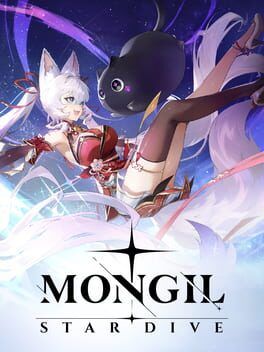

Netmarble’s new creature-collecting ARPG Mongil: Star Dive has finally landed on mobile and PC. Here is how its Monster Taming DNA, cross-platform rollout, and free-to-play design look on launch day – and whether it has the hooks to be a true breakout hit.
Netmarble has finally pushed Mongil: Star Dive out of pre-registration purgatory and into live service reality on iOS, Android and PC. The question now is whether this glossy spin on the Monster Taming universe can claw out space in an overcrowded free-to-play market or quietly settle into niche gacha rotation.
A Monster Taming offshoot built for global play
Mongil: Star Dive is positioned as a creature-collecting action RPG that branches off from the Korean Monster Taming RPG series. Instead of a traditional turn-based structure, it sends you into real-time fights with a three-character squad while a familiar element for series fans, the Monsterling system, handles the collectible side.
That lineage matters. Monster Taming never broke big outside its home territory, so Star Dive is effectively a soft reboot for the brand aimed at a global audience. Where the original leaned more into classic RPG pacing, Star Dive tries to condense that identity into snappy sessions that fit mobile play and cross over cleanly to PC.
Cross-platform launch: friction and opportunity
On launch week, Star Dive lands day-and-date on iOS and Android with a downloadable PC client via the official site. Netmarble is pointing players toward pre-downloads and a shared launch window, and early coverage highlights modest PC requirements: roughly 20 GB of storage, with 50 GB recommended to leave room for patches.
In practice, the rollout feels closer to a mobile-first release with a PC companion rather than a truly even, controller-ready cross-platform push. You are downloading a bespoke client instead of grabbing it on Steam or the big PC launchers, which limits the game’s organic discovery on desktop. For a title that wants to be a global monster-collecting fixture, the lack of a major store presence may cap how many curious players casually try it on PC.
The flip side is that Netmarble has one unified ecosystem to tune and monetise. If account linking between mobile and PC holds up under launch traffic, the ability to grind on a laptop at home and clean up dailies on a phone during a commute gives Star Dive the kind of lifestyle flexibility that Genshin Impact and Honkai: Star Rail have already proven players will commit to.
Combat that lives or dies on switching
Where many monster-collecting games still rely on menu-driven combat, Mongil: Star Dive is all about real-time party flow. You field three characters at once and swap between them to dodge, burst and layer skills. Pocket Gamer’s early look highlights the feel of tag-team chains as the core pleasure loop, with your collected Monsterlings acting as passive and active force multipliers.
In short bursts, that works. The immediate hook is less about slowly building a perfect elemental counterparty and more about weaving abilities together in motion. If Netmarble can keep encounter design varied enough that switching and timing matter, the combat has a chance to stand apart from more static autobattle-heavy gachas that dominate app store charts.
The catch, even on day one, is that action-heavy designs live or die on responsiveness. Touchscreen controls, latency and framerate can quickly flatten an otherwise stylish system. Launch impressions point to a solid, if not flawless, performance profile on mid-range devices, but it will take a few content patches and events before we know whether high-end boss design leans into skill expression or gets tuned around overpowered, limited characters.
Monsterlings and the collection loop
Star Dive’s collection hook is not just about pulling big-name characters. The Monsterling system carries over from Monster Taming as the spine of progression. These creatures function as both companions and stat engines, bolstering your party’s abilities while adding an extra layer of fiddly optimisation for fans who like to min-max.
Early use suggests Monsterlings are less about Pokémon style identity and more about buildcraft. You are not just asking which cool creature to bring, you are asking which combination of Monsterlings meaningfully changes your team’s rhythm. That is a smart angle in a space where so many games have converged on the same elemental rock paper scissors ideas.
This also factors into how the gacha feels. DroidGamers’ reroll guide makes it clear that Netmarble does not really want you burning through accounts for perfect day-one pulls. You need an email from the moment you start, only one account is allowed per address, and account deletion has a long cooldown. Common reroll tricks like Gmail address variations do not work, so determined optimisers have to juggle multiple real email accounts if they want to chase ideal starts.
In practice, that kind of friction suggests confidence in early roster balance. The same guide and early impressions describe lower rarity characters and more common Monsterlings as usable and viable. If that holds, Star Dive’s collection meta might avoid the trap where only a tiny handful of five-star heroes matter, with everyone else destined for the bench.
Free-to-play realities on launch day
From moment one, Mongil: Star Dive is plainly a service game. The launch period already includes redemption codes for bonus resources and a free character, Francis, for new players. That is a tried-and-true way to soften the start for newcomers and give social channels something to broadcast as players pile in.
The more important launch reality is that the game’s monetisation posture is visible but not overbearing at low levels. Pulls, upgrade materials and time-savers are all in place, but the absence of an easy reroll loop lowers the pressure to spend heavily on day-one banners. For now, the path of least resistance is to pick a starter setup you like and play, rather than treating the prologue as a casino lobby.
Whether that holds as content ramps up is the big unknown. Netmarble’s catalogue ranges from fair-to-firm on monetisation, and monster-collecting RPGs thrive on limited banners, exclusive units and power-crept options. The first seasonal event and the first premium-exclusive character will tell us far more about Star Dive’s long-term temperament than the relatively generous launch bonuses.
What actually sets Mongil: Star Dive apart?
At launch, three things genuinely help Mongil: Star Dive stand out in a crowded free-to-play scene.
The first is focus on real-time, squad-based action in a creature-collecting wrapper. It feels closer to an action RPG that happens to use monsters as modifiers than a pure monster battler. That blend reaches toward fans of character action games and classic pet battlers at the same time.
The second is its Monster Taming heritage. For long-time fans, Monsterlings are more than just another system, they are a connective tissue to a series with its own history and aesthetic. For new players, that history is invisible, but it gives Netmarble a catalogue of concepts, locations and creatures to draw from as it builds out events and expansions.
The third is its cross-device reach. It is trivial to imagine Star Dive quietly finding a stable audience of players who only ever touch it on phones, but the presence of a PC client at least opens the door for streamers, guide creators and community theorycrafters to sit down at a desk and treat the game with more seriousness than they might a purely mobile title.
Those factors add up to a game that feels more distinct at the design level than yet another idle-RPG with auto-questing.
Breakout potential: realistic or long shot?
Looking purely at launch-day reality, Mongil: Star Dive has the ingredients for a solid, sustainable hit. It has sharp presentation, a combat system that rewards paying attention, a collection framework with depth and a cross-platform footprint that fits how people actually play.
What it does not yet have is a clear path to immediate breakout status. The absence of a Steam launch puts a ceiling on PC mindshare right out of the gate, and it is entering a mobile landscape already dominated by established action gachas with years of content and characters behind them.
For now, the most plausible future for Mongil: Star Dive is that of a strong mid-tier live service. If Netmarble can keep reroll-hostile systems while genuinely supporting lower-rarity characters, resist aggressive monetisation spikes and steadily build out the Monster Taming universe with compelling events, there is room for the game to grow beyond its core fandom. If launch generosity gives way to heavy-handed banner design, it risks being remembered as yet another polished ARPG that never quite broke free of its gacha gravity.
In other words, Star Dive has not proven it will be a breakout yet, but it has done enough on day one to earn a closer look over the next few months. Its next moves, more than its trailers, will decide how high it can fly.