
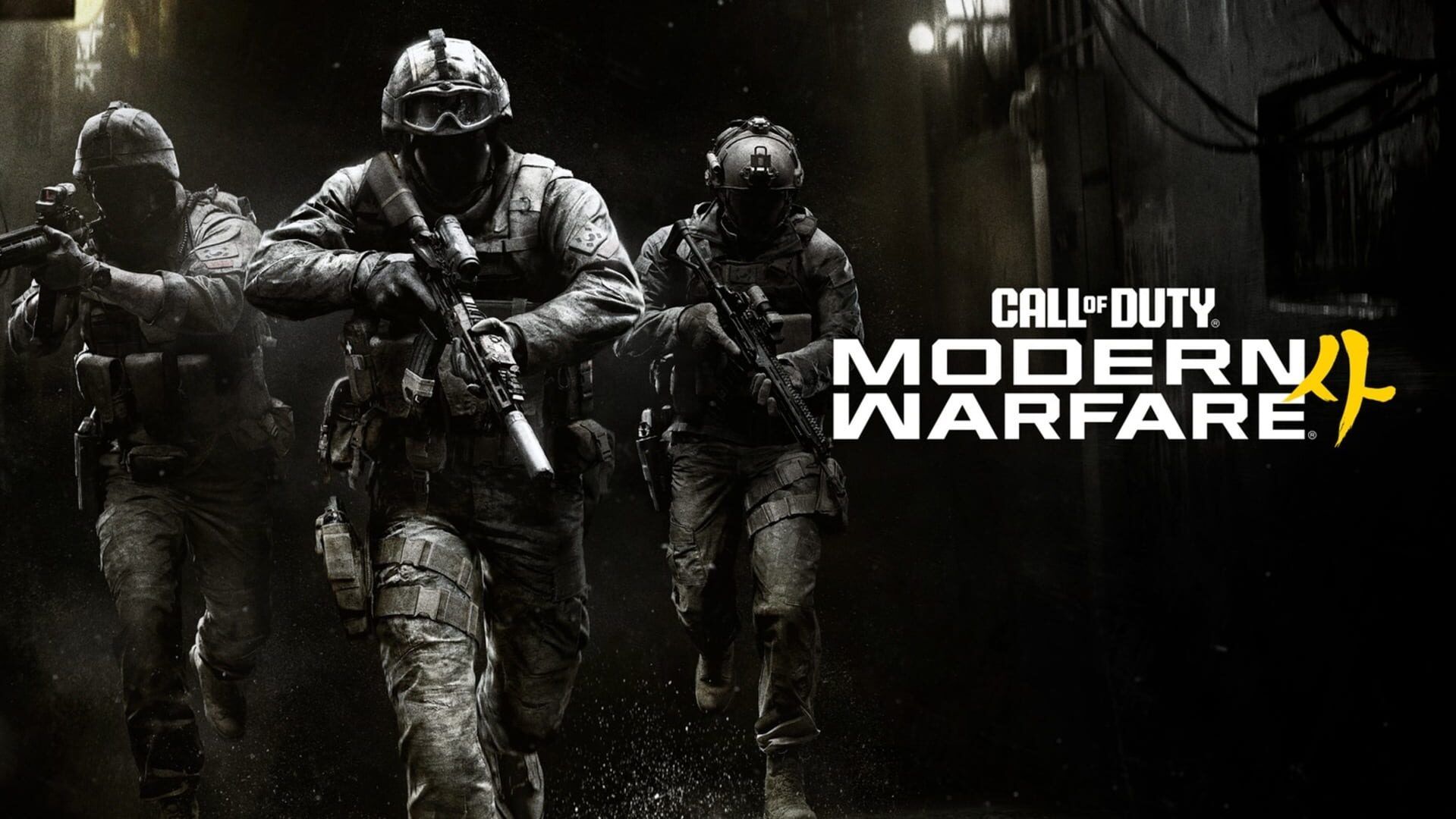

Infinity Ward is turning Call of Duty’s once-experimental DMZ into a full-fat extraction shooter, with persistent progression, a living FOB, and systems shaped directly by player feedback.
Call of Duty’s DMZ is no longer a beta side hustle. In Modern Warfare 4, Infinity Ward is rebuilding the mode into something closer to a full extraction shooter that can stand alongside Escape from Tarkov and The Finals’ Bank It, rather than a loose experiment bolted onto Warzone.
Set in the new Haijin exclusion zone, DMZ in MW4 is pitched as a “full-featured game inside Modern Warfare” with its own progression, economy, and long-term goals. It is still about dropping into a hostile map, looting, and escaping, but now the scaffolding around those matches looks far more like a dedicated extraction game than a traditional Call of Duty playlist.
A new DMZ built on player feedback
Infinity Ward is refreshingly blunt about the first DMZ’s limits. Internally it was always treated as a beta, which meant the team shipped a promising sandbox but never fully committed to the persistence, economy, and narrative structure extraction fans expect.
Player feedback targeted three main pain points. First, that progression felt anaemic and unrewarding once you had a few guns stashed away. Second, that the mode’s identity was muddied by its attachment to Warzone, with too many systems and currencies overlapping awkwardly. Third, that matches lacked a strong sense of purpose outside of a checklist of faction missions.
Modern Warfare 4’s DMZ is the studio’s answer. The team is clear that this is not a “DMZ 2.0” patch but a structural rebuild that keeps the high points of the original while addressing its biggest shortcomings. Almost every headline change answers a complaint from that first run.
Haijin: a tighter, more authored extraction playground
The new DMZ map, Haijin, is a war-scarred nuclear exclusion zone on the border of North and South Korea. Where Al Mazrah sprawled, Haijin is denser and more authored, closer in spirit to Tarkov’s Streets or Reserve than to a standard battle royale map.
Infinity Ward describes Haijin as a free-roam space stitched together from distinct combat biomes. There are rusted industrial yards, half-flooded tunnel networks, military research sites, and pockets of irradiated terrain that gate off high-value loot behind new gear checks. Because AI difficulty escalates dynamically, some routes that feel safe early in a run can turn into kill zones once global alert levels spike.
Narrative also has a stronger presence. You play as an off-the-books CIA asset sent into Haijin to recover experimental weapons tech, but story beats no longer sit in their own menu tab. Instead, missions and cutscenes now fire while you are in a match, pulling your squad towards live objectives rather than static checklists. Infinity Ward talks about DMZ as a “living campaign” that slowly unfolds through your extractions, failures, and discoveries on the map.
Persistence that actually matters
The biggest shift is how DMZ handles persistence. In MW4, nearly everything you do in a match loops back into long term progression. Extracted loot can now be sold, broken down for crafting, or funnelled into a more layered upgrade web.
Operators have inventories that are fully separate from standard multiplayer. Weapons built in Gunsmith can cross over, but they behave more like blueprints inside DMZ’s own economy. Attachments you rely on in 6v6 have to be earned or purchased through DMZ progression, so building out a meta rifle for this mode is its own grind.
A new rarity system for loot gives more texture to runs. Routine supplies like ammo and plates feed daily missions and station upgrades, while rare materials and prototypes are ticket items for crafting high tier equipment or unlocking new story beats. Extracting with a backpack stuffed with high-end components now feels meaningfully different from slipping out with a couple of guns.
Crucially, loss has been tuned around that deeper persistence. Dying in DMZ still stings, but Infinity Ward is trying to avoid the “lose everything, uninstall game” spiral that can turn new players away from Tarkov-style experiences. Certain investments you make back at base are safe, and the most valuable equipment can often be insured, giving you incentives to risk good gear without feeling like every mistake erases weeks of progress.
Your Forward Operating Base is the new endgame
Anchoring all of this is the Forward Operating Base, or FOB, which functions as your persistent home between raids. In the original DMZ, the pre-match lobby was mostly a menu. In MW4 it becomes a tangible space that reflects your progress.
The FOB starts as a bare-bones staging area with a few workbenches and a stash. As you extract more loot and complete operations, you invest in new facilities: weapon labs to tweak and craft guns, medical bays that unlock stronger self-revive and squad-respawn tools, intel rooms that reveal high-value targets or open up side missions on the next deployment.
Each upgrade tier introduces small but meaningful modifiers. Upgrading your comms, for example, might expand your pre-raid briefing with intel on active bounties or AI patrol density. Building out logistics can increase your stash capacity or allow you to tag items for auto-selling after a match. A high-level FOB is both a quality of life boost and a visible trophy case of your time in Haijin.
Infinity Ward positions the FOB as DMZ’s de facto endgame. Once you have a solid stable of guns and extraction routes memorised, optimising your base, chasing the high tiers of each facility, and unlocking raid-like activities becomes the long tail.
Story missions inside live matches
One of the most striking changes from the original DMZ is how story content is delivered. Instead of loading into static, checklist-driven faction missions, MW4’s DMZ injects narrative events into live raids.
You might get redirected mid-run to intercept an enemy convoy carrying a named target, or to infiltrate a research bunker that only opens during a specific weather pattern. Environmental puzzles, like rerouting power through a half-destroyed substation to open a vault, turn pockets of the map into mini-dungeons. Bosses roam or defend key sites, drawing in multiple squads who decide whether to cooperate briefly or gamble on killing each other after the objective drops.
These missions are meant to layer on top of DMZ’s core tension instead of replacing it. You still choose when to commit and when to bail. Chasing story rewards deeper into Haijin while evac windows close behind you is where Infinity Ward sees the best DMZ moments emerging.
A reputation and bounty system that shapes how players behave
One of the sharpest new systems is DMZ’s reputation and bounty layer, which directly addresses how chaotic PvP often felt in the original mode. Feedback from the beta version consistently circled back to one thing: too many firefights felt like pointless ambushes, with no mechanical distinction between squads that hunted players and those focused on PvE.
Modern Warfare 4 tracks your behaviour over time. Players who habitually hunt squads see their reputation shift, and once a threshold is crossed a live bounty can be placed on their heads. Other players are then incentivised to track and eliminate those high-threat operators for extra rewards.
Weekly leaderboards highlight both ends of that spectrum. One board celebrates the most lethal players in Haijin, while another spotlights the top bounty hunters. The aim is to give the mode a social metagame, where notorious squads become known quantities in the community and fights against them feel like events rather than random skirmishes.
This system functions as a light deterrent for mindless KOS behaviour without removing the danger altogether. PvP is still central, but now it is framed within a structure that creates stories and rivalries.
Learning from the original DMZ’s missteps
Infinity Ward repeatedly points to lessons learned from the first DMZ run. That mode launched as a curiosity bundled into Warzone, with a foggy roadmap and inconsistent support cadence. While its mix of PvE and PvP found a passionate audience, players quickly discovered that the economic and progression layers were too shallow to keep up with dedicated extraction shooters.
Modern Warfare 4’s take leans into cohesion. DMZ now has its own progression track, a clearer set of currencies, and rewards that feed back into a singular loop instead of a cluttered tangle of menus. Gunsmith integration is more purposeful, cross-mode unlocks are better signposted, and the FOB gives DMZ a spine that was sorely missing.
Developers also talk about technical and AI learning. The original DMZ’s AI could feel inconsistent, flipping from pushover to aimbot within a single match. In Haijin, AI difficulty escalates more predictably over the course of a run and is tied to in-world states like alarms, reinforcements, and faction hostility levels. This should make the sandbox both fairer and more legible, while still leaving room for brutal late-game firefights when everything goes loud.
Chasing the dedicated extraction crowd
All of this lands in a very different extraction landscape than when DMZ first appeared. Escape from Tarkov continues to define the hardcore end of the spectrum, while games like Dark and Darker or The Finals’ Bank It mode show there is room for more mainstream spins on the formula.
Infinity Ward is not trying to out-Tarkov Tarkov. Modern Warfare has different strengths. Gunplay is snappier, movement is more immediately readable, and time to kill is tuned for quick engagements. The rebuilt DMZ tries to graft the long-term stakes and systemic depth of a traditional extraction shooter onto that familiar Call of Duty feel.
The question is whether those layers will be deep enough to hook players who already treat Tarkov or Hunt: Showdown as hobby games. Persistent FOB upgrades, story-driven raids, and a more cohesive economy are strong signals that Infinity Ward understands what makes extraction loops tick, but the proof will be in how well all those systems hold up after dozens of hours.
At the same time, DMZ’s greatest opportunity might be as a bridge for players who bounced off harsher extraction titles. Shorter match times, clearer objectives, and safety nets like insured gear and base persistence could make Haijin a more approachable on-ramp without sacrificing tension.
A full game inside a game
What is clear from Infinity Ward’s messaging is that DMZ is no longer a side mode fighting for scraps of development time. The team talks about it like a game within a game, complete with its own narrative arc, economy, and endgame grind.
If the studio can deliver on that promise, Modern Warfare 4’s DMZ will not just be a nostalgic return for fans of the original experiment. It could be Call of Duty’s first serious bid to stake out a long-term home in the extraction shooter space, one where squads log in night after night not for a couple of quick matches, but to push their FOB, their stories, and their reputations a little further into the ruins of Haijin.