
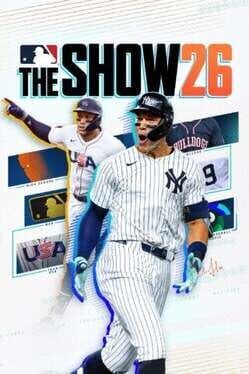

Breaking down the MLB The Show 26 announcement on Nintendo Switch, the Aaron Judge cover, confirmed modes and features, cross‑play expectations, and how this year’s entry can finally nail handheld baseball sim gaming.
MLB The Show 26 is officially stepping back up to the plate on Nintendo Switch on March 17, 2026, and Sony San Diego is clearly treating the portable version as a first class citizen rather than a stripped down side project. With Aaron Judge returning as cover athlete and fresh trailers aimed specifically at Switch owners, this year’s game looks like the most confident take on handheld baseball the series has attempted.
What’s confirmed for the Switch version so far
The announcement and follow up trailers for MLB The Show 26 lock in a few key points about the Switch build. First, this is not a cloud port or a late release. Switch launches day and date with PlayStation and Xbox, which keeps the entire community aligned for opening day and beyond.
Sony is again promising the full suite of core modes on Nintendo’s hardware. That means the single player career grind of Road to the Show, team building in Diamond Dynasty, classic Franchise play, and March to October style seasonal runs are all present. Previous Switch entries have largely maintained parity with console modes, and there is nothing in the 26 announcement that suggests a change in that philosophy. The Switch focused trailer reinforces this by cutting between handheld footage of Road to the Show at bat sequences, fielding plays, and Diamond Dynasty style card reveals.
Visually, MLB The Show 26 on Switch still targets a smooth, playable experience rather than parity with PS5 level fidelity. Early footage shows trimmed down stadium detail and simplified lighting compared to the flagship versions, but animation work and pitcher batter duels appear intact. The goal seems similar to prior years: hit stable performance while keeping all of the systems and features that define the series.
Modes and features that define this year’s entry
The marketing around MLB The Show 26 has focused on refinement and depth more than wholesale reinvention, and that carries over to Switch owners. Road to the Show is being pitched as a more customizable and narrative aware career path. Expect expanded archetypes, more nuanced progression, and additional ways to shape your player’s journey to the majors. Because these systems are not tied to cutting edge visual effects, they translate well to the hybrid handheld.
Franchise mode and March to October are getting attention on the simulation side. Longtime fans have been asking for deeper team building tools, smarter CPU roster moves, and more authentic trade and free agency logic. The early previews and talking points around MLB The Show 26 highlight tuned AI decision making and more control over scouting and player development. If these changes are systemic rather than platform specific, Switch players stand to benefit just as much as those on PS5 or Xbox Series X.
Diamond Dynasty continues to be the live service backbone for the series. The expectation, supported by the trailers and platform list, is that the full online card collecting and competitive ecosystem carries over intact. That includes seasonal programs, ranked play, co op options, and ongoing content drops that mirror the MLB calendar. For Switch users, the real question is not whether these modes exist, but how stable online performance and load times feel compared to other platforms. Past entries have been playable online on Switch, but MLB The Show 26 has a chance to narrow that gap.
Cross play and cross progression expectations on Switch
Since MLB The Show 21 expanded to Xbox, cross play has been a core feature of the franchise, and later entries layered in account based cross progression. Although Sony has not devoted a lengthy blog post exclusively to cross functionality for MLB The Show 26 at the time of the initial announcement, the platform lineup and historical trend strongly point in the same direction as recent years.
The standard setup in modern The Show titles has been simple: you create an MLB The Show account, link it to your platform profiles, and your Diamond Dynasty inventory and progression carry between systems. Cross play matchmaking lets Switch players face off against opponents on PlayStation and Xbox, with input options and connection quality being the main differentiators.
The Nintendo Switch announcement material explicitly positions the game alongside PS5 and Xbox Series X and S rather than as a separate ecosystem. Outside coverage of MLB The Show 26’s launch has already referenced full cross play and cross progression across platforms via an MLB The Show account, mirroring how MLB The Show 25 handled it. Given how central this structure is to Diamond Dynasty and the game’s live service economy, it would be surprising to see a rollback here. Switch players should plan around being part of the unified online population, with progress that can follow them to and from other hardware.
What Aaron Judge on the cover tells us about the marketing
Aaron Judge returning to the cover for MLB The Show 26 is not just a nod to his status as one of baseball’s biggest stars. It is also a statement about how Sony wants to frame this year’s game.
Judge is the face of a big market franchise, a multi time MVP, and the current standard bearer for tape measure power hitting. Bringing him back after his MLB The Show 18 appearance connects the series’ modern, multiplatform era to its PlayStation focused past. It is a safe, marquee choice aimed squarely at the broadest possible audience rather than a breakout rookie or a niche fan favorite.
From a Switch specific angle, Judge is also a smart pick. He is instantly recognizable even to more casual MLB followers who might be picking up a baseball game for the first time on a Nintendo system. When someone sees a Switch case on a store shelf, the towering Yankees slugger on the front immediately communicates that this is the official, big league simulation rather than an arcade spin off.
The timing of the reveal supports that reading. Sony paired the cover announcement and general gameplay trailer with a follow up Switch trailer, keeping Nintendo’s platform visible in the same marketing cycle as PlayStation and Xbox. It suggests that MLB The Show 26 on Switch is meant to feel like part of the mainline conversation instead of a delayed, side story port.
How MLB The Show 26 can advance handheld baseball sim
The most interesting part of MLB The Show 26 on Switch is less about raw content lists and more about how well the team optimizes the experience for portable play. Previous Switch entries proved the concept that a full scale sim could run on Nintendo’s hardware, but there was room to grow on performance, clarity, and quality of life.
The early footage and messaging point to a few areas where this year’s entry might push the handheld game forward.
First is consistency on the field. If Sony San Diego can hold a steadier frame rate in both docked and handheld modes, with fewer hitches during fielding and baserunning, it will go a long way toward making Road to the Show and online Diamond Dynasty less frustrating on the go. Visual compromises are easier to accept when the timing window for a fastball feels reliable.
Second is interface readability. MLB The Show on Switch has always had to juggle dense menus and stat screens on a relatively small display. Subtle tweaks to font size, contrast, and UI layout could make it easier to manage lineups, work through card collections, or dig into Franchise scouting reports without squinting. The Switch trailer already appears to favor cleaner overlays and more legible text, which is promising.
Third is session friendly structure. Modes like March to October and Road to the Show are naturally well suited for handheld play, as they break seasons down into digestible chunks. MLB The Show 26 can lean into this strength by streamlining load times between moments, adding quick resume friendly checkpoints, and making it painless to complete a couple of appearances during a commute or break.
Finally, cross progression itself is a major win for portable baseball. Being able to grind Diamond Dynasty or level a Road to the Show player on Switch when away from home, then pick up the same profile on a living room console, transforms the handheld into an extension of your main setup rather than a separate save file. MLB The Show 26’s likely continuation of this approach could be the single biggest quality of life upgrade for players who own multiple platforms.
The bottom line for Switch owners
MLB The Show 26 on Nintendo Switch is shaping up as a continuation of Sony San Diego’s multi year effort to put the full baseball sim experience in your backpack. With Aaron Judge anchoring the marketing, a confirmed day one release alongside other platforms, and every indication that core modes and cross features are intact, this year’s entry has a real chance to polish what earlier Switch releases started.
If the developers can deliver steadier performance, cleaner handheld presentation, and seamless cross progression, MLB The Show 26 could quietly become the most compelling way to play big league baseball on the go while still staying in step with the console crowd.