
How Annapurna and Beethoven & Dinosaur tackled delisting fears by paying for Mixtape’s soundtrack “in perpetuity,” why that matters for game preservation, and what it could mean for the next wave of story-driven music games.
When Mixtape launched, it quickly picked up rave reviews and a different kind of attention: a wave of people confidently predicting that its licensed soundtrack meant the game was destined to vanish from storefronts in a few years.
Annapurna Interactive and developer Beethoven & Dinosaur responded with a rare level of clarity. In interviews and on social media, they flatly rejected the rumor that Mixtape would eventually be delisted because of music rights. The reason, according to creative director Johnny Galvatron and Annapurna, is simple. They paid extra to secure the songs “in perpetuity.”
That single licensing decision turns Mixtape into a useful case study in how music actually works in games, why fans get anxious whenever they see a big licensed tracklist, and how one studio’s approach could influence future narrative projects built around recognizable songs.
Why everyone assumed Mixtape would disappear
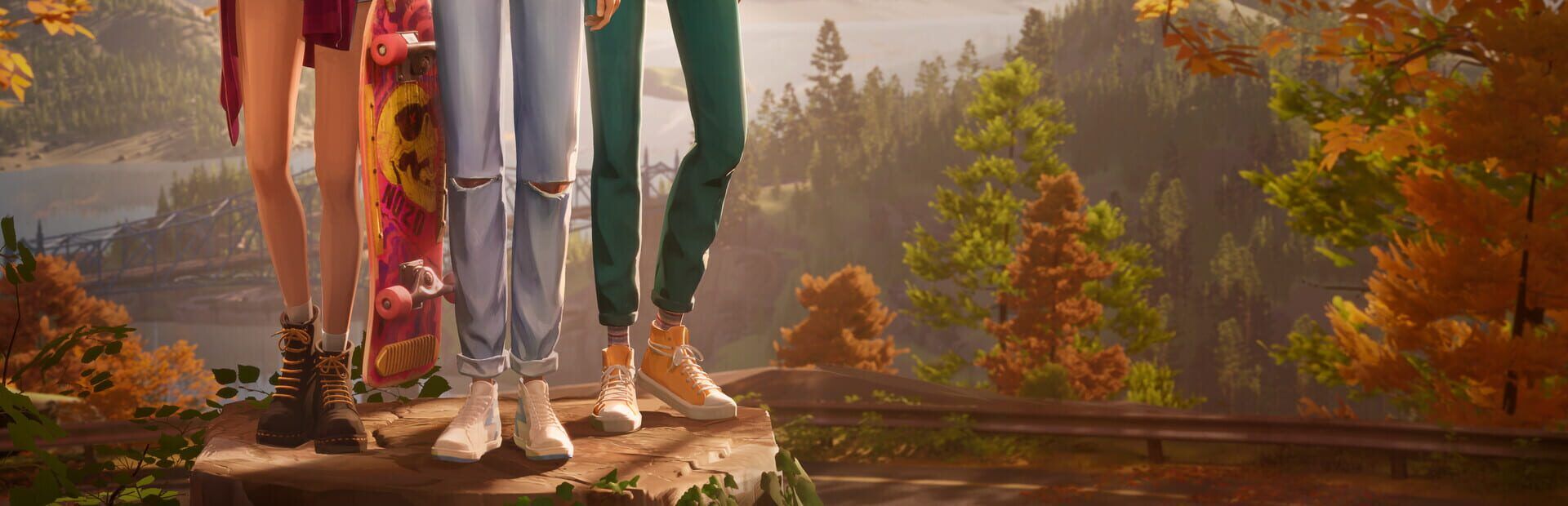
Mixtape lives and dies on its soundtrack. It is a coming‑of‑age road‑trip anthology, a series of playable memories on the last night of high school, scored to bands like Devo and The Smashing Pumpkins. The game’s marketing pitches it as “set to the soundtrack of a generation.” Reviewers highlight the needle drops almost as much as the characters.
For a lot of players, that pitch immediately sets off alarms. The industry has trained people to expect that when a game leans hard on licensed music, it eventually runs into a wall of expiring contracts.
Over the last two console generations alone, there have been enough examples to make the fear feel automatic. Rock Band and other rhythm games saw songs delisted as licenses ran out. Alan Wake briefly vanished from digital stores in 2017 until music deals were renegotiated. Grand Theft Auto IV had to patch out tracks when agreements ended. Even entire games have disappeared because renegotiating audio rights stopped making financial sense.
So when social media posts started circulating that Mixtape would “definitely” be delisted once its music licenses expired, the claim felt plausible, even if no one could point to an actual contract. The logic was simple: if the soundtrack is full of famous songs, the rights must be time‑limited.
Annapurna and Beethoven & Dinosaur say that logic is wrong in this case.
What “perpetual” licensing actually means in games
Galvatron explained in a Kotaku interview, echoed by coverage in outlets like VGC, IGN, and PC Gamer, that the team went into Mixtape knowing exactly how fragile music‑heavy games can be. From the start, they aimed to license the soundtrack “in perpetuity.”
In basic terms, that means the right to use a piece of music in the game does not have a built‑in expiration date. Instead of paying for ten years of use on digital storefronts or a fixed term for distribution on specific platforms, Mixtape’s deals are meant to allow the game to keep using those tracks forever, across its supported platforms.
Perpetual does not magically override all future legal realities. Rights can still be sold or inherited, new formats and territories might need separate paperwork, and edge‑case disputes can always appear. But compared to a typical fixed‑term license, a perpetual agreement dramatically reduces the most common reason these games vanish. There is no countdown ticking away to the day the music has to be pulled or the game taken down.
Securing that level of access is not standard, especially for an indie‑scale studio. It usually costs more upfront. Each rightsholder can set different terms, and well‑known bands with valuable catalogs have no reason to offer perpetual rights cheaply. Galvatron has been open that Beethoven & Dinosaur paid extra for this privilege, treating it as a core production cost rather than a luxury.
Why licensed soundtracks usually scare preservationists
The anxiety around Mixtape did not come out of nowhere. It is rooted in how music rights are traditionally carved up and sold to game studios.
For a developer, putting a pre‑existing song into a game often means negotiating at least two separate licenses. There is the composition itself, owned or administered by publishers and songwriters, and there is the sound recording, which belongs to a record label or the artists. Each side can have multiple stakeholders, each with their own lawyers and preferred terms.
From there, the agreements can limit:
Where the game can be sold. A license might only cover certain territories.
How long the music can be used. Five or ten year terms are common starting points.
Which formats are allowed. Digital downloads, streaming, subscription services, and physical media can all be treated differently.
For music‑driven games, those limits become existential threats. If a track that defines a level can no longer be used, you are left with bad options. Replacing the song can undercut the scene. Cutting the level breaks the story. Re‑negotiating can be expensive in a game that has already finished its main sales window.
That is why rhythm games, skating titles, and radio‑driven open worlds are so notorious in preservation circles. Their identity is so tightly wrapped around popular songs that when a license ends, the whole work becomes harder to maintain in anything like its original form.
Fans have now seen this cycle repeat enough times that they tend to assume the worst as soon as a game rolls out a tracklist full of recognizable artists. Mixtape, which openly celebrates bands by name and structures entire vignettes around them, looked like a prime candidate for that same fate.
Annapurna’s blunt response to the delisting rumor
Once the rumor started spreading, Annapurna and Beethoven & Dinosaur did something notable: they answered the question quickly and directly.
In the Kotaku interview, Galvatron said the team licensed the songs “in perpetuity” and that they paid more to do so. The implication was not subtle. They knew people would worry about the game disappearing, and they were determined to avoid becoming another cautionary tale.
Annapurna then followed up on social media with a short, pointed message that was quoted by multiple outlets. “We heard some people say Mixtape would be delisted due to music licenses expiring. That was a lie.” PC Gamer and IGN both highlighted the line in their coverage, using it as a springboard to explain the difference between Mixtape’s contracts and the fixed‑term deals that hurt earlier games.
The messaging is a little unusual in how strongly it pushes back on community speculation, but that makes sense in context. Mixtape’s entire appeal is its emotional connection between teenage memories and specific songs. If players decide that the experience is a ticking time bomb, that undermines both sales and the game’s chance to become a long‑term cult favorite.
By making the licensing strategy public, Annapurna and Beethoven & Dinosaur are not just correcting a rumor. They are inviting people to think of Mixtape as something designed to last.
What Mixtape’s approach costs and buys
From a production standpoint, choosing perpetual licensing for a soundtrack as prominent as Mixtape’s is not a small decision. It pushes cost earlier in the schedule and concentrates risk. The team has to front more money before launch in exchange for avoiding future cliffs.
That cost has ripple effects. It influences which artists are realistic to approach. It can shape the number of tracks, their length of use in scenes, and how many territories the game can fully cover. In interviews, Galvatron has talked about how surprisingly many bands said yes, while acknowledging that certain big‑ticket wishes, like Pink Floyd, were long shots.
What the team gets in return is flexibility for everything that comes after launch. If the game finds a second life through word of mouth or future sales, they are not watching a calendar, nervous that renewed interest will arrive just as rights are expiring. Ports to new hardware, re‑releases, and long‑term availability in digital libraries all become simpler conversations.
There is also a creative benefit. If you know during production that you might one day be forced to remove or replace songs, you are more likely to hedge. Maybe story beats become less tied to a specific chorus. Maybe you avoid mentioning bands in dialogue. Mixtape does the opposite. It leans into the power of particular tracks to define a moment, precisely because the team expects those songs to still be there in a decade.
What it means for game preservation
Preservationists often argue that games need to be protected as complete cultural artifacts, not hollowed out versions missing key audiovisual elements. Licensed music has been one of the hardest hurdles in that fight. Even where ROMs, code, and art assets are archived, the inability to legally distribute original soundtracks means the public record can end up feeling like an approximation.
Mixtape is not a universal solution, but it is a concrete example of developers trying to solve the problem during production rather than leaving it to future curators. By buying perpetual rights, Beethoven & Dinosaur and Annapurna turn the soundtrack from a ticking clock into something closer to the rest of the game’s assets. That does not guarantee Mixtape will always be easy to buy or play, but it removes one of the biggest legal reasons for it to disappear.
The choice also sends a signal. It implies that at least some rights holders are now willing to negotiate long‑term or perpetual grants for interactive use in games when the project is pitched in the right way. As more studios point to Mixtape and similar cases, it becomes easier for future teams to argue that secure long‑term access is both possible and desirable.
For players who care about keeping games playable in a recognizable form, that is significant. It suggests that the current model, where music‑driven games turn into licensing time bombs, is not inevitable. It is a consequence of specific business choices that can be changed when preservation is treated as a priority instead of an afterthought.
Could Mixtape change how future narrative music games are made?
Mixtape arrives in a moment when narrative‑driven games built around big licensed songs are having a small resurgence. Some, like certain story‑heavy indies, mix original compositions with a few carefully chosen licensed tracks. Others put recognizable songs at the center of their emotional climaxes, betting that the right needle drop can carry a scene as powerfully as any cinematic score.
Most of those projects still rely on traditional fixed‑term licensing, whether because of budget constraints or because the team sees the game as a product of a particular launch window. Mixtape’s very public “in perpetuity” stance gives those developers a different reference point.
If Mixtape maintains its availability over the long term and keeps being talked about as a defining music game of this era, it strengthens the argument that paying for permanent rights can be worth the higher upfront investment. It can help justify budget lines labeled as preservation in a way that finance teams understand. It also provides a practical playbook. Galvatron’s comments make it clear that the team identified music rights as a core risk, addressed it at the contract stage, and then used that security to create bolder, more specific scenes.
For the next wave of music‑heavy narrative games, the lesson is not that every soundtrack needs a blank‑check perpetual license. It is that if your story depends on a particular song, and you want that story to be playable for the long haul, you should be thinking about those rights as early and as permanently as possible.
Mixtape does not end the industry’s licensing headaches, and it cannot retroactively rescue games that already lost their songs. What it can do is show, in a concrete and commercially visible way, that one of the most feared pitfalls of music‑driven storytelling is not unavoidable. It is something developers can choose to solve in advance.
In that sense, Annapurna and Beethoven & Dinosaur are not just making a nostalgic coming‑of‑age mixtape. They are quietly remixing how licensed music can work in games at all.