
Mixtape refuses to add a streamer mode, insisting its licensed soundtrack is the game’s soul. Here’s what that says about the growing tension between creator-friendly features and uncompromised artistic intent in music-driven games.
[Mixtape, Streamers, and the Cost of Sticking to the Soundtrack]
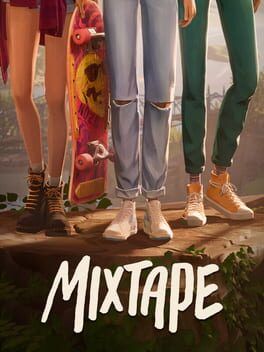
Mixtape arrives in 2026 as the kind of game that feels designed to light up Twitch: a stylish, tightly edited coming-of-age adventure from Beethoven & Dinosaur, built around big emotions, bold visuals, and a soundtrack stacked with instantly recognizable names. It is also, ironically, one of the least stream‑friendly games released in years.
There is no streamer mode. No toggle to mute songs. No royalty-free replacement playlist. If you stream Mixtape with audio on, you are walking straight into DMCA purgatory.
According to the studio, that is not a missing feature. It is the point.
“Music is the soul of Mixtape”
In a statement shared with outlets like VGC and IGN, Beethoven & Dinosaur drew a line in the sand. Mixtape, they argue, is not a game that merely uses music; it is a game that is built out of it. The soundtrack ranges across artists like Devo, The Smashing Pumpkins, Lush, Alice Coltrane, Iggy Pop, and more, and those songs are not just background noise.
Characters literally talk about specific tracks. Scenes and level pacing are choreographed around particular crescendos and breakdowns. Emotional beats lean on the cultural baggage those songs carry from the real world. Swap them for anonymous, streamer-safe loops and the timing, tone, and even the meaning of moments shifts.
The studio’s language is blunt: they “couldn’t change the songs” and “couldn’t replace them.” Music, they say, is the “soul” of Mixtape, and “your soul is the one thing you can’t compromise.”
In isolation, that sounds like familiar artistic rhetoric. In 2026’s streaming-first landscape, it is a very practical choice with real fallout.
The streamer-first expectation
Over the last decade, streamer modes have gone from novelty to expectation. From big-budget blockbusters to tiny indies, any game that leans on licensed tracks is under pressure to provide some kind of DMCA-safe option.
There is good reason for that. Twitch, YouTube, and TikTok are not just marketing channels anymore. For many players, watching a favorite creator is their first, and sometimes only, contact with a game. For creators, music strikes can kill vods, demonetize channels, or even jeopardize livelihoods. A game that cannot be safely streamed is, for them, a risky investment of time.
So we get modes that automatically mute licensed music, sliders that strip out only the vulnerable tracks, or entirely separate “streamer soundtracks” that try to keep the vibe without triggering automated copyright systems. It is not just about kindness to creators; it is business sense. Games that stream easily spread easily.
Mixtape swims against that current. Not because the team is unaware of the benefits, but because those very compromises are in direct conflict with the kind of game they set out to make.
When a soundtrack is scaffolding, not wallpaper
The usual justification for streamer modes is that they only take a little from the experience in exchange for a lot of accessibility. Lose the chart hit during a car chase, get a vaguely similar instrumental track instead, and you have preserved most of the scene for both player and streamer.
Mixtape was not built on that logic. Its structure is closer to a concept album in game form. Sequences are edited like music videos, with camera cuts, character animation, and even mechanical beats flowing around specific songs. It is the difference between putting music on while you play and designing the play to be music.
That is why the developers are so dismissive of the idea of a parallel, streamer-safe version. For a game like this, there is no way to carve out the music without pulling down the rest of the design. A replacement soundtrack would not just feel off, it would be a different game.
The result is a rare modern title where the soundtrack feels like scaffolding rather than wallpaper. You can repaint the walls; you cannot quietly remove the beams.
The cost of saying no
All of this makes sense artistically, but the cost is obvious. Many streamers have already been open about skipping Mixtape precisely because it lacks a streamer mode. For those who make a living from their channels, it is difficult to justify hours of footage that will be either muted, claimed, or restricted.
That decision has ripple effects. Fewer streams mean fewer organic discoverability moments. A story-driven indie, even one with a strong publisher like Annapurna, lives and dies on word of mouth. In 2026, a big chunk of that word of mouth happens through live content and vods.
Beethoven & Dinosaur and Annapurna are effectively choosing to cap that reach. They are saying that if the route to popularity requires sanding down what makes Mixtape specific, they would rather accept a smaller audience that plays it uncut.
In a market where even huge franchises bend over backward to be creator-friendly, that is a risky stance.
Streamer modes as creative compromise
There is also a more uncomfortable admission buried in Mixtape’s stance: most streamer modes are compromises. Clever compromises, sometimes generous ones, but compromises all the same.
When a song is stripped out entirely, every scene it touched loses texture. Jokes that reference lyrics lose impact. Pacing shifts as a moment that was timed to a chorus now lands on nothing. Even the simple thrill of hearing a song you know in a game you love gets replaced with something functional but forgettable.
In rhythm and music games the trade-off is even sharper. Try imagining Rock Band or Beat Saber with the music turned off and a royalty-free pack swapped in. Technically functional, but spiritually hollow.
Mixtape just makes that tension impossible to ignore, because it refuses the workaround. By denying streamer mode outright, it is calling attention to how much would have to be sacrificed to make one exist.
The player, the creator, and the artist
Where this gets complicated is that modern games do not live in a simple one-way relationship anymore. Players are also broadcasters. Broadcasters are also marketers. And in many cases, they are also collaborative storytellers, layering their own persona and commentary on top of the work.
Streamer modes emerged as a way to recognize that reality. They say: here is a slightly altered version of the game that is built for your world, not just ours. For some creators and communities, that is not a small concession, it is a lifeline.
Mixtape is, in effect, declining that invitation. It insists on a more traditional relationship between artist and audience. Experience the game as it was authored, or do not experience it publicly at all.
Some players will see that as admirable conviction. Others will see it as exclusionary, particularly disabled players or folks who rely on streams and vods because they cannot comfortably play certain games themselves. Licensed music conflicts are a legal issue on paper, but they become an accessibility issue in practice.
Could there have been another path?
It is fair to ask whether there was any middle ground. Could Mixtape have licensed at least some tracks under streaming-friendly terms, limiting DMCA risk without gutting the concept? Could it have offered, not a full alternate soundtrack, but optional silencing of a handful of tracks to reduce the number of potential strikes?
From the outside, those sound like reasonable compromises. In reality, music licensing is slow, fragmented, and expensive. Clearing global streaming rights for every track across Twitch, YouTube, and other platforms is a maze, especially when you are dealing with multiple labels and rights holders. For a comparatively small studio, the legal and financial weight might have been prohibitive.
There is also the creative side again. Mixtape is all about a specific generation’s relationship to specific songs. Pull too many threads out of that tapestry and the picture stops making sense.
Instead, the team chose a brutal kind of clarity. This is a game scored like your old burned CD mixes, full of songs you loved at a particular time and place, and it is meant to be played on your own speakers, in your own room, without algorithms listening in.
What Mixtape tells us about the future of music-driven games
Mixtape’s refusal to bend toward streaming will not suddenly reverse the trend toward streamer modes. The economics are too strong, and for many genres the trade-offs are minor. Big live-service titles, battle royales, and sports games will continue to treat creator-friendliness as a pillar of design.
But it does send a clear signal to other music-driven projects. If you are making a game where the songs are not just garnish but grammar, then you cannot outsource your soundtrack to a toggle. You either build your experience on music you control outright, as many rhythm games now do, or you accept that you will be partially invisible in streaming spaces.
That is not a comfortable choice. It is, however, an honest one.
Mixtape sits in the middle of that discomfort. It might become a cult favorite that spreads despite its streaming limitations, recommended in group chats and private discords rather than via Twitch front pages. Or it might quietly fade, remembered mostly by critics who championed its commitment to the bit.
What is certain is that it crystallizes a tension that has been simmering for years. As games lean harder on licensed soundtracks to evoke real-world memories and moods, and as creators continue to be central to how those games find an audience, the gap between artistic intent and creator convenience is only going to get harder to ignore.
Mixtape picks a side. It chooses the mixtape over the algorithm, authored timing over flexible toggles, the full song over the safe version. Whether you agree with that choice or not, it forces a question every music-driven game now has to answer before it ships: are you willing to be less streamable in order to sound exactly like you mean to?