
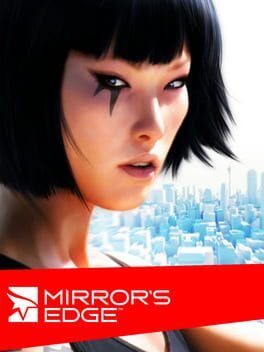

A deep look at the newly playable pre-release Mirror’s Edge prototype, what it reveals about DICE’s early design direction, and why restoring “janky” builds is crucial for game preservation.
When people talk about preserving games, they usually mean getting a clean, final build running on modern hardware. The newly restored pre-release prototype of Mirror’s Edge is a reminder that sometimes the messy, broken versions matter even more.
After years of sitting in an unplayable state, an early PlayStation 3 prototype of Mirror’s Edge has been painstakingly brought back to life by fans. It is janky. It is visually flat. It is full of rough edges and placeholder work. As a historical object, though, it is priceless, because it captures a version of DICE’s first-person parkour game that existed only briefly on the way to the 2008 release.
This is preservation not as nostalgia, but as archaeology.
A prototype rescued from the brink
The prototype first surfaced in 2019, circulating privately in preservation circles as a broken PS3 build. It booted, but so much of the underlying code was corrupted that it was effectively a dead end for anyone who wanted to explore it.
YouTuber and modder Softsoundd describes the recovery process as involving “hundreds of fixes.” The team had to repair the PS3’s EBOOT fSELF executable, stub out more than 300 corrupted functions, and work around bugs in how this early Unreal Engine build handled its data packages. Only after that deep reverse engineering could the game be coaxed into a playable state.
From a preservation standpoint, this work is significant in two ways. First, it rescues a unique snapshot of Mirror’s Edge at a particular moment in development. Second, it represents reverse engineering knowledge that will be essential as more PS3-era prototypes and early builds come to light. These technical methods are as much a part of preservation as dumping a cartridge or ripping a disc.
A harsher, flatter City of Glass
Booting the prototype today, the first thing you notice is how different it feels visually from the release version. The final Mirror’s Edge is remembered for its high-contrast color design, pristine whites broken by bold accents of red, yellow, and blue. The prototype strips that away. Lighting is unbaked, with a nagging “lighting needs to be rebuilt” message hovering like a watermark over the experience, and environments look raw and utilitarian.
The City of Glass here feels less like a stylized concept and more like a work-in-progress tech level. Surfaces are flatter, shadows are inconsistent or missing, and the clean art direction that defined the shipping game is only faintly visible. You can see the underlying geometry and blocking that will later be dressed into those iconic rooftops, but it is still scaffolding rather than the finished skyline.
That visual roughness is exactly what makes the build valuable. It shows how much of Mirror’s Edge’s identity rests on lighting, color, and post-processing. Without that tightly controlled aesthetic, the fantasy of being a fluid, visible traceur moving through a hostile city is diminished. The prototype is a before-and-after comparison frozen in time, allowing critics and historians to point to the exact role art direction played in transforming a functional parkour prototype into a memorable world.
Faith’s lost monologue and a different tonal pitch
The most striking discovery in the prototype is Faith’s unused opening monologue. In the released game, Faith is almost aggressively minimal as a protagonist. She speaks in short bursts, reacts to immediate danger, and leaves much of the city’s political and social context implied. The prototype opens instead with a voiced monologue that attempts to spell out the setting and themes.
“In this city of mirrors, the edge is where you still have a choice,” she says, in a line that sounds almost like a trailer tag. It reaches for hard-boiled introspection, positioning Faith as a noir-style narrator who frames the story for the player. The delivery, as Eurogamer noted, is awkward and on-the-nose in a way the final game mostly avoids.
From a design history perspective, this is telling. It shows DICE wrestling with how much to explain and how much to leave unsaid. The final Mirror’s Edge takes a more restrained approach, trusting visual storytelling, environmental cues, and kinetic tension to carry most of the emotional weight. The prototype’s monologue suggests an early direction where the game would lean more on overt exposition and self-conscious metaphors.
Cutting that monologue was not just a script edit, it was a tonal recalibration. Faith in the prototype sounds like a written character trying to sell you on the game’s themes. Faith in the final release feels more like a person living those themes while trying to survive. Without this prototype, that shift would be something we could only infer from scattered interviews and concept art. Hearing the original line read in context gives researchers concrete, playable evidence of the tone DICE walked away from.
Combat experiments and rougher animation language
The prototype also reveals a combat system that pushes harder toward physical brutality. Enemies can block Faith’s melee strikes in ways that did not survive into the final game, forcing exchanges that feel more like clumsy brawls than quick, decisive takedowns.
Faith herself has attacks that never made the cut, such as a crouching uppercut that looks more like something from a traditional brawler than a movement-focused parkour game. There is also a pistol disarm animation where Faith breaks an enemy’s arm in a way that is much more explicit and violent than anything in the retail release.
Taken together, these details point toward an earlier design concept where Mirror’s Edge was more comfortable lingering on bodily harm. The final game certainly includes guns and takedowns, but its most celebrated moments are when you avoid combat altogether, outrun bullets, and rely on momentum. In retrospect, the more brutal prototype moves feel out of step with what players now consider the core appeal of Mirror’s Edge.
Animation fidelity tells a similar story. The prototype’s movements are less polished, sometimes more exaggerated, and frequently misaligned with the environment. Climb animations snap harshly, disarms lack the smooth camera choreography of the final game, and transitions between states can feel abrupt. That roughness would be unremarkable in a generic prototype, but here it helps illustrate just how deliberate DICE’s later animation choices were.
When you compare the prototype to the shipping game, you can see entire frames of animation and timing being re-authored to sell Faith not as a generic FPS body, but as a parkour athlete with weight, rhythm, and vulnerability. The prototype is the missing “in-between” stage that lets animators, students, and historians trace that evolution in detail rather than simply admiring the finished product.
Design in flux: routes, trials, and discarded spaces
Alongside the obvious differences in tone and combat, the prototype contains level content that never shipped. The most talked-about example is a storm drain time trial, an entire run built around a piece of infrastructure that did not appear in the console release.
Time trials in the finished game are framed as replayable score-chasing routes through existing levels. The storm drain sequence suggests DICE was also experimenting with bespoke, more self-contained challenge spaces. It plays like a testing ground for flow, line-of-sight, and how far the movement system could be stretched within a controlled environment.
This kind of content is often the first to be cut when schedules compress. From a historical point of view, though, it shows how the team thought about training players and pushing high-level mastery. It also hints at alternate directions the game might have taken if time trials had become more central to the structure, leaning into a more arcade-like challenge mode instead of occupying the margins of the experience.
The prototype, full of rough geometry and unpolished layouts, helps answer questions that production interviews rarely cover in depth. Which movement ideas required custom spaces that no longer fit the pacing of the campaign? How did route readability evolve before the famous red “runner vision” highlights were fully integrated? These are design conversations embedded directly in the build.
Why restoring prototypes matters more than ever
It would be easy to treat the Mirror’s Edge prototype as a curiosity, a piece of content to watch on YouTube and then move on from once the novelty of a bad monologue wears off. But as commercial support for older games waxes and wanes, prototypes like this are becoming some of the most valuable artifacts the medium has.
Final retail builds represent the end of a process, shaped not just by design ideals but by deadlines, hardware constraints, and publisher priorities. Prototypes and pre-release builds show the paths not taken. They preserve cut mechanics, aborted tonal shifts, discarded layouts, and technical experiments that never made it to marketing bullet points.
For historians and critics, that material is crucial. It allows more accurate accounts of how games are made, beyond simplified “visionary director” narratives. You can see team compromises inscribed directly into the code. You can track how feedback, internal or external, reshaped a project over time.
The Mirror’s Edge prototype is also a case study in why this work cannot rely on official channels alone. DICE and EA did not ship this build. Without community preservation efforts, it would remain an inert curiosity on an old hard drive, degrading bit by bit. The reverse engineering that brought it back is unpaid labor done largely for the sake of history, not profit.
At the same time, the restoration raises ongoing questions around legality and access. The people who saved this prototype do not own the IP, and their ability to share their work exists in a gray area. Yet as more companies delist older titles and shutter their online services, community archivists often become the only practical stewards of endangered games.
Beyond nostalgia: treating rough builds as primary sources
Mirror’s Edge is not that old compared to arcade cabinets or early console cartridges, but its prototype already demonstrates how fragile digital development history can be. It took only a decade and a half for an early build of a major EA release to become badly broken and almost lost. The fix required specialized knowledge of both PS3 internals and a specific generation of Unreal Engine.
Preservation in this context means more than just keeping playable copies on a shelf. It requires capturing source assets where possible, documenting toolchains, and sharing reverse engineering techniques before they vanish with the people who understand them. The Mirror’s Edge prototype restore is a reminder that the window to save many PS3 and Xbox 360 era works in progress is already narrowing.
Treating this prototype as a historical document also helps resist the pull of pure nostalgia. Instead of asking whether the cut monologue is “cringe” or whether the early combat is “better,” we can ask what these elements tell us about how a first-person movement game found its identity. Instead of debating which version is more fun, we can focus on what the unfinished build reveals about process, constraint, and iteration.
For developers, students, and scholars, the restored prototype is a playable lecture in how a distinctive game takes shape. For archivists, it is a success story that also reads as a warning about how much else might already be gone.
When you sprint across the unfinished rooftops of this early Mirror’s Edge, you are not revisiting a lost classic. You are stepping through a ghost of what could have been, guided by glitches, placeholder art, and a monologue that no longer exists in official canon. Preserving that ghost, and the work needed to make it speak again, is how game history moves beyond marketing timelines and into the messy, fascinating reality of how games are actually made.