
A quick platform-by-platform spotlight on MIO: Memories in Orbit, its handcrafted Metroidvania world, and how it shines on Switch, Switch 2, PC and other consoles.
If you are in the mood for a new Metroidvania to get lost in this week, MIO: Memories in Orbit has quietly become one of the most interesting launches of the year. Developed by Douze Dixièmes and published by Focus Entertainment, it arrives simultaneously on Nintendo Switch, Switch 2, PlayStation, Xbox and PC, with a level of polish that has already attracted strong reviews on high end hardware.
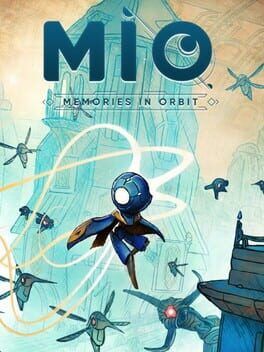
At the heart of MIO is its art direction. The entire game is presented as a handcrafted sci fi ruin, an enormous spacefaring ark called the Vessel that is slowly being reclaimed by nature and rogue machinery. Rather than chasing hyperrealism, Douze Dixièmes leans into painterly backdrops, intricate line work and moody lighting. Industrial corridors give way to overgrown biodomes, eerie laboratories and forgotten sanctuaries, all stitched together as a single, explorable structure. It feels curated in the way the best Metroidvanias do, every screen staged for readability and atmosphere, with animation that sells MIO’s agile, almost balletic movement.
Structurally this is classic Metroidvania territory. You start as a relatively fragile android wandering a hostile ark on the verge of collapse, with only a fraction of your potential unlocked. As you push deeper into the Vessel you earn new traversal options and combat abilities that open previously unreachable routes. Early paths that dead end above a suspiciously high ledge or behind a broken mechanism later become shortcuts once you have the right upgrade, encouraging you to mentally map the station and loop back through older areas. Thirty plus enemy archetypes and a generous lineup of guardian style bosses punctuate the exploration, and the ability system lets you tune MIO toward evasive, precision platforming or more aggressive crowd control depending on how you slot modifiers and scavenged components.
What makes MIO work especially well as a weeknight pick up is the feel of movement and combat. Abilities like wall climbing and gliding layer naturally onto a responsive core jump and dash, and mobility tools such as the Hook, orb projectiles and decoy clones create a satisfying rhythm of engage and reposition. Encounters ask for timing and spacing more than raw stats, which helps the game feel fair even when it leans into tougher boss patterns. Combined with the stark contrast between rusted metal and invasive foliage, it all builds a tone closer to melancholic science fiction than bombastic space opera.
On Nintendo hardware MIO is an easy recommendation. On the original Switch the art style does a lot of heavy lifting. The stylized visuals scale down gracefully, and the strong silhouettes and clean animation keep platforming readable even in handheld mode. The tradeoff is resolution and some softness in effects, but performance in the launch build holds up well enough for tight jumps and boss patterns to feel reliable. Portable play suits the game’s structure, letting you clear a few rooms, grab a new ability or push to a save point on a commute or late night session without feeling lost when you return.
Switch 2 is where the game really stretches its legs in Nintendo’s ecosystem. Higher resolution output and steadier performance help the hand painted backdrops and lighting pop in a way that is closer to the PC and current generation console versions. Finer details in the Vessel’s decaying machinery and creeping vegetation stand out, and the stronger performance ceiling makes the more effect heavy boss fights feel smoother. In docked mode it looks striking on a modern TV, while handheld play benefits from sharper image quality that makes distant environmental cues easier to read.
Compared with PS5, Xbox Series X|S and a capable PC, the main differences are predictably about visual crispness and frame rate headroom rather than content. On those platforms, MIO takes advantage of higher resolutions and faster loading, which makes backtracking between distant sectors of the Vessel snappier. Effects like particle rich attacks and volumetric lighting in some of the ark’s more dramatic chambers are a touch more pronounced, and players chasing the absolute smoothest frame pacing will be happiest here or on a tuned PC setup.
The good news is that the core of MIO’s appeal survives intact on every platform. The carefully authored spaces, the interplay between exploration and newly acquired abilities, and the moody, lonely ambience of the Vessel itself do not depend on brute force hardware. If you favor portability or primarily play on Nintendo hardware, the Switch and Switch 2 versions serve the game’s design and atmosphere well. If you want the sharpest image and fastest loading for long, late night Metroidvania runs, PC and the other current generation consoles have an edge.
If you are deciding what to download this week, the pitch is simple. If you enjoy the sense of place and progression found in modern Metroidvanias and you are drawn to distinctive, handcrafted art in a science fiction setting, MIO: Memories in Orbit is worth carving out time for, whether that is on a launch Switch, a new Switch 2 on the go, or a higher end machine on your TV or monitor.