

How MIO: Memories in Orbit is shaping up as a fluid, systems‑rich sci‑fi Metroidvania for PS5, Xbox Series, Switch 2 and more in a post‑Silksong landscape.
MIO: Memories in Orbit has quietly gone from “nice Direct reveal” to one of the most talked‑about Metroidvanias on the 2026 calendar. With the new January 20 date locked in and a Switch 2 version confirmed, it is no longer just another indie chasing Hollow Knight’s shadow. It is arriving in a post‑Silksong world, and it is very clearly designed to court the same crowd that loves intricate worlds, punishing combat, and movement that feels good the moment your thumb hits the stick.
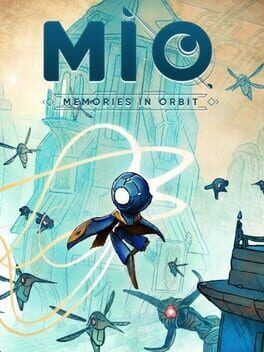
At a glance, MIO looks like a hand‑painted sci‑fi fever dream. You play as an android consciousness called MIO, rebooting inside the Vessel, a colossal ark swallowed by rogue machinery and bio‑mechanical growth. The premise is deliberately sparse: you are pulled forward not by quest markers, but by curiosity and the logic of a classic Metroidvania map that keeps taunting you with doors, gaps, and unreachable ledges.
Underneath that watercolor exterior is a design that understands what makes modern Metroidvanias tick. Douze Dixiemes is building MIO around three pillars that matter to genre fans after Silksong: movement that is expressive but exact, a world structure that rewards getting lost instead of correcting you, and progression systems that make every death feel like another step forward.
Fluid movement built for expression, not just efficiency
Hands‑on previews have all circled the same first impression: MIO just feels good to move. You start with the usual 2D basics, a clean jump and a responsive slash, then quickly earn more expressive tools. The standout is a tendril‑based hookshot that shoots from MIO’s head and snaps you toward anchors and enemies. It is the sort of traversal power you can use defensively, aggressively, or just to style on a room you have already mastered.
That hookshot is central to why people are already comparing MIO’s movement to the genre’s elite. In combat, it lets you close space on ranged foes or reposition instantly after a dodge. In platforming sequences, it layers over wall clings and precise jumps to create chains of movement that feel almost improvisational. The key is that these moves are fast and readable. There is little animation bloat, so recovering from a missed grab or adjusting midair becomes a player skill, not a fight against sluggish controls.
The hookshot is only one part of a broader philosophy. Level geometry is clearly designed to be reinterpreted as your kit expands, and preview builds already hide shortcuts or high‑risk routes that only open once you begin to think of rooms as movement puzzles rather than corridors. That gives MIO the same kinetic potential that sets apart games like Silksong or Ori: you are not just traversing the Vessel, you are learning how to surf across it.
A labyrinthine Vessel that wants you to get lost
Where some modern Metroidvanias have softened their edges with aggressive waypointing, MIO has more in common with the old‑school, map‑scribbling side of the genre. The Vessel is a dense tangle of decayed industrial wings, glitched‑out laboratories, and alien‑tinted biomes, each painted with that signature brushstroke animation that seems to ink the scenery right in front of you.
The catch is that this place is confusing by design. Previewers describe twisting routes, stacked vertical chambers, and loops that only make sense once you uncover a hidden passage. Early on, you do not even have a traditional map. Instead, navigation is folded into the game’s progression logic through one of its most interesting systems: nacre and the pool.
Nacre is the Vessel’s catch‑all resource, scattered across rooms and dropped by enemies. You spend it to enhance abilities, but dying knocks the nacre you were carrying out of your pockets. Rather than simply disappearing forever, that lost energy trickles into a strange pool containing a dormant mechanical lifeform. As the pool fills, this being unlocks key functions for you, and one of the first big rewards is access to an actual map of the areas you have been struggling to mentally chart.
It is a smart compromise between full hostility and pure friendliness. At first you wander by instinct, building a vague picture of the Vessel. Each failure, each misjudged fight that sends you back, pushes the pool toward your eventual cartographic lifeline. When the map finally unlocks, it is not a charity handout, it is something you earned by crashing against the level design enough times that the game decides you are ready for a better overview.
That same ethos extends to shortcuts and one‑way routes. Long corpse runs to bosses are absolutely part of the rhythm, just as they are in some of the genre’s toughest peers. But careful exploration reveals ways to punch through those routes, dropping ladders, powering elevators, or cracking open sealed doors that transform an oppressive commute into a half‑minute warmup. The Vessel is constantly reconfiguring around your growing knowledge of it.
Progression and modifiers: dying forward in a hostile ark
MIO’s progression systems show a developer that has been watching the last decade of action platformers very closely. On the surface you have the expected metroidvania upgrades: traversal tools that open up new layers of the map, combat moves that give you more options than a basic slash, permanent health or damage boosts. Underneath that lies a more experimental bed of systems that connect power, death, and self‑imposed challenge.
Nacre is the foundation. You hoover it up as you explore, then channel it into ability upgrades at points of safety. The risk is immediate: die before you bank it and that nacre is gone, diverted into the pool rather than your current build. The psychological effect is familiar to Souls veterans, but MIO tweaks the formula. Even a disastrous run contributes to long‑term unlocks, since the pool’s lifeform will eventually grant critical utilities, including that all‑important map. You are encouraged to push your luck instead of retreating at the first sign of a full wallet.
Layered over this is the Modifier system, a flexible grid that lets you equip gameplay perks within a limited set of slots. Every modifier has a cost. Simple quality‑of‑life boosts such as visible enemy health bars might take a modest chunk of your allocation, while tangible survivability like an extra health segment demands a larger investment. On the other end of the spectrum are modifiers that strip information away, disabling certain UI elements or imposing quirky constraints that increase tension in exchange for freeing up points elsewhere.
The net result is a difficulty curve that you actively sculpt. If you want a tougher, purist experience closer to classic no‑HUD runs, you can spec into that. If you would rather smooth a particularly cruel boss, you can tilt your grid toward comfort, and the game even offers softer accessibility features like gradually reducing a boss’s max health after multiple failures. In a post‑Silksong landscape where many players relish brutal challenges but also expect thoughtful options, MIO’s approach feels sharp rather than compromised.
Post‑Silksong expectations and how MIO stands out
Coming after Hollow Knight: Silksong means a new Metroidvania cannot just be “tough but fair” and call it a day. Fans now look for cohesive worlds, combat depth, and systems that make repetition feel meaningful. MIO’s answer is not to mimic Silksong’s needle‑sharp dueling but to complement it with a different flavor of difficulty and atmosphere.
Where Silksong leans into acrobatic melee finesse in a fantasy‑insect kingdom, MIO is a slower burn set in a crumbling sci‑fi ark. Combat is still demanding, yet it is framed by a sense of decay and mystery rather than a bustling ecosystem. The watercolor aesthetic is not just pretty; it sells the feeling of a place mid‑collapse, with every corridor and off‑kilter platform looking like it might flake away under your feet.
The way death feeds into the pool and the map also sets MIO apart. Many contemporaries treat maps as a universal constant from minute one, or lock crucial utilities behind straightforward shops. Here, key information is tied to how stubbornly you keep throwing yourself at the Vessel. That creates a distinct pacing compared with Silksong’s more traditional cartography and keeps MIO’s world unreadable longer, which will appeal to players who loved feeling lost in the original Hollow Knight.
Finally, the Modifier grid gives MIO a malleability that even some genre giants lack. Instead of choosing a fixed difficulty mode, you are constantly tinkering with trade‑offs: clarity versus power, safety versus thrill. In the shadow of Silksong’s finely tuned but mostly fixed challenge, that kind of self‑directed customization is a smart way to carve out its own niche.
Platforms: PS5, Xbox Series, Switch 2 and what to expect
With the updated 2026 plan, MIO: Memories in Orbit is targeting a wide slate of hardware, and the messaging around each version hints at a game that wants to feel consistent while still taking advantage of the newer consoles.
On PS5 and Xbox Series X|S, you can reasonably expect crisp 4K‑targeted presentation with stable performance. The art style is not about polygon counts so much as animation density and subtle effects, which should give these machines plenty of headroom for clean image quality, short loading, and snappy respawns after inevitable deaths. Publishers have already highlighted these platforms alongside PC as lead targets, so they are likely to see the smoothest frame pacing for the game’s most demanding movement and combat sequences.
Switch 2 is where things get especially interesting. MIO began life targeting the original Switch, and the move to Nintendo’s next hardware while still promising a Switch 1 version suggests the developers want their layered animation and atmospheric lighting to really sing on more modern portable tech. Switch 2 should sit closer to PS5 and Series in terms of resolution and effects, with the added benefit of handheld play that does justice to the game’s intricate backgrounds and fine line work. For a Metroidvania that thrives on long exploratory sessions and short retry loops, being able to suspend and resume seamlessly on a portable hybrid is a genuine strength.
What matters most is that the core design is platform‑agnostic. MIO uses a two‑dimensional plane, readable inputs, and a progression structure that does not rely on haptic gimmicks or bespoke hardware tricks. Whether you are on PS5, Xbox Series, or Switch 2, the Vessel’s layout, the risk‑reward of nacre, and the expressive movement toolkit should feel fundamentally the same.
Why MIO is one to watch in 2026
Metroidvania fans are spoiled right now, and 2026 is shaping up to be crowded. Even in that context, MIO: Memories in Orbit is starting to look like more than just another stylish indie. It is a game where the movement invites mastery, the world insists on being learned rather than labeled, and every death pays into a strange, unsettling savings account that slowly arms you with better tools.
Silksong may have redefined expectations, but MIO is not trying to topple that mountain directly. It is setting up camp on a neighboring peak, trading bugs and bells for rust, oil, and watercolor ghosts. If Douze Dixiemes can sustain the preview build’s sense of mystery across the full arc of the Vessel, MIO: Memories in Orbit could be the next Metroidvania people are still talking about long after the credits roll.