
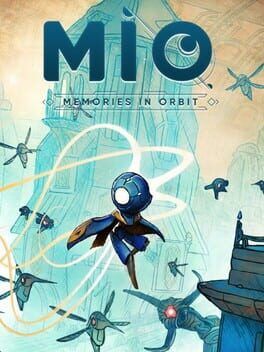

A launch‑week Game Pass spotlight on MIO: Memories in Orbit, focusing on why its art direction, combat rhythm, and exploration flow are worth discovering among 2026’s crowded Metroidvania lineup, plus how it plays on Xbox Series, PS5, Switch 2, and PC.
MIO: Memories in Orbit arrives on Xbox Game Pass in the middle of a brutally crowded Metroidvania year. Plenty of 2D action games are fighting for time on your dashboard, but MIO quietly does something different. It blends intricate, hand‑drawn sci fi with an almost musical sense of movement, turning the decaying corridors of the Vessel into something you feel as much as you explore.
This is not a scored review. Think of it as a discovery guide for Game Pass subscribers: what makes MIO worth downloading on day one, what kind of Metroidvania it actually is, and how it stacks up across Xbox Series, PS5, Switch 2, and PC.
What kind of Metroidvania is MIO?
MIO is a side‑scrolling action platformer set on the Vessel, a massive technological ark that is slowly falling apart. You control Mio, a nimble robot waking up in the middle of the collapse. Instead of medieval ruins or gothic cathedrals, you are weaving through coolant‑flooded maintenance shafts, overgrown data gardens, and machine graveyards where old caretaker units lie stacked like fossils.
The structure is classic Metroidvania: a single large map that folds back on itself as you gain new powers. The twist is how aggressively the game ties your movement, combat, and resource systems into a single rhythm. Traversal is not just about finding the right key ability for the next door, it is about keeping a flow state going as you chain jumps, glides, grapples, and wall strides without breaking your tempo.
If you like Metroidvanias that lean hard into platforming finesse and physicality rather than loot‑heavy builds or branching dialogue, MIO is aimed squarely at you.
Art direction: a decaying ark that actually feels lived in
The first thing Game Pass players will notice when that splash screen fades is the art. Screenshots for MIO look good, but in motion the Vessel feels almost overdesigned in the best way. Every screen layers angular machinery against soft organic shapes, with cables sagging like vines and coolant pools reflecting sparse neon light.
The color work is deliberate. Early zones saturate the screen with cold blues and sickly greens, then punctuate them with warm signal lights that guide your eye toward climbable surfaces or hidden routes. As you push deeper, the palette shifts: rust reds and violet shadows take over industrial sectors, while overgrown biomes push more natural greens and yellows through broken panels in the hull.
Crucially, this is not just a pretty backdrop. The environmental storytelling constantly sells the idea that the Vessel was once maintained and inhabited. You pass through dormitories where service drones lie powered down mid task, archives where data‑pearls sit cracked open, and maintenance bays where improvised repairs have literally re‑routed the architecture. The layout tells you as much about the downfall of the ship as any datapad.
Character design leans into contrast. Mio is sleek and readable, all smooth curves and glowing lines, while the enemies feel cobbled together. Some are clearly repurposed tools, others look like maintenance bots that evolved claws once nobody was watching. Bosses in particular are striking, each towering guardian fusing a distinct silhouette with a color language that telegraphs attack patterns before you ever learn their move set.
If you instinctively gravitate to Metroidvanias with strong aesthetic identity like Hollow Knight, Ori, or Ender Lilies, MIO absolutely belongs in that conversation from an art and atmosphere standpoint.
Combat: aerial pressure and resource‑driven rhythm
On Game Pass it is easy to bounce off a new Metroidvania if the first ten minutes of combat feel mushy. MIO avoids that pitfall. Every swing of Mio’s blade has a clean startup and impact, and the game pushes you toward the air almost immediately.
The foundational loop looks like this. Your basic combo strings together horizontal slashes, but the real depth appears once you add the double jump, glide, grapple, and the signature spider‑like wall and ceiling stride. Landing a hit in midair can refresh your jump, letting you stay aloft far longer than you expect. The best fights are a blur of bouncing off enemies, grappling to distant platforms, then diving back down with a strike that resets your movement again.
Overlaying all of this is an energy system that fuels everything beyond running and basic attacks. Glide too long or cling to a ceiling for extended periods and your reserves drain. Touching the ground, bouncing off certain enemy types, or striking special environmental anchors refills that meter. The result is a kind of combat rhythm game where your positioning and target choice are all about maintaining momentum rather than simply emptying a stamina bar.
Later on, ranged tools and decoys give you more control. Grapple hooks double as gap closers and evasive options. Orb projectiles let you pressure hard to reach targets or finish off weakened foes without risking a whiffed dive kick. Decoy units create openings by drawing aggro, which is particularly useful during multi enemy waves or attacks with long windups.
It is not the most build heavy combat system in the genre. You will not be piecing together wildly divergent weapon loadouts the way you might in something like Dead Cells. Instead, the game introduces a memory module system that lets you tweak Mio’s internal wiring. You can trade HUD elements for damage buffs, push more power into your combo finisher, or lean into low health risk and reward setups. It is a lighter touch, more about nudging the feel of your kit than reinventing it.
If you subscribe to Game Pass looking for a Metroidvania where every new weapon radically alters your playstyle, MIO might feel restrained. If what you want is a tight, air focused combat loop that rewards precision and route planning, there is a lot to enjoy here.
Exploration: flow state platforming and deliberate friction
Metroidvanias rise or fall on how satisfying it is to simply move through their worlds. MIO is unapologetically built for players who enjoy demanding platforming sequences and tolerating some friction to get there.
From the outset you have a double jump, a fast melee, and a glide. You layer on the grapple, the spider walk that lets you cling to walls and ceilings, and other traversal tricks at a brisk pace. Each new area of the Vessel is designed around the latest addition to your kit, with optional routes and secrets asking you to chain abilities in increasingly creative ways.
Here is the catch. Because those abilities all draw from the same energy pool, long traversal challenges become a kind of puzzle. Do you burn energy early to reach a safer foothold, or conserve it for a mid sequence correction if your timing is off The game frequently throws you into gauntlets where a single mistimed bounce or depleted meter sends you back to the start of a section.
Some players will love that. There is genuine satisfaction in finally nailing a sequence that once seemed impossible, surfing across the ceiling on your last sliver of energy before slamming into a grapple point and launching to safety. Others will find the repetition grating, especially when failed attempts mean a long runback from the last checkpoint.
As a Game Pass recommendation, the key is expectation. MIO is not a breezy, exploration first Metroidvania where every dead end hides a secret room. It is a game that asks you to learn its routes, recognize environmental cues, and treat navigation itself as a core challenge. If that clicks for you, the Vessel becomes a delight to unpick.
How it stands out in 2026’s Metroidvania crowd
This year is packed. Between long awaited heavy hitters finally arriving and a constant stream of stylish indie contenders, new Metroidvanias on Game Pass and beyond have to work to justify your time. MIO’s edge is that it is not trying to outgun the competition with raw content volume or loot tables. Instead, it focuses on three clear strengths.
First, atmosphere. Very few 2026 releases match how cohesively MIO ties its art, animation, and sound together. The score slides between moody ambient tracks reminiscent of Risk of Rain and punchier electronic pieces that hint at Daft Punk, always synced to the feel of the area you are in. Paired with meticulous parallax layers and lighting, each biome feels distinct without breaking the unified sci fi tone.
Second, traversal identity. Plenty of Metroidvanias have a grapple or a double jump. Fewer build their entire design around sustaining a movement flow. The combination of spider stride, energy management, and aerial resets gives MIO a platforming personality that is immediately recognizable. When you are clinging to the underside of a pipe network, bouncing between enemies just to keep your meter alive, there is not really another 2026 release that feels quite like it.
Third, encounter structure. Regular enemy compositions and the fifteen or so guardian bosses lean into the same idea of movement centric pressure. Instead of tight arenas where you trade blows at ground level, fights tend to use verticality and environmental hazards to force you into the air. Figuring out how each boss interacts with the architecture of the arena is as important as learning their attack tells.
In short, while MIO does not try to be the biggest or the most customizable Metroidvania, it stakes out a clear niche as the stylish, traversal focused sci fi entry on Game Pass this year.
Platform performance: Xbox Series, PS5, Switch 2, and PC
If you are choosing where to play outside Game Pass, or deciding whether to stick with your subscription version or double dip on another platform, here is what to expect.
On Xbox Series X and Series S, where MIO launches day one into Game Pass, the experience aims for a crisp, stable frame rate with fast loads. The heavy use of parallax layers, particle effects, and subtle post processing fits comfortably within the hardware ceiling, and the hand drawn art scales cleanly to 4K on Series X. Series S trades some resolution and effect density for consistency, but the core feel of movement and combat remains intact. It is an ideal way to sample the game if you are curious, with cloud streaming as a bonus if your connection can handle it.
PlayStation 5 offers a comparable experience on the technical side, benefiting from the same high resolution assets and brisk loading. The difference here is ecosystem. If you prefer Trophy hunting or playing with Sony’s DualSense features, PS5 is an attractive alternative. The quick resume and suspend resume quality of life is similar to what you get on Xbox, so choosing between them is mostly about where your friends list and achievements live.
On Nintendo Switch 2, MIO has to work a bit harder but the art direction pulls its weight. The cleaner lines and bold shading translate well to both docked and portable modes. You may notice more aggressive resolution scaling or pared back effects in the heaviest scenes compared to the current gen versions, but animation and input response remain the priority. The original Switch targets lower specs again, so if you own both Nintendo handhelds, the newer hardware is the clear choice.
PC is where you can really tune the experience. With modest system requirements, midrange hardware should have no issue running MIO at high frame rates with all visual bells and whistles enabled. Mouse and keyboard works, but the game is plainly designed around a controller, which is worth bearing in mind if you are downloading from Steam, Epic, or the Microsoft Store.
Whichever platform you pick, the key takeaway is that MIO’s strengths are in its art and feel, not in pushing hardware limits. You are not missing the point of the game by playing it on a less powerful device.
Who on Game Pass should download MIO first?
Because Game Pass makes trying MIO almost frictionless, the better question is where it should sit in your queue. If any of these describe you, it deserves to be near the top.
You enjoy Metroidvanias where platforming challenges are as memorable as boss fights, you are drawn to strong art direction and electronic leaning soundtracks, or you do not need sprawling RPG systems bolted onto your 2D action games as long as the core movement feels great.
If you are mostly here for narrative heavy adventures, loot heavy progression, or low stress exploration, you might want to treat MIO as a targeted taste test. Play through the opening hours on Game Pass, get a feel for the movement and the Vessel’s atmosphere, and then decide whether its sharper edges around traversal difficulty and backtracking work for you.
For everyone else in the 2026 Metroidvania crowd who has ever looked at a decaying sci fi megastructure and thought, “I wish I could climb all over that,” MIO: Memories in Orbit is exactly the kind of curiosity Game Pass was made for. Download it, give it a night, and see if the Vessel gets under your skin.