
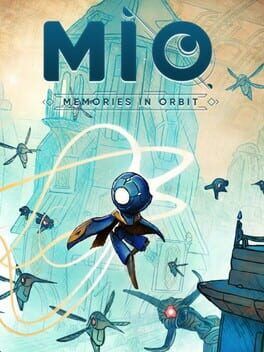

Rave reviews are positioning MIO: Memories in Orbit as 2026’s first big Metroidvania contender. Here’s how its art, combat feel, and finely tuned familiarity are carving out space next to Hollow Knight, Ori, and a post‑Silksong genre.
MIO: Memories in Orbit is only just out, but the Metroidvania crowd is already talking about it the way they usually talk about games years later. Polygon is calling it “Metroidvania Mount Rushmore” material. Other outlets land closer to “stylish but conservative,” but there is a striking consensus on three points: its art direction is among the best the genre has seen in years, its movement and combat feel are distinct even when divisive, and its design is familiar in a way that feels honed rather than lazy.
For a genre that has just weathered Hollow Knight: Silksong’s arrival and a flood of imitators, the fact that MIO is even in the frontrunner conversation for 2026 says a lot. It is not trying to reinvent Metroidvanias. It is trying to perfect a very specific flavor of them.
A biomechanical ship that looks good enough to live in
Every review starts in the same place: the Vessel. MIO’s sprawling ark is another in a long line of Metroidvania “bodies” you carve open over 15 to 20 hours, but critics are almost unanimous that it is one of the most striking spaces the genre has produced in years.
Polygon leans hard into the anatomical metaphor, describing the map as a body with a central Spine, Pearls that function like organs, and routes that loop and suture back into each other until you know its pathways like the veins in your own hands. Others focus less on metaphor and more on texture. Shacknews and AV Club talk about ruined bulkheads overgrown with strange fauna, slumped machines half reclaimed by moss, and small oases of clean metal where NPCs quietly unpack questions of identity, consciousness, and what it means to be “alive” when all the humans are gone.
Nintendo Life calls it visually “stunning but familiar,” and that phrase captures the overall critical mood. You have seen aspects of this before if you have played Ori’s painterly forests or Hollow Knight’s crumbling insect kingdoms, but MIO filters its influences through an angular, biomechanical style that is recognizably its own. Mio herself, with her cable hair and weightless, almost angelic silhouette, feels like a piece of concept art that somehow stayed intact all the way into the finished game.
Where MIO separates itself is in how consistently the visuals are tied to legible level design. Reviewers highlight how rarely spaces feel like throwaway corridors. Platforms and background machinery double as navigation clues. Light sources pull your eye toward secrets. When you do finally connect two distant parts of the Vessel, that moment reads not just as efficient shortcutting but as healing a wounded creature. It is exploration that is pleasing on a technical level and also emotionally coherent.
Movement first, combat second
If you come to MIO expecting a Silksong style gauntlet of punishing duels, you are setting yourself up for a different experience. Critic sentiment is remarkably aligned here: MIO is a movement game first and a combat game second.
Polygon puts it closer to Ori than Hollow Knight, and you see that reflected in how reviewers describe basic play. Mio is fast, light, and “vibrantly fluid.” Her wire hair trails behind jumps and dashes, selling a sense of momentum that reviewers repeatedly call “buttery” and “celestial.” Traversal is about stringing together double jumps, dashes, pogo strikes, swings and hairpin climbs into long, improvisational routes. Many critics single out long platforming runs to hidden upgrades or currency caches as the highlights of their time with the game.
That emphasis has tradeoffs, and the responses are nuanced rather than unanimously glowing. Some outlets applaud how Mio’s kit enables a constant forward push, making backtracking feel like express routing rather than chore. Others are more critical of the friction that shows up at the edges: her high speed makes lightly telegraphed spikes and tight wall gaps feel harsher than they look, and the hairpin move used to scale vertical shafts demands precise positioning in ways that can break the flow if you are even slightly off.
Combat sits on top of that movement instead of the other way around. Reviews agree that regular enemies, from hammer‑wielding guardians to floating drones, are there to harass you and punish sloppy dashing, not to provide elaborate duels. Bosses draw more praise. They are big, aggressive and pattern dense, asking you to learn tells, create your own pockets of safety and commit to damage windows.
The sticking point is feel. Multiple critics note that Mio’s attacks do not land with the same weight that her movement seems to promise. Dodges can be unreliable at the margins. When everything lines up, sliding in beneath a mech’s swing and carving through its weak point while your energy hums feels great, but MIO is not trying to be a precision combat showcase in the way Silksong or even something like Blasphemous is. It is more interested in maintaining pressure and presence as you move through the Vessel than in making every encounter a set piece.
That design choice is also reflected in its accessibility and punishment systems. Dying drops your currency but does not trigger a full corpse‑run ritual, and boss difficulty can automatically relax after repeated failures. Critics see this as the game quietly signaling where it wants your focus to be: learning the topography of a place, not memorizing the last ten seconds of a boss loop.
Familiar, but sharpened to a point
Across reviews there is a clear split between how people feel about MIO’s originality and how they feel about its execution. On one hand, hardly anyone is calling it innovative. References to Hollow Knight and Ori are everywhere. Some writers call it “risk‑averse” or “overly familiar,” pointing to genre staples like item‑locked doors, fetch‑quest‑adjacent objectives and sprawling, sometimes opaque critical paths as signs that MIO is more interested in perfecting a template than interrogating it.
On the other hand, even the more critical reviews agree that within those boundaries, MIO is startlingly well made. Currency feeds into a flexible, memory‑bank upgrade system that lets you lean into aggression, survivability or navigation without overcomplicating things. Secret‑rich side paths are substantial enough that completionist players feel rewarded rather than strung along. Difficulty sits in the sweet spot where a boss can take a dozen tries but almost never feels mathematically impossible.
If you have spent the past few years drowning in Metroidvanias, that balance matters. There is a wide gulf between “derivative” and “comforting,” and MIO tends to land in the latter for most critics. Its familiar structure is a foundation it uses to do a few things very well: deliver a cohesive, body‑like world, foreground fluid movement and let its art and sound quietly carry narrative beats about memory, personhood and the residue of human design.
After Silksong and in the shadow of the greats
The genre context here is impossible to ignore. Team Cherry’s Silksong finally dropping has reset expectations around what a new 2D exploration game needs to offer. Hollow Knight still dominates conversations around combat density and labyrinth design. The Ori duology defines “prestige platformer” art direction. Any game chasing the same audience has to answer the same question: why play this when those exist, especially now that Silksong is no longer a hypothetical?
Critics are already sketching out MIO’s answer. Compared to Hollow Knight and Silksong, MIO cares less about relentless, tight combat ecosystems and more about a sense of place as a continuous organism. Its hub, the Spine, is not Dirtmouth or Pharloom’s brittle peaks. It is a connective cable that makes you feel the Vessel’s layout in your bones, with every elevator, loop and vertical shaft knitting back into it. Where Hollow Knight’s dirt‑choked kingdoms feel buried and forgotten, the Vessel in MIO feels like something still fighting to regulate itself.
Against Ori, the differences are subtler but still substantial. Ori’s worlds are painted crises that constantly push you along emotional set pieces. MIO is quieter, more clinical in vibe, and more openly mechanical in its fiction. Its watercolor‑like backgrounds and intricate foregrounds are in service of a labyrinth you will live in for dozens of hours rather than a roller coaster of one‑off sequences. Reviewers who bring up Ori tend to land on a simple comparison: Ori is about escalation and spectacle, MIO is about intimacy and anatomy.
Crucially, as a post‑Silksong release, MIO does not try to compete on the exact same axes. Silksong pushes the “Metroidvania as high‑pressure action platformer” model to one extreme. MIO settles into the neighboring niche of “Metroidvania as patient exploration of a single, coherent organism,” where victory is not just beating a boss but making the map itself feel like home. That makes it attractive to players who crave structure and discovery, but who do not necessarily want to sign up for another hundreds‑of‑deaths gauntlet.
An early standard‑bearer for 2026
MIO: Memories in Orbit is not the next tectonic shift in Metroidvania design, and the reviews are not pretending otherwise. What they are doing is circling around a more grounded verdict. This is the first big Metroidvania of 2026 that feels like it belongs in the same ongoing conversation as Hollow Knight, Ori and now Silksong, not because it outguns them, but because it confidently occupies its own corner of the genre’s map.
Art direction that makes every screen worth staring at, movement that feels thrilling even when combat does not quite match it, and a familiar structure sharpened into something comfortingly exacting rather than tired; that is the recipe critics are responding to. For a year that will almost certainly see more Metroidvanias than anyone has time to play, MIO has already staked its claim near the front of the pack. If you are looking for the next world to get lost in after Silksong’s dust settles, the Vessel is ready to welcome you aboard.