
How Devolver and Artificer use a free, seasonal Home Alone‑style spin‑off on Steam to teach MINOS’s trap‑laying systems and sell the full maze‑building roguelite.
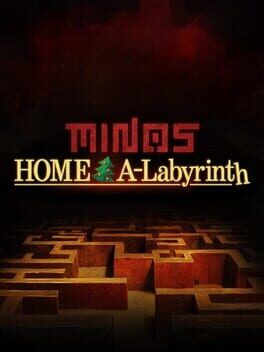
MINOS: Home A‑Labyrinth is the kind of promo that only Devolver Digital would greenlight. It is a limited‑time, free holiday spin‑off on Steam that turns upcoming roguelite MINOS into something that looks a lot like a legally distinct homage to Home Alone, then quietly doubles as a hands‑on tutorial for the full game’s systems.
On the surface it is all slapstick snow and intruders stepping on metaphorical LEGO. Underneath, Artificer is doing something much more calculated: using a seasonal one‑shot to on‑board players into maze‑defense fundamentals before the main event even launches.
A Cozy Slice Of The Full Roguelite
Home A‑Labyrinth reframes MINOS’s ancient‑labyrinth concept into a contemporary holiday home under siege. You are still designing routes, creating kill corridors and juggling limited tools, but here it is all wrapped in tinsel. The core loop is deliberately short. Build out a floor of the house, place a handful of traps, start the wave, then scramble when the plan inevitably collapses.
That structure matters, because it mirrors the rhythm MINOS is aiming for while stripping away mid‑run meta progression and long‑term stakes. Instead of a dense roguelite run full of relic synergies and branching floors, you get snack‑sized scenarios where failure is funny, not punishing. You understand very quickly that the real goal is to learn how its trap language works.
Learning To Think Like A Labyrinth Architect
The most interesting thing about Home A‑Labyrinth is how it quietly teaches you to think like a MINOS player.
Every improvised defense you place has two lives. In the moment it is a slapstick gag, whether you are icing a hallway to send thieves skidding into a wall, or stacking fireworks near a doorway for a chain reaction. In design terms, it is asking you to read timing, line of sight and enemy routing. You start to recognize how narrow spaces amplify damage, how corners buy you extra trap cycles and how overlapping hazards create soft crowd control.
Because each run is self‑contained, you are free to experiment. Swapping a corridor of simple snares for a funnel that leads intruders through three different hazards is a low‑risk decision when the cost of failure is a few minutes and a pratfall. That feedback loop is exactly what a bigger roguelite needs, delivered here in a safe, playful context.
The enemies themselves reinforce those lessons. Clumsy intruders do not just walk straight into danger; they bumble, hesitate and sometimes pathfind around obvious traps. That forces you to think two moves ahead, hiding threats behind furniture, chaining knockbacks into damage zones or using one trap to push them toward another. By the time you are done with a handful of clears, you are already playing MINOS in miniature.
A Steam Page That Reads Like A Design Document
Even the Steam description makes the project’s intent clear. Home A‑Labyrinth is explicitly billed as a "lighthearted seasonal promo" released entirely for free, with a call to wishlist MINOS if the bite‑sized version clicks. The pitch is honest about being a spin‑off and leans into the novelty instead of pretending this is a full product.
That transparency helps because the structure is tuned for teaching, not for hundreds of hours of progression. Sessions are quick by design. Once you understand how a handful of hazards and layouts work, you are nudged toward wanting more toys and bigger spaces to ruin. That desire is what the eventual full game is built to satisfy.
It is also notable how closely the interface and presentation match what we have seen of MINOS itself. Menu layout, trap placement flow and the way information is surfaced are all familiar, so time spent here should carry over directly. For a roguelite, where the first few hours can make or break player retention, having an approachable holiday version that does the onboarding legwork is quietly valuable.
Why Free Seasonal Spin‑Offs Are Back In Style
Home A‑Labyrinth is part of a broader trend of publishers leaning on small, theme‑driven stand‑alone promos instead of traditional demos. A normal slice of a roguelite often drops you into the middle of a progression curve, overwhelmed with relics and abilities that make little sense without context. A seasonal one‑off like this resets expectations.
You are not being asked to judge the full game’s depth in thirty minutes. You are being invited to hang out with a tone and a ruleset. The barrier to entry is almost nonexistent. It is free, it looks familiar thanks to obvious holiday movie inspiration and it offers quick laughs that are easy to share on social media.
From the publisher side, the upside is clear. A festive spin‑off is a marketing beat that can stand on its own news cycle, from announcement to launch, and it does double duty as a stealth tutorial. It generates wishlist adds for MINOS while giving players a positive first contact that is not gated by a purchase or a timed demo window.
For players, the value is just as straightforward. You get a complete, self‑contained toybox that respects your time. If you bounce off the pacing or the slapstick tone, you have lost nothing. If it clicks, you head into the full game already fluent in its language of chokepoints, trap synergies and pathing tricks.
Holiday Hijinks With A Purpose
MINOS: Home A‑Labyrinth works because it never forgets to be entertaining. The best runs are messy, full of misfires and unexpected chain reactions when a plan goes sideways. That chaos is exactly what sells the premise of a defensive roguelite about building unfair spaces for overconfident intruders.
At the same time, every pratfall is teaching you something useful about how MINOS will actually play. It is a smart fusion of marketing and design, and a reminder that sometimes the most effective way to explain a complex system is to wrap it in a snowball fight and give it away for free.
If Artificer can scale the ideas on display here into a full, replayable labyrinth campaign, MINOS will hit Steam with a player base that already knows how to weaponize a floor plan. For a game about building the perfect maze, that is a very good start.