
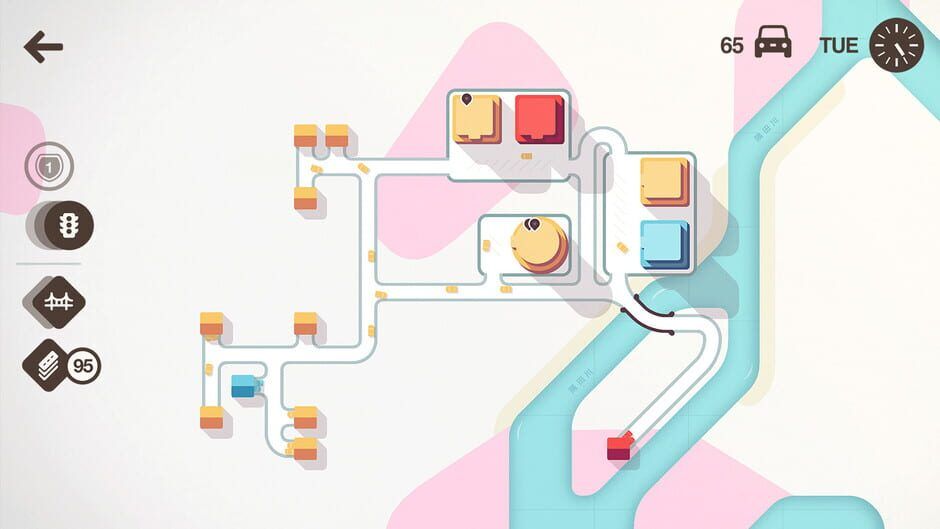

Dinosaur Polo Club’s minimalist traffic puzzler gets a scenic new Cape Town map in the free Tabletop Traffic update, showing how smart live support can keep a tiny game thriving on PC, mobile, and Switch for years.
Mini Motorways is the kind of game that looks finished at a glance. It has a clean art style, a focused design about drawing roads to keep cities moving, and a complete world tour of maps already in rotation. Yet in 2026, Dinosaur Polo Club is still quietly adding free content across PC, mobile, and Switch, and the new Tabletop Traffic update proves why the game’s long‑tail support works so well.
A postcard of Cape Town in motion
Tabletop Traffic’s headline addition is a new map based on Cape Town, South Africa. Mini Motorways has always been good at capturing a city’s personality through simple shapes and color, and Cape Town might be one of the strongest examples yet. The playfield stretches along a mountainous coastline, with neighborhoods hugging bays and climbing into the shadows of familiar silhouettes that echo Table Mountain and Lion’s Head.
From your first few houses and destinations, the layout forces you to think about the city’s geography. Water splits suburbs into pockets, while ridges and peaks create natural choke points. The map invites long coastal roads that feel efficient but can turn into gridlock if multiple colors start overlapping, and short, direct links through tunnels that come with a higher upfront cost in your limited upgrades. It is a map about knowing when to wrap around the mountain and when to go through it.
As traffic scales up, Cape Town leans on Mini Motorways’ signature tension between short‑term fixes and long‑term planning. A single misplaced bridge over a cove can lock you into a lopsided network twenty minutes later. A carefully timed motorway that leaps across the bay can save a dying business, but it might starve another part of town of resources. That constant trade‑off feels especially sharp here, because the coastlines create fewer truly neutral building spots. Everything is either strategically vital or awkwardly out of the way.
How Cape Town rethinks the existing formula
Mini Motorways’ existing maps already cover a lot of ground. Los Angeles is a flat sprawl that teaches you road fundamentals. Tokyo and Beijing escalate density, forcing tight grids. Maps like Zurich and Auckland lean on water and bridges, while others push you to juggle highways across a fractured city.
Cape Town fits into that lineage while still feeling distinct. Compared with previous coastal maps, Tabletop Traffic’s city is more linear. The coastline and mountain range draw your eye across a long horizontal strip, which naturally encourages parallel routes and layered motorways. You are not just bridging rivers or bay mouths; you are solving how parallel streams of commuters can coexist without constantly crossing each other.
The mountains introduce a rhythm that feels different from something like Hong Kong’s island‑like layout. Where Hong Kong’s challenge is often about hopping between discrete chunks of land, Cape Town is more about skirting past bottlenecks, like threading a needle along a cliff face. Tunnels become as important as bridges, effectively adding a vertical dimension to how you think about paths. Do you dive under the mountain to reach a fast‑growing commercial hub, or let slower surface roads absorb the pressure while you reserve your top‑tier infrastructure for cross‑town motorways?
This makes Cape Town an excellent late‑game map for veterans. It does not overwhelm new players with special rules or gimmicks; instead it subtly changes how familiar tools behave. The same road tiles, bridges, and motorways feel different when the land itself narrows your options, and that is the kind of twist that deepens a game’s sandbox rather than fragmenting it.
Four ways to drive the new city
Like the rest of Mini Motorways’ roster, Cape Town is playable across all four major modes: Classic, Endless, Expert, and Creative. That simple decision multiplies the value of the Tabletop Traffic update.
Classic Mode delivers the familiar pressure cooker experience, where each commuter icon ticking up at a destination tightens the noose. Cape Town’s narrow passes and long coastal runs make those late‑game spikes feel particularly punishing. When one critical junction clogs, there often is not a convenient parallel route waiting to take the load.
Endless Mode turns the map into more of a sandbox, ideal for players who want to soak in the aesthetic of a growing coastal city without stressing over hard fail states. The geography that feels oppressive under Classic’s timer becomes a gentle puzzle here, inviting you to gradually re‑route neighborhoods, replace long roads with tunnels, and sketch cleaner commuter corridors as the city matures.
Expert Mode takes the tension of Classic and dials it up for high‑score hunters. The constrained terrain punishes sloppy early placement, and your upgrade choices in the first ten weeks can effectively decide if your late‑game network has room to breathe. Cape Town’s design shines here, because its big hazards are visible from the start. You can see where the mountains will pinch, you can see how the coastline splits districts, and the mode is about making a long‑term plan to cope with those inevitabilities instead of reacting in panic.
Creative Mode brings out a very different side of the map. Rather than fighting to survive, you can treat Cape Town like a digital model city on a coffee table. The sightlines along the water, the stacked roads snaking around the hills, and the gentle color palette give it a diorama quality that fits the update’s “Tabletop Traffic” name perfectly. It is easy to imagine players using this mode specifically to create screenshots and gifs of idealized coastal cities that would be almost impossible to maintain under time pressure.
Daily and Weekly Challenges layer global competition over all of this, remixing rules and conditions so you can revisit Cape Town in new configurations. A restriction that limits motorways, for example, suddenly makes every tunnel placement feel like a minor event, while a challenge that boosts the number of bridges you start with can transform how you approach the coastline.
A model for long‑tail live support
On paper, Tabletop Traffic is a modest update: a new map, new challenges, some additional creative tools, all for free. In practice, it is a textbook example of how to keep a small, premium‑leaning game alive without resorting to intrusive monetization.
First, the update lands simultaneously across platforms. Whether you are playing through Apple Arcade on mobile, on Nintendo Switch, or on Steam for PC and Mac, Cape Town arrives as part of the core package. There is no split between a “main” platform and lagging ports, and that parity keeps the community conversation coherent. When players share challenge scores or Creative Mode screenshots, everyone can participate.
Second, the content respects how people actually play Mini Motorways. A new map is one of the few things that is universally appealing to both casual commuters and leaderboard chasers, and making it free removes any friction to returning. You do not have to remember what DLC you bought or which cosmetic pack a certain feature was in; you can simply click Cape Town and start drawing roads.
Third, Dinosaur Polo Club keeps the scope of each update sensible. Tabletop Traffic does not bolt on an entirely new progression system or currency. Instead it deepens the existing loop. Creative Mode gains a scenic new canvas. Classic and Expert gain a late‑game challenge that feels fair but demanding. Endless players get a relaxing new skyline to grow. The game stays recognizable, which matters when you are trying to lure back lapsed players who might not have touched it since a launch window several years ago.
Finally, the studio pairs concrete content drops with a clear roadmap. The 2026 outline hints at more maps, additional Creative Mode features, and even a mystery event later in the year. That kind of communication fuels long‑term curiosity without locking the game into the relentless grind of a service title. Players can dip in for a new update, enjoy the additions, and step away until the next stop on the roadmap without feeling punished.
Why Mini Motorways is still thriving
The continued success of Mini Motorways across PC, mobile, and Switch comes down to a blend of design clarity and thoughtful support. The core loop is timeless: draw a road, watch the car move, tweak the intersection, try to keep the flow alive a little longer. There are no daily login streaks to protect, no battle pass seasons to chase. That simplicity makes it easy to recommend and easy to return to.
At the same time, the game has quietly grown more versatile over the years. What began as a pure score‑chasing puzzle has evolved into something that can be played as a meditative city toy in Creative and Endless, a razor‑sharp challenge in Expert, or a quick mobile distraction during a commute. Features like cloud saves and cross‑platform parity lower the friction of jumping between a phone session and a longer run on PC or Switch.
Updates like Tabletop Traffic also highlight how strong the fantasy remains. Each new map is not just a reskin; it is a new way of feeling what it is like for a city to breathe. Cape Town’s coastal corridors and mountain tunnels give a different texture to your decisions than the tight grids of New York or the meandering rivers of Zurich. By anchoring maps in recognisable geography, the game turns abstract traffic puzzles into little love letters to real places.
Years after launch, Mini Motorways does not need a sequel to stay relevant. It just needs thoughtful, steady additions like Cape Town, delivered with the same care and restraint that defined the original release. Tabletop Traffic is exactly that: a free update that deepens the game for everyone, proves the value of long‑tail support, and gives players one more excuse to get lost in the quiet satisfaction of a perfectly flowing commute.