
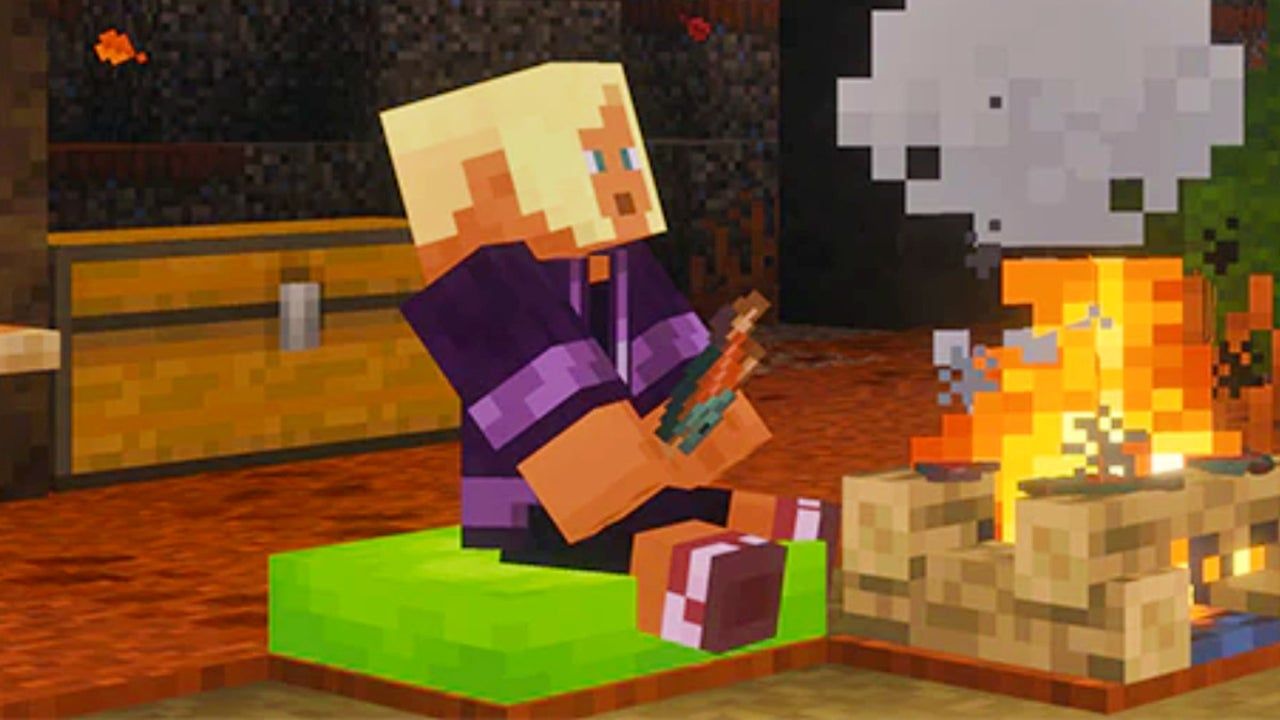

Mojang's Minecraft Preview 26.40.30 adds cushions, straw beds, and abandoned camp changes. Here is how sitting and temporary sleeping affect survival building, roleplay, and spawn management.
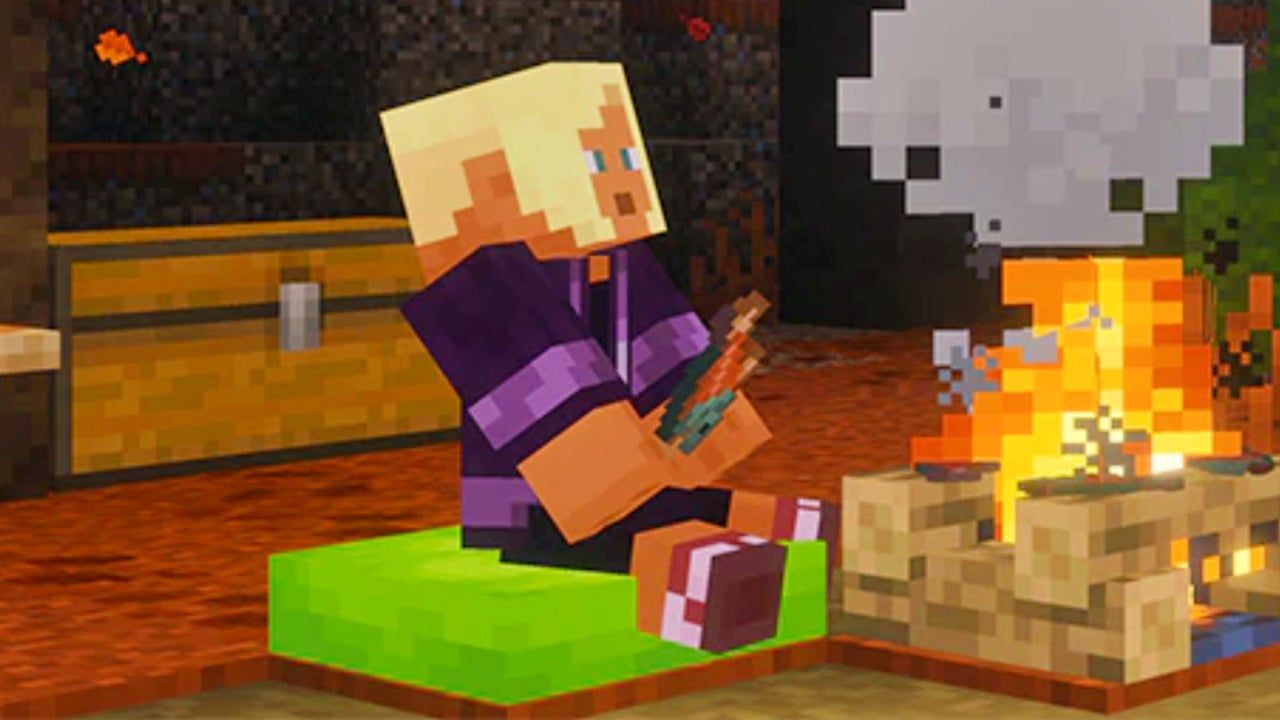
Image: en.softonic.com
Minecraft’s new rest tools change an old survival tradeoff
Mojang’s Minecraft Preview 26.40.30 introduces two experimental rest features with very different survival uses: the Cushion, which lets players sit, and the Straw Bed, which lets players sleep through the night without setting a spawn point. Mojang’s own patch notes describe the update as a Bedrock Edition Preview, with the features listed under Drop 3 Experimental Features.
The immediate practical change is spawn control. A normal bed has long carried a strategic cost: use it to skip night and you also commit your respawn location to that bed. The new Minecraft straw bed separates those two decisions. According to Mojang, it can be used to sleep through the night without setting spawn, but it breaks after one use. If you try to use it in the Nether or The End, it is destroyed there as well.
That makes this Minecraft preview update unusually relevant to survival players. It does not add a new weapon, boss, or resource tier, but it changes the risk calculation around travel. Players who build around a carefully chosen home spawn, world spawn, bed hub, or portal network now have a cheap temporary night-skip option that does not overwrite that plan.
How the Straw Bed works in practical survival play
Mojang says Straw Beds are crafted from three Hay Bales, producing four Straw Beds. That recipe matters because it prices temporary sleep around farming infrastructure rather than rare exploration loot. For established survival worlds, wheat farms and hay bale storage are already common. For early-game travel, the cost is still meaningful, because three Hay Bales require a larger wheat supply than a single bed’s wool and planks.
The strongest use case is long-range overworld exploration. If you are mapping, searching for structures, moving animals, scouting biomes, or traveling between build sites, a Straw Bed lets you clear hostile night spawns without moving your respawn anchor away from base. That is the core value of Minecraft sleep without spawn reset: it lets sleep become a travel consumable rather than a permanent logistical decision.
The single-use rule keeps it from replacing regular beds. A regular bed remains the better choice for a base, village outpost, or mining camp where you actually want to respawn. A Straw Bed is better when death routing matters. If your main bed sits near storage, farms, maps, or gear recovery supplies, accidentally resetting spawn hundreds or thousands of blocks away can turn one mistake into a larger recovery problem. The Straw Bed is Mojang’s first official answer, in this preview, to that specific survival frustration.
There are limits. Mojang confirms the Straw Bed cannot be used in the Nether or The End, and attempting to sleep on one there destroys it. That keeps the usual dimension rules intact. It also means this is not a tool for bypassing Nether danger or End expeditions. Its value is concentrated in the Overworld, where skipping night already fits Minecraft’s existing rhythm.
The Cushion gives builders an official seat, with useful placement rules
The Minecraft cushion is the other half of the update, and it addresses a different player habit: simulating furniture with stairs, trapdoors, minecarts, boats, or mods. Mojang defines the Cushion as an item players can place in the world and interact with to sit on. It comes in 16 colored variants and is crafted from three Wool Slabs of the same color.
The placement rules are where builders will find the long-term value. Mojang says a Cushion can be placed on any flat surface, aligns horizontally to the grid, sits vertically on top of its supporting surface, cannot move, breaks if the supporting block is removed, and has no collision. It can overlap with other objects except other cushions.
PCGamesN reports that this no-collision behavior allows players to place a Cushion on the lower part of Wood Stairs to create an instant chair design, without awkward clipping. The same report notes broader decorative potential, including use on surfaces such as trapdoors, while also observing that placing one on a button or pressure plate can break it when sat on because the interaction depresses the support.
For survival builders, that means seating finally has a clean official interaction, but it still asks for planning. Because Cushions depend on a support block and cannot move, they are less like portable chairs and closer to finishing pieces for interiors, campsites, meeting halls, boats, taverns, map rooms, and roleplay spaces. The design ceiling is high because the item is functional and decorative at the same time.
Abandoned Camps are becoming rest stops, but the preview has a gap
Mojang’s patch notes also update Abandoned Camps. In Preview 26.40.30, Abandoned Camps now generate in Pale Garden and Flower Forest biomes, Straw Beds can be found in Abandoned Camps, and camps have been updated to place procedural trees. Mojang also says it fixed wrong potion names in the Abandoned Camp loot tables.
That pushes the new rest system into world generation, not only crafting. A player who finds an Abandoned Camp can treat it as a temporary overworld stop, especially because Straw Beds are now part of those camps. In survival terms, that encourages a cleaner travel loop: discover a camp, use or collect its temporary sleep option, then keep moving without changing spawn.
There is one important preview-stage limitation. Mojang lists a known issue stating that Cushions are not currently generating in Abandoned Camps, although they can be found in the creative inventory. EGW.News also highlights that gap, noting that the two features shipped together in the test build but do not yet appear together naturally in the world.
That distinction is worth preserving. Confirmed now: Straw Beds can be found in Abandoned Camps in this preview, and Cushions exist as craftable and creative-inventory items. Unconfirmed for stable release: whether Abandoned Camps will eventually generate with Cushions, how frequently Straw Beds will appear, and whether the camp layout or loot economy changes again before the Drop 3 features leave testing.
Roleplay gains are obvious, but the strategy layer is spawn discipline
The Minecraft sit update will be read by many players as a roleplay and building win, and that is fair. IGN reports that players reacted strongly to the announcement because sitting without mods has been a long-running request. The same report points to fan comments on Mojang’s announcement video celebrating official sitting as a surprisingly large addition for roleplay.
For survival strategy, though, the bigger shift is discipline around spawn state. In Minecraft, where you respawn can define how risky a journey really is. A player with a spawn bed beside sorted storage, backup armor, food, maps, and Nether access has a recovery plan. A player who resets spawn in a remote hut for one night of safety can lose that plan without noticing until death.
The Straw Bed creates a new split between expedition sleep and settlement sleep. Regular beds remain infrastructure. Straw Beds become consumables. That distinction should affect how players pack for exploration. A sensible travel kit after this update may include several Straw Beds for overworld nights, while keeping the real spawn bed at the main base or a deliberate outpost.
Builders get a similar division. Cushions serve the social and aesthetic side of a base: dining rooms, benches, camps, lodges, classrooms, council chambers, and multiplayer hubs can now have actual seated interaction. Straw Beds serve the field economy. Together, they make rest less binary. A player can sit in a finished build, sleep temporarily on the road, and still protect the respawn plan that holds a survival world together.
Availability, timing, and whether survival players should wait
The safest confirmed availability is Mojang’s own listing: Minecraft Preview 26.40.30 is a Bedrock Edition Preview published on July 7, 2026, and the update was scheduled to begin rolling out later that day. Mojang labels the Cushion, Straw Bed, Abandoned Camp changes, and Dappled Forest adjustments as Drop 3 Experimental Features, which means their behavior can still change.
Other outlets add broader testing and release context. PCGamesN reports that the features are part of the latest Java Snapshot and Bedrock Preview patches, and describes them as part of what will eventually become the third Game Drop of 2026. Eurogamer says the full release is planned for later this year. VGTimes reports a full release planned for the third quarter of 2026 and says the update is available in Java Snapshots and Bedrock Edition Preview 26.40.30 across PC, Xbox, PlayStation, Nintendo Switch, and mobile devices. Mojang’s provided Preview 26.40.30 source text, however, is specifically a Bedrock Edition Preview note, so players should check their own platform’s preview or snapshot access rather than assume stable-world availability.
If you play in a long-running survival world, the practical advice is to test cautiously. Preview and Snapshot builds are for features before full release, and EGW.News explicitly notes that Mojang can still change how Straw Beds or Cushions work before stable release. Use a copy of an important world if you want to experiment early.
If you prefer stable survival, waiting is reasonable. The key systems to watch are recipe cost, camp generation, Cushion support interactions, and whether Straw Beds keep their current one-use spawn-free sleep identity. If those survive testing, Minecraft’s next rest update will give survival players a cleaner way to travel, build, and roleplay without accidentally turning a night skip into a spawn-management mistake.