
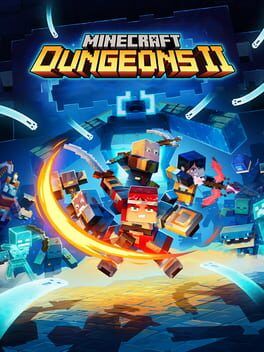

Minecraft Dungeons II is now playable on Steam Deck after a quick Steam update, but full verification is still pending as early reviews debate its ARPG depth.
Image: IGDB
Store links: Minecraft Dungeons II on Steam
Steam Deck support arrived fast, but it is still provisional
Minecraft Dungeons II has received a Steam update that makes the game playable on Steam Deck, according to the official Steam announcement cited by GamingOnLinux, DLCompare, and TheSixthAxis. That is the strongest practical development for handheld players this week because the sequel launched on September 29, 2026 with serious SteamOS trouble, then received a compatibility fix within days.
The Steam announcement’s wording is careful. The developers said the game “should now be playable on Steam Deck,” while warning that “some issues may occur such as missing on-screen keyboard functionality.” The same post says more improvements are planned “in a future update to bring full Steam Deck verification.” In plain terms, Minecraft Dungeons II Steam Deck play is no longer blocked in the way early SteamOS users reported, but Valve-style confidence is not yet implied by the developer message.
That distinction matters for anyone choosing where to buy Minecraft Dungeons II PC. A game being playable on Deck is a different state from being fully verified, especially for an action RPG that asks players to manage heroes, gear, upgrades, account features, co-op sessions, and character progression across long stretches of play. The immediate fix lowers the risk for players who already bought on Steam or who want a handheld-first copy, but the official note still leaves room for friction in menus and text input.
The update also lands while Minecraft Dungeons II reviews are settling into a broadly positive but divided early consensus. Nintendo Life’s roundup listed a 75/100 critic score on Metacritic, an 8.2 user score on Metacritic, and a 77/100 average critic score on OpenCritic at the time of its article. That puts the sequel in the territory of a solid, accessible dungeon crawler rather than an uncontested must-buy, which makes platform choice and technical reliability especially important for buyers.
The awkward part is how the launch message changed
The speed of the fix is welcome, but the Steam Deck story did not begin cleanly. GamingOnLinux reported that Minecraft Dungeons II launched “completely broken” on Steam Deck and SteamOS, then noted that a pre-release Minecraft.net blog post had originally mentioned Steam Deck in a cross-progression example. According to GamingOnLinux, an archived version of that blog said players could link platform accounts to the same Microsoft account and continue with the same hero, using “a Steam Deck and an Xbox” as the example. The live version later removed the Steam Deck reference while keeping the broader account-linking language.
That is a notable platform-communication problem rather than a confirmed broken promise about final Verified status. The source material supports two separate facts: an archived blog post used Steam Deck as an example, and the later version did not. GamingOnLinux describes the edit as silent, but the provided material does not include an explanation from Mojang, Xbox Game Studios, Double Eleven, or Mojang Studios for why the line changed.
TheSixthAxis reported the original failure mode in more technical terms. On SteamOS, the game reportedly presented a warning to install a missing online component while running through Proton, with the article pointing to Windows-specific Xbox account support as part of the problem. TheSixthAxis also noted that Minecraft Dungeons II does not require a Microsoft account login to play, but that the closer link to Xbox APIs built into Windows was problematic for Linux users at launch.
That context changes how to read the new patch. This is not a late-life compatibility bonus for an old PC release. It is a rapid repair to a launch-week problem on a major handheld PC platform, after the game’s own pre-release messaging had at least briefly positioned Steam Deck as part of the expected cross-platform journey. For players who plan to move a hero between devices, confidence in account behavior is as important as raw frame rate, and the sources currently provide more certainty about basic playability than about the finished state of every related account feature on SteamOS.
Handheld players still have a few practical caveats
For Minecraft Dungeons II handheld players, the most useful takeaway is that the Steam version should now start and play on Deck, but the official known issue is exactly the kind of problem that can interrupt an RPG loop. Missing on-screen keyboard functionality can affect account entry, naming, chat-adjacent fields, or other text-input moments depending on how the game presents them. The Steam announcement does not list every scenario, so players should treat the keyboard warning as a general usability caveat rather than a narrowly defined bug.
TheSixthAxis adds one more wrinkle from its own testing. After the update, the outlet said the game “now works great” in SteamOS on a PC, but also reported that Mojang had “seemingly” removed the ability to link to a Microsoft account in that environment. The outlet’s wording is important: it is an observed test result, not a formal patch note. The same report says Microsoft account linking provides cross-platform progression, account-based rewards, and can sync extra content, while also stating that it is not strictly required for online play or cross-platform co-op.
That leaves buyers with a clear split. If your priority is local Steam Deck play, the new Minecraft Dungeons 2 SteamOS update appears to address the headline blocker. If your priority is carrying one hero seamlessly between Steam Deck and Xbox through Microsoft account linking, the source material does not yet establish that the updated SteamOS experience is fully settled. GamingOnLinux’s archived blog comparison makes that uncertainty harder to ignore because the removed example specifically described continuing progress between Steam Deck and Xbox.
There is also no supported performance profile in the provided sources. The update says playable, not a target frame rate, battery-life estimate, graphics preset, or stable Verified checklist result. For a loot-driven action RPG, moment-to-moment performance matters less than in a twitch shooter, but stutter, small UI text, and menu friction can still wear down long sessions. The safest reading is that the Steam Deck door is open, while the final comfort level remains pending further developer updates and broader player reports.
The first review wave praises added depth, then argues over how deep it goes
The early review picture is useful because it explains who is likely to tolerate those handheld caveats. Nintendo Life’s roundup shows critics broadly agreeing that Minecraft Dungeons II expands the original game’s action RPG formula, while disagreeing on whether that expansion is enough for players who want sustained buildcrafting, endgame pressure, and stronger use of the Minecraft setting.
Destructoid gave the game 9/10 in the roundup and called it an “excellent advancement” that expands and improves on the original in most conceivable ways. DayOne, at 8.5/10, praised tougher and flashier combat, a bigger and more cohesive world, and more varied character builds, while also pointing to a lacklustre endgame and minor issues. Press Start’s 8/10 review, as quoted by Nintendo Life, said the sequel adds depth without losing approachable chaos, highlighting The Sift and an expanded gear game, while wishing its glimpses of an open world went further.
The critical counterweight is IGN’s 6/10. In the excerpt collected by Nintendo Life, IGN described Minecraft Dungeons II as a shallow ARPG that offers a few evenings of low-stakes dungeon delving, but argued that it makes poor use of Minecraft’s world and has barebones story and skin-deep hack-and-slash combat. GameSpot’s 7/10 assessment, also quoted in the roundup, placed the game closer to the middle, saying it is not a radical reinvention and that it adds depth and connects its world to the wider Minecraft universe while preserving an approachable dungeon-crawler shape.
Those review disagreements track with a familiar ARPG divide. Players who enjoy readable loot, brisk co-op, and approachable builds may see Minecraft Dungeons II as a confident sequel. Players who come from heavier loot games and want intricate trees, punishing endgame loops, or dense progression economies may find the same accessibility limiting. As Elara Chen’s RPG brain reads the available criticism, the decisive question is less “is it good?” and more “how much build pressure do you want from your dungeon crawler?” The current review spread suggests the game is strongest as a friendly progression chase and weaker as a long-term systems labyrinth.
The emerald cap change is small, but it speaks to progression pressure
The Steam Deck update arrived alongside a balance adjustment across all platforms: the emerald cap has been increased from 9,999 to 99,999. According to the official Steam announcement quoted by GamingOnLinux and DLCompare, that balance change does not require a game update and takes effect the next time players log in.
On paper, a currency cap increase looks like a simple number change. In an action RPG, it affects how often players must break their dungeon rhythm to spend, upgrade, or manage resources. DLCompare reported that the emerald limit had quickly surfaced as a community issue after launch, citing Minecraft Feedback where one player said they reached the 9,999 cap in less than two hours and lost emeralds earned beyond it. DLCompare also notes that emeralds are used with Merchants and for upgrades at the Blacksmith.
The official Steam post does not say whether the higher cap was made in direct response to those specific complaints. Still, the timing makes the adjustment relevant to the same buyer question as Steam Deck support: how smooth is the game’s progression loop in real play? If a loot game is built around short bursts, co-op sessions, and portable play, repeatedly hitting a low currency ceiling can make the loop feel oddly cramped. A tenfold increase gives players more room to bank rewards before returning to vendors and upgrades.
For handheld sessions, that matters more than it may appear. Steam Deck play often happens in fragments: one dungeon before bed, a co-op run on the couch, a few gear checks between longer sessions elsewhere. A higher emerald cap reduces the chance that a player loses value simply because they stayed in the flow too long. Combined with the SteamOS fix, the balance change suggests the team is responding quickly to launch-week friction, although full Deck verification and account behavior still remain the larger unanswered items.
Where to play if you are buying this week
Minecraft Dungeons II is available on PC, Xbox Series X|S, PlayStation 5, Nintendo Switch, and Nintendo Switch 2, according to DLCompare and TheSixthAxis. For most players, the platform choice now comes down to how much they value handheld PC flexibility against the still-unfinished Steam Deck support path.
If you want Minecraft Dungeons II PC primarily for a Windows desktop or laptop, the Steam Deck issue may be secondary unless you planned to split time with Valve’s handheld. If you want a Steam copy because your library, friends list, and refund tools live there, the new update makes that decision easier than it was at launch. The game should now be playable on Steam Deck, and the emerald cap improvement applies across platforms after login. The remaining caution is that full Steam Deck verification has not arrived, and the official warning about on-screen keyboard issues is still active.
If your priority is console convenience, the current sources do not report equivalent launch-blocking issues on Xbox Series X|S, PlayStation 5, Nintendo Switch, or Nintendo Switch 2. That does not prove those versions are flawless, but the provided reporting focuses the technical problem on SteamOS and Linux compatibility. Families and co-op groups that want the least account-and-Proton uncertainty may reasonably choose a console version, especially if they do not need the Steam ecosystem.
If you are waiting on Minecraft Dungeons II handheld play specifically, the recommendation depends on your tolerance for rough edges. Players comfortable with early patches, minor UI snags, and possible account-linking uncertainty can consider the Steam version now that the main SteamOS blocker has been addressed. Players who need verified status, reliable on-screen keyboard behavior, and proven cross-progression between Deck and Xbox should wait for the promised future update or a clearer developer statement.
The review context supports that patient approach. With Metacritic and OpenCritic averages in the mid-to-high 70s at the time of Nintendo Life’s roundup, this appears to be a well-liked sequel with contested depth rather than a release so universally praised that buyers should ignore platform caveats. Minecraft Dungeons II may be a strong fit for approachable co-op loot runs, build experimentation without oppressive complexity, and a gentler ARPG rhythm. The Steam Deck update makes that fit available to many handheld PC players sooner than expected, but the best version of that portable experience is still being built.