
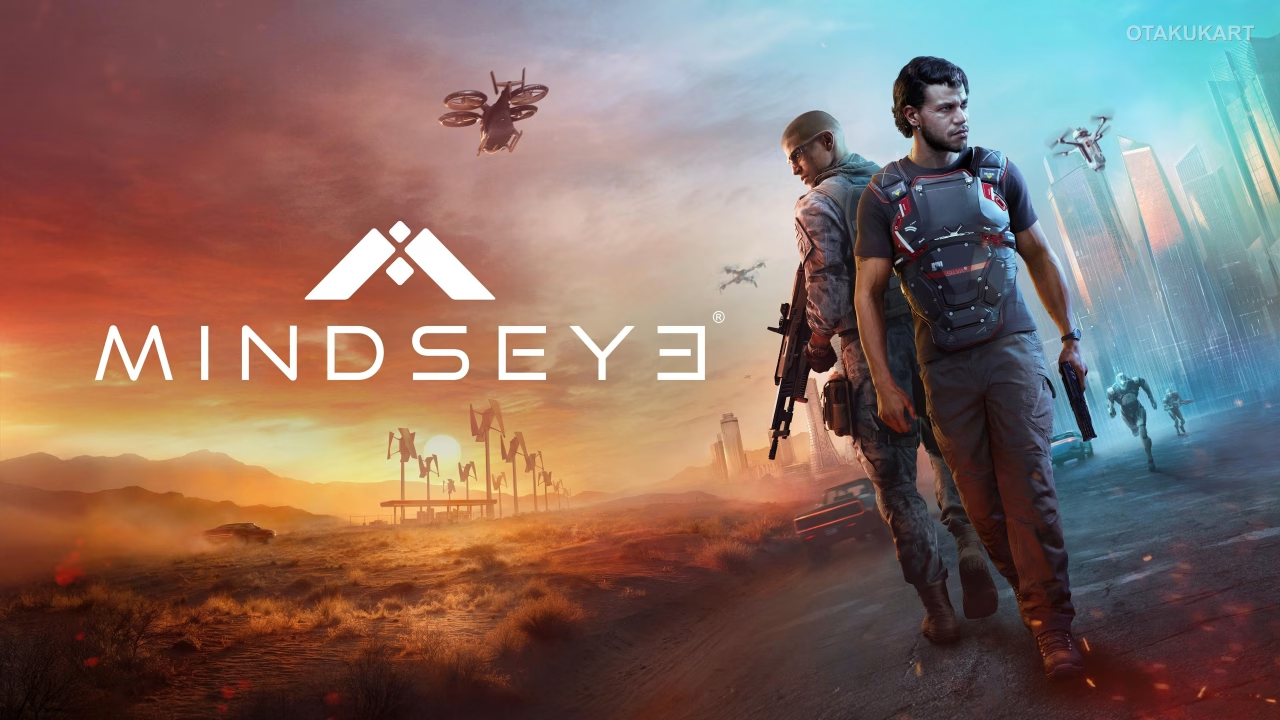

Former Build A Rocket Boy workers and IWGB supporters protested outside a MindsEye fan playtest, escalating allegations over layoffs, surveillance software, crunch, and leadership after the game’s troubled launch.
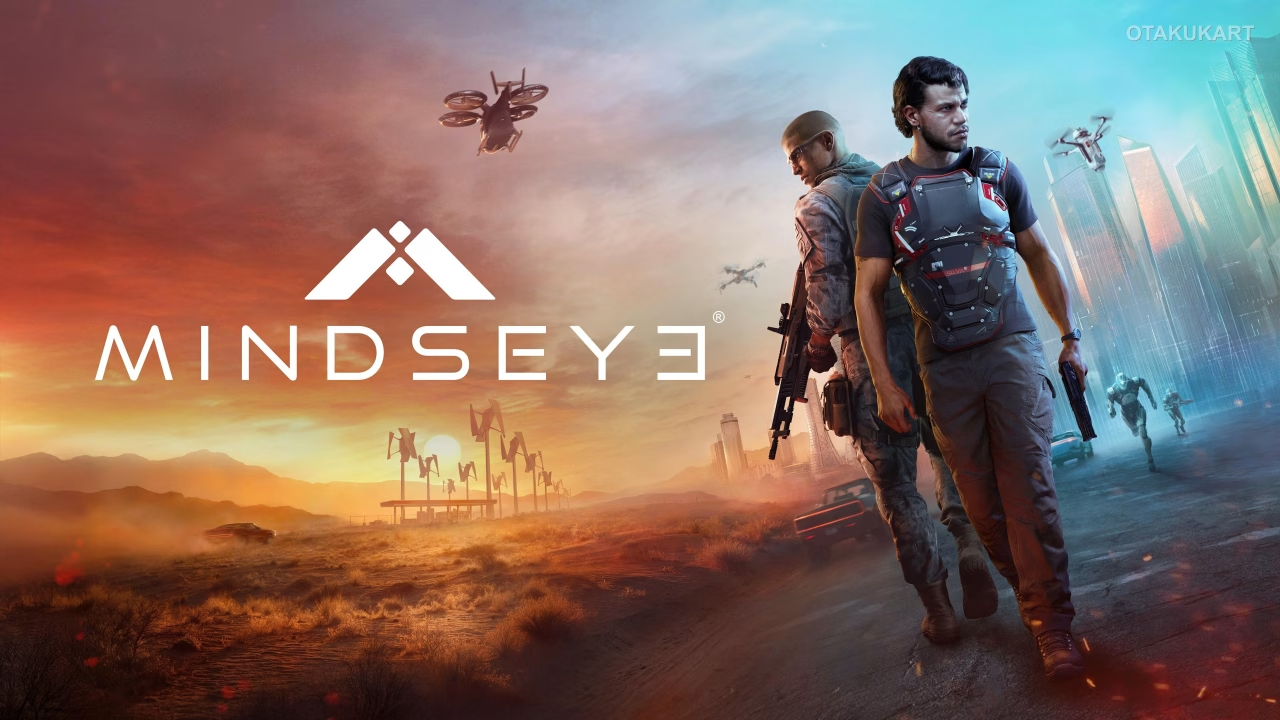
Image: otakukart.com
A fan playtest became the latest flashpoint for MindsEye
Former Build A Rocket Boy employees protested outside the studio’s Leith, Edinburgh office on Saturday, July 11, while the MindsEye developer hosted a fan playtest for upcoming content. According to Video Games Chronicle and GameDeveloper.com, the demonstration was backed by the IWGB Game Workers Union and drew former staff, union members, and supporters to the same doorstep where the studio was trying to put MindsEye back in front of players.
The immediate dispute is over the optics and purpose of the event. The IWGB described the Build A Rocket Boy playtest as an “all-expenses-paid” fan event, saying invited fans were flown in and hosted while the studio has recently cut large numbers of staff. GameDeveloper.com reported the union’s claim that Build A Rocket Boy paid for fans’ flights and accommodation so they could test an upcoming MindsEye release. Eurogamer reported ahead of the event that fans would be brought in to play an updated build with new features.
Build A Rocket Boy has framed the event differently. In a statement to Eurogamer, a studio spokesperson said, “Saturday’s playtest is about our players and the future of MindsEye. Community playtests are a routine part of game development that also gives us invaluable feedback as we continue improving the experience. We’re grateful to everyone taking part, and we’re focused on listening to our community and continuing to build what’s next for MindsEye.” GamingBolt also cited a statement to IGN in which the company tied the event to its Arcadia game creation system and said gathering creator feedback is “a very well-established part of game development.”
That is the tension at the center of the MindsEye protest. Community testing is ordinary in games, especially for a live or evolving project. Holding a paid-in fan event after multiple rounds of layoffs, while former workers allege mismanagement and privacy violations, is far less ordinary.
The protest is rooted in layoffs, not playtesting alone
The fan event drew anger because it arrived after a bruising year for Build A Rocket Boy workers. Eurogamer’s timeline says the studio began a redundancy process shortly after MindsEye’s release, notifying more than 100 employees they were being laid off. Eurogamer also reported another round of layoffs in March after a major MindsEye update, followed by a May round in which another 170 employees were let go after a new campaign mission shipped.
The exact total is disputed across reports and union claims. GameDeveloper.com reported the IWGB’s estimate that 250 to 300 workers have been laid off since last June. VGC’s report says the union estimated more than 400 employees had been laid off, while a Bluesky post from journalist Chris Bratt embedded in VGC’s article referred to 250 to 300 layoffs over the last 13 months. GamingBolt reported that the May layoffs affected 170 employees and brought the studio’s headcount down to around 80 workers. Those figures do not line up cleanly, but every cited source points to repeated and substantial reductions after MindsEye launched.
At the protest, former Build A Rocket Boy employee Isaac Hudd directly tied the picket to worker treatment and leadership accountability. VGC quoted Hudd saying, “We’re here today because all of us believe in one thing, that game workers deserve to be treated with respect.” He accused co-CEOs Mark Gerhard and Leslie Benzies of laying off staff while blaming others for the game’s failure. Hudd also alleged that MindsEye followed “the most brutal crunch” and said the company responded to the game’s reception with silence, layoffs, and “veiled threats.”
Former worker Ben Newbon made a similar argument in comments reported by GameDeveloper.com, saying studio executives had put “their own egos ahead of their workforce” and that the playtest was “little more than a grandstanding gesture.” His criticism focused on the contrast between the studio’s public-facing push for feedback and the loss of the people who had built the game and the studio around it.
Surveillance allegations added a sharper edge to the labor dispute
The Build A Rocket Boy workers’ complaints extend beyond redundancy decisions. GameDeveloper.com reported that the IWGB Game Workers Union has taken legal action against the studio over allegations of data privacy violations connected to surveillance software installed on work devices. Eurogamer identified the software as Teramind and reported that it has since been removed. The union alleges the monitoring violated employee data protection and privacy rights.
Those allegations remain allegations. The provided sources do not state that a court has ruled against Build A Rocket Boy, and OtakuKart specifically notes that claims around union busting and employee monitoring had not been proven in court and that the studio had not publicly responded to them in that report.
Still, the surveillance issue gives the MindsEye studio controversy a different tone from a standard post-launch restructuring story. According to Eurogamer, studio leaders Leslie Benzies and Mark Gerhard alleged “organised espionage and corporate sabotage” had affected MindsEye’s development. VGC reported that Gerhard suggested criminal activity, including “organised espionage and corporate sabotage,” was among the main reasons for the game’s commercial failure. The union and former workers argue the company’s response to that belief harmed staff.
The studio also tried to fold the sabotage claim back into MindsEye itself. VGC reported that Build A Rocket Boy released a DLC mission called Blacklisted, which the studio said would “share some of the evidence of the sabotage with the community.” VGC added that the mission’s release seemingly did not have much impact on public opinion or the game’s fate. In practical terms, the sabotage narrative has not ended the argument. It has become part of the argument.
MindsEye’s public rebuild is fighting its own history
MindsEye launched in June 2025 to a severe critical reception. VGC cites Metacritic scores of 39 on PC and 29 on PS5, calling it the worst-rated game of last year. TheGamer similarly described MindsEye as one of the worst-reviewed games of its year. Those scores matter here because the fan playtest appears to be part of a longer attempt to salvage or reshape the game after launch.
For an action game, the road back usually runs through feel. Players need to see cleaner mission flow, sharper combat encounters, steadier technical performance, and set pieces that can hold together under pressure. The source material does not detail the new build’s features or performance, so there is no basis to say whether this playtest addressed those problems. What is confirmed is that Build A Rocket Boy says it is listening to community feedback and continuing development on MindsEye, while the IWGB says the studio is spending on fan testing after firing workers who would normally contribute professional testing and development labor.
That clash complicates the studio’s confidence campaign. A community playtest can show fans that the game is still moving. It can also send the opposite message if former developers are outside the door saying the company has hollowed out its workforce. When a troubled action game tries to re-enter the arena, the studio’s credibility becomes part of the product. Players are not only judging a patch note or a new mission. They are judging whether the team behind it is stable enough to deliver sustained improvement.
Build A Rocket Boy says community feedback is routine, workers say the spending is insulting
The studio’s best defense is straightforward: games are tested with communities all the time. Build A Rocket Boy told Eurogamer that community playtests are routine and provide “invaluable feedback” as the company improves MindsEye. The statement cited by GamingBolt went further, saying the event was part of the company’s commitment to Arcadia and the creators who had supported it “from the very beginning.”
The union’s objection is also straightforward: timing and priorities. VGC reported that IWGB Game Workers Branch chair Spring McParlin-Jones called the event a “waste of money” and “a kick in the teeth for the fired workers who are seeing fans brought in to do jobs that would otherwise have been theirs.” GameDeveloper.com reported the union’s position that funding flights and accommodation after several redundancy rounds showed fired staff were effectively being replaced with players.
There is an important distinction for readers here. The sources do not establish that fans were formally hired to replace quality assurance staff or developers. The claim that fans were taking on testing duties is the IWGB’s characterization of the event. Build A Rocket Boy’s public position is that player feedback is part of normal development. Both can be true at the surface level: a fan playtest can be normal in isolation, and still become inflammatory when held during a labor dispute shaped by layoffs, legal action, and accusations of mismanagement.
The unanswered question is whether Build A Rocket Boy can rebuild MindsEye while rebuilding trust with the people who made it. The company has spoken publicly about listening to players. The protest was a demand that it also answer former workers.
For players, the safest read is caution until the work is visible
For anyone still tracking MindsEye, the playtest does not create a clear buying signal on its own. The provided sources do not confirm a release date, price, platform plan, patch contents, or performance results for the updated build shown to fans. Build A Rocket Boy has confirmed continued work on MindsEye and says it is collecting feedback, but public confidence will depend on shipped updates that players can judge directly.
The labor dispute is harder to separate from that question than it might first appear. Layoffs can affect patch cadence, QA coverage, mission design, animation polish, and the ability to respond quickly when fixes break something else. The sources report multiple staff cuts, a reduced headcount estimate from GamingBolt, and ongoing legal and union pressure. None of that proves future MindsEye updates will fail, but it does raise practical risk around consistency and support.
The strongest confirmed development is that the MindsEye protest happened at the same time Build A Rocket Boy was trying to stage a controlled, community-facing step forward. That image is difficult for the studio: fans inside testing the future, former workers outside contesting the cost of getting there. Until Build A Rocket Boy provides clearer public answers on the allegations and ships improvements players can verify, the studio’s comeback pitch remains tangled in the controversy surrounding its workforce.