
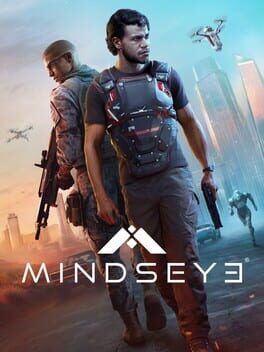
With IO Interactive walking away from MindsEye and canceling the Hitman crossover, Build A Rocket Boy is now solely responsible for salvaging a brutally rough launch. Here is what the split means for the game’s roadmap, player confidence, and post-launch support.
MindsEye was supposed to be a showcase partnership. IO Interactive would lend its publishing expertise and the strength of the Hitman brand, while Build A Rocket Boy launched its ambitious, cinematic sci fi debut. Instead, a disastrous release has ended with a quiet divorce, a cancelled crossover, and a lot of questions about what happens to the game next.
A partnership that couldn’t survive the launch
IO Interactive’s IOI Partners label was created to publish “quality first” third party titles, and MindsEye was the test case. On paper it made sense: an action driven, single player sci fi thriller from a high profile new studio led by former Rockstar talent, backed by a publisher best known for tightly designed stealth sandboxes.
Reality did not match the pitch. MindsEye launched in June with severe bugs, performance issues and progression breaking problems across PC and consoles. Within days it sank to the bottom of Metacritic’s 2025 rankings, with some of the lowest scores seen on PS5 and PC this generation. Sony began issuing refunds, social feeds filled with clips of broken encounters and crashes, and any early momentum evaporated.
In that context, the end of the publishing deal feels less like a surprise and more like the inevitable conclusion to a partnership that had already failed in its core task: delivering a stable, well received release. IO Interactive confirmed it will provide only limited transition support while Build A Rocket Boy takes over full publishing duties going forward.
The cancelled Hitman crossover and a broken roadmap
Before launch, the planned Hitman crossover was one of the clearest signals that both companies expected a long tail for MindsEye. A mission built around Agent 47 inside MindsEye’s world would have been more than fan service. It would have tethered the new IP to one of the most respected live franchises on the market and given IOI a reason to keep marketing the game well beyond release week.
That content is now scrapped completely. For MindsEye’s roadmap, the cancellation is more than the loss of a single DLC mission. It removes a high visibility anchor that future updates could have been built around. Crossover content tends to act as a traffic spike, pulling back lapsed players, generating creator coverage and reigniting wishlists.
Without it, Build A Rocket Boy has to rely entirely on its own world and characters to drive ongoing interest. That is not impossible, but it is a much taller order for a game that launched with deep trust problems and no strong word of mouth to build on.
Player confidence after refunds and refunds
The IOI split lands on top of several existing confidence shocks. MindsEye’s launch state was so poor that it triggered platform holder refunds, which is a clear red flag to anyone watching from the sidelines. At the same time, Build A Rocket Boy has gone through additional layoffs and publicly referenced “organised espionage” and “corporate sabotage” as factors in the game’s troubled development.
From a player’s perspective, the fine details of those allegations matter less than the surface level pattern. A game ships in bad shape, the studio cuts staff soon after, and the publisher walks away. Those are not the usual markers of a title that is about to receive years of patient iteration and support.
The cancelled Hitman DLC makes this perception problem worse. Crossover content is often read as a vote of confidence from both brands. Its removal, especially this early, sends the opposite signal. It tells prospective buyers that the original expansion plans are no longer viable in their current form, which encourages people to wait or walk away entirely.
What IO Interactive’s exit changes in practical terms
With IO Interactive stepping back, the immediate change is structural rather than mechanical. IOI Partners was responsible for publishing activities: marketing, distribution, and some strategic guidance around how MindsEye would be positioned in the market. Build A Rocket Boy now assumes that workload on top of ongoing development and live operations.
Practically, this means any future patches, content drops, or pricing changes will be driven solely from within BARB. There is no external partner with a proven track record of nurturing an underperforming title and no second party pressure point to argue for long term support even if the early numbers are weak.
For IO Interactive, cutting ties helps contain reputational damage to IOI Partners. MindsEye was its first third party release and it launched into a storm. Exiting now lets IOI refocus on its core Hitman and James Bond projects without being continually associated with a troubled action shooter they do not directly control.
For MindsEye, the split removes access to some of IOI’s softer assets that are hard to quantify but matter in practice: marketing muscle, relationships with platform holders and influencers, and the halo effect of sitting next to Hitman in storefront promotions.
Post launch support: realistic best and worst case scenarios
The key question for players is simple: will MindsEye actually be supported in a meaningful way now that IOI is out and the crossover is cancelled?
In a best case scenario, Build A Rocket Boy consolidates its resources, focuses on stabilising the core game, and spends the next 6 to 12 months shipping aggressive bug fixes and balance passes. The cancelled Hitman mission is replaced on the roadmap by lower cost updates that lean on existing systems rather than new external deals: New Game variants, additional challenge runs, small narrative vignettes, and quality of life improvements that make repeat play more appealing.
If BARB communicates clearly, publishes a transparent patch schedule, and hits those milestones, there is a path to slow rehabilitation. We have seen rough live service and single player titles rebuild some goodwill when they pivot from flashy DLC promises to a practical focus on making the base game solid.
The worst case scenario looks very different. Under financial pressure and without a committed publishing partner, the studio could decide that continued work on MindsEye is no longer viable at its current scale. In that outcome, support tapers off after a few stability updates, larger content plans are shelved, and the game moves into a low maintenance state while the team shifts to new projects or contract work.
The cancellation of the Hitman crossover suggests that the original, more ambitious roadmap is already off the table. The open question is whether it will be replaced with a leaner, repair focused plan or nothing coherent at all.
Rebuilding trust will be harder without the Hitman link
Trust was always going to be MindsEye’s biggest post launch challenge. The state of the game at release, public accusations of sabotage, and immediate layoffs have all left players wondering if the studio can execute on promises. IO Interactive’s exit and the loss of a high profile crossover strip away two of the clearest trust signals the game had in reserve.
For many players, the Hitman mission was a simple, tangible reason to keep MindsEye on their radar. It implied that both studios were committed to the long term and gave fans of Agent 47 a hook to check back in later. Without it, MindsEye has to sell itself purely on its own merits and whatever improvement story it can build over the next year.
If BARB wants to win that argument, its priorities need to be predictable patches, visible performance gains, and frank communication about what content is still coming and what has been permanently cut. The days of teasing big crossovers are over. What matters now is demonstrating that the game that exists today can evolve into one that feels worth a full price purchase tomorrow.
What it means if you are still on the fence
Taken together, IO Interactive leaving and the Hitman crossover being cancelled are strong signals that MindsEye’s original expansion plans are being rewritten under pressure. The game is not dead, but its future is more uncertain and more dependent on a single studio that is navigating its own internal turbulence.
If you are a player who was primarily interested in MindsEye because of the Hitman link, there is no longer a reason to wait for that content. If you are curious about the core game itself, the smarter move is to watch what Build A Rocket Boy does over the next several months. A consistent cadence of meaningful patches and frank status updates would justify cautious optimism. Silence or only minor fixes would indicate that MindsEye is unlikely to ever reach the potential that was once implied by its partnership with IO Interactive.
For now, MindsEye’s future rests entirely in the hands of its creators, without IO Interactive’s umbrella and without Agent 47 waiting in the wings. The game can still claw back ground, but the path forward just became narrower, steeper, and far more reliant on steady, unglamorous work than on headline grabbing crossovers.