
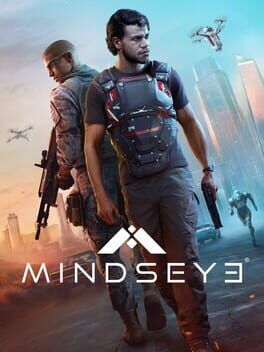

Build A Rocket Boy is reportedly in administration with about £61.7 million owed, while pursuing legal action over alleged MindsEye review manipulation.
Image: IGDB
Store links: MindsEye on Steam
Debt is now the central constraint around MindsEye
The clearest new development around MindsEye is financial, not creative: Rock Paper Shotgun reports that freshly published Companies House documents put Build A Rocket Boy’s debts at around £61.7 million, while Kotaku reports a similar figure of roughly £62 million, or about $81 million. That figure now frames every question about the game’s future support, because the studio is no longer operating in the normal rhythm of a troubled post-launch recovery.
According to Rock Paper Shotgun, Build A Rocket Boy entered administration in September, with Opus Restructuring appointed to oversee attempts to salvage the insolvent business and return money to creditors. Kotaku says an administrators’ proposal written by Opus Restructuring LLP appeared on Build A Rocket Boy’s Companies House page on November 18, detailing creditors and the proposed path to repayment.
That distinction matters. Several headlines and search queries now describe the situation as Build A Rocket Boy bankruptcy, but the reported UK process is administration. In practical terms for players, the important point is still stark: the company behind MindsEye is being managed under a restructuring process where creditor recovery is a primary concern. That is a very different strategic board state from a studio choosing how aggressively to fund patches, content updates, or long-tail community repair.
The creditor list shows how narrow the runway may be
Kotaku reports that Build A Rocket Boy’s two largest debts are to the Diamater Dislocation Master Fund, described as a Cayman Islands hedge fund, and Marvel Rivals developer NetEase. According to Kotaku’s reading of the administrators’ proposal, the studio owes the former roughly £4.2 million, or $5.5 million, and owes NetEase more than £36 million, or $47 million. Kotaku also notes a much smaller listed debt of $25 to OpenAI.
Those numbers matter because they put the MindsEye developer debt story in a different category from a bad launch followed by layoffs or a reduced roadmap. When a company owes tens of millions, the opportunity cost of every department, contractor, server bill, support ticket, and legal invoice becomes sharper. Any player waiting on fixes has to understand that post-launch support is competing with restructuring priorities and creditor claims.
None of the provided source material confirms a new patch schedule, a relaunch plan, or a funded long-term content roadmap. The absence of those details does not prove support is ending, but it does mean there is no sourced basis to promise that MindsEye will receive the kind of sustained technical turnaround players might expect from a healthier publisher-backed operation.
The legal strategy is built around alleged sabotage
The unusual part of the reported plan is where Build A Rocket Boy expects value to come from. Kotaku reports that the administrators’ proposal says the company is pursuing legal action against “several third parties” in an attempt to recoup tens of millions and pay debts. Rock Paper Shotgun reports that the documents refer to leadership claims that MindsEye was harmed by an organised sabotage campaign involving negative online reviews.
This is still an allegation, not a finding. The provided sources do not identify a court judgment, a proven manipulation network, or a public evidentiary record showing that MindsEye reviews were coordinated by named parties. Kotaku says the administrators’ proposal describes “detailed investigations” into “a number of third parties” as what is considered “to be the largest asset of the administration,” if the litigation succeeds.
That phrasing is revealing. In a normal recovery strategy, the strongest asset might be a sequel plan, a publishing agreement, technology, an active player base, or a saleable IP package. Here, according to Kotaku, the administration’s largest potential asset may be litigation. That puts the Build A Rocket Boy legal action at the center of the company’s financial strategy, but it also makes the strategy uncertain by design. Lawsuits can take time, cost money, fail outright, settle quietly, or recover less than expected.
Review controversy and game reception are separate problems
The MindsEye controversy has two layers that should not be collapsed into one. The first is the confirmed reception problem. A public listing for MindsEye describes the 2025 action-adventure game as having received strongly negative reviews from both critics and audiences after its June 10, 2025 release on PlayStation 5, Windows, and Xbox Series X/S. That aligns with the broader public-facing reality players encountered around launch: MindsEye became defined by negative sentiment.
The second layer is Build A Rocket Boy leadership’s claim that some of that negativity was organised sabotage. Kotaku connects the current legal pursuit to co-CEO Mark Gerhard’s earlier comments about “saboteurs” in July 2025. Kotaku also reports that Gerhard referred in a leaked video to a “very big American company” called Ritual Network, while Kotaku describes Ritual Network as a YouTube and TikTok management agency based in the United Kingdom.
Those details create tension rather than clarity. Players can see that the studio’s leadership and administrators are treating alleged third-party conduct as financially significant. They cannot, from the provided material, determine how much of MindsEye’s poor reputation came from genuine player dissatisfaction, ordinary critical response, influencer coverage, coordinated activity, or some mix of all four. For buyers, that uncertainty cuts both ways: alleged manipulation does not erase real technical or design complaints, and negative consensus alone does not prove every review was organic.
For players waiting on fixes, the risk is resource allocation
A troubled game can recover when the developer has time, money, staff, and a clear product mandate. The reported situation around Build A Rocket Boy complicates each of those inputs. Administration places financial discipline above brand redemption, while legal action over alleged review manipulation could demand management attention and additional funding before producing any return.
Rock Paper Shotgun reports that the company’s leaders apparently took out further loans to fund legal action against suspected perpetrators, with the promise of a payout. If accurate, that means the litigation is not simply a background complaint. It is part of the financial plan. From a strategy perspective, that is a high-variance play: successful litigation could create funds for creditors and potentially stabilize the company, but an unsuccessful or slow case could consume resources while players continue waiting.
The practical guidance is cautious. If you already own MindsEye, the sources do not provide enough information to say whether a meaningful repair campaign is coming. If you are considering buying it because you expect a future turnaround, there is no sourced patch roadmap in the provided material to support that bet. The safest read is to evaluate the game on its current state and documented reception, not on an assumed comeback.
The unanswered questions now matter more than the allegations
The next phase of the MindsEye story depends on facts that have not been announced in the provided sources. There is no confirmed timetable for the legal action, no reported recovery amount guaranteed to creditors, and no sourced statement here explaining how Build A Rocket Boy would prioritize game updates if the litigation succeeds. There is also no sourced detail on whether staff, contractors, or external partners remain in place at the level required for long-term support.
The publishing picture adds another complication. The public listing for MindsEye says the game was originally published by IO Interactive Partners, that IO Interactive Partners stopped working with Build A Rocket Boy, and that the rights reverted to the developer. If that listing is accurate, Build A Rocket Boy’s financial condition becomes even more central because the game’s future sits closer to the developer’s own balance sheet.
For now, the confirmed story is narrower than the noise around it: Build A Rocket Boy is reported to be in administration with roughly £61.7 million to £62 million owed, and its administrators’ proposal reportedly treats legal action against alleged third parties as a major potential asset. The interpretation is where players should stay disciplined. The legal claims may become important if proven or settled, but the immediate player-facing issue is simpler: MindsEye’s future support now depends on a company trying to solve a debt problem as much as a game problem.