
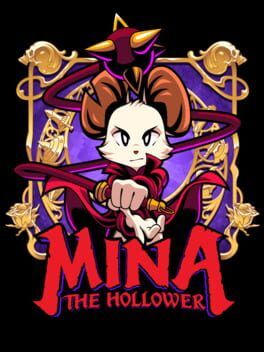
Previewing Mina the Hollower’s long‑awaited May 29 launch, its Game Boy Color‑inspired horror vibe, platform rollout, $19.99 price, and why six years of development have turned this retro action adventure into a high‑stakes moment for Yacht Club Games.
Mina the Hollower is finally real. After years of Kickstarter updates, shifting windows, and a “spring 2026” target that slid one last time, Yacht Club Games has circled a date in ink: May 29, 2026. On that day, the studio behind Shovel Knight moves from the security of its 8‑bit mascot into much riskier territory with a gothic, top‑down action game that wears its Zelda and Castlevania influences proudly.
Mina has gone from a neat side project to something much larger: a make‑or‑break moment for a studio trying to prove it can do more than iterate on Shovel Knight. The long gestation, the broad platform rollout, and the surprisingly low price all feed into a launch where expectations are higher than the modest scope might suggest.
A retro horror adventure with Zelda bones
Mina the Hollower immediately broadcasts its inspirations. Visually and structurally it channels The Legend of Zelda: Link’s Awakening, but rewired for a nastier, more horror‑tinged tone. This is a world of crooked graveyards, fog‑soaked villages and laboratories buzzing with unstable experiments. Mina herself is a whip‑wielding inventor, more Belmont than traditional Zelda hero, pushing the fantasy into pulp horror territory.
Played from a top‑down perspective, Mina mixes screen‑by‑screen exploration with quick, high‑commitment combat. You crack a whip, dodge in tight windows, and rely on Mina’s defining trick: the ability to burrow underground and rocket back out. That tunneling move lets you slip under projectiles, cross gaps and pop up behind enemies for big damage, turning traversal and combat into a single, snappy rhythm instead of separate systems.
Yacht Club talks about three key pillars for the design. First is responsiveness at a locked 60 frames per second across all platforms. Second is the sense of “dangerous readability,” where enemies telegraph attacks clearly but punish sloppy play. Third is dense, secret‑laden maps in the tradition of classic handheld Zeldas, where suspicious walls and dead ends often hide gear, currency or shortcuts.
The studio’s track record with Shovel Knight gives reason to expect tight, tactile action. The big question is whether that same precision will translate from side‑scrolling platformer to top‑down adventure without losing the exploratory charm that Mina so clearly chases.
Game Boy Color roots with modern detail
Mina’s art direction is one of its strongest selling points. Yacht Club describes the look as a modernized Game Boy Color game. That means a limited, punchy color palette, chunky sprites and simple geometry, but layered with animation and effects that the original hardware could never have pushed.
Environments lean into gothic horror without abandoning exuberant color. Graveyards use sickly greens and violent purples, while coastal areas push cold blues and sharp whites. Mina’s own sprite is expressive, with clear attack wind‑ups and burrow transitions that sell the speed and impact of her moves. Enemies and bosses exaggerate silhouettes so they read cleanly at a glance, which is crucial for a game built around quick reactions.
The camera sticks close, but backgrounds are busier than you would see on an actual Game Boy Color, with parallax, lighting accents and occasional environmental animation. Spell effects, screen shakes and hit flashes sit on top of that old‑school base to give combat a modern sense of impact.
It is a calculated nostalgia play. For older players it looks like the game you remember in your head from the late 90s, rather than the one that actually existed on a tiny handheld screen. For newer players it reads as a stylized retro aesthetic rather than a technical limitation.
Platforms, date and price: built to find an audience
Yacht Club is not treating Mina as a niche side project. The launch plan is wide and aggressive. On May 29 the game is set to release on Nintendo Switch, Nintendo Switch 2, PlayStation 5, Xbox Series X|S, and PC on Steam, GOG and the Humble Store. Some outlets also list last‑gen PlayStation 4 and Xbox One versions, underlining the studio’s desire to meet players wherever they are still playing.
Every version targets 60fps, which lines up with how tightly the combat is tuned. The studio has also been explicit that the game is being built with the Steam Deck and other handheld PCs in mind, which fits the Game Boy Color inspiration. Mina is designed to feel at home on a portable system, even if it is technically launching on nearly everything.
Then there is the price. Yacht Club has chosen a flat $19.99 USD on all platforms. In a market where comparable retro‑styled action games regularly push into the $30 range or launch with deluxe editions and early access bundles, this is a restrained, almost conservative tag.
That choice says a lot. First, it lowers the barrier to entry for curious players who may know the studio from Shovel Knight but are not sold on a spooky top‑down whip game. Second, it repositions Mina as a high‑value package instead of a prestige, premium project. In a way, the studio is trying to counterbalance the risk of a long development cycle with a price that feels friendly and approachable.
Six years of development and rising expectations
Mina was first shown to the world back in early 2022 with a Kickstarter campaign that funded rapidly. At the time, Yacht Club framed it as a relatively modest project that would leverage the team’s 8‑bit expertise with a fresh perspective. What followed has been a long, very public development.
The team spent years posting progress updates, animation tests and level teases. Windows shifted from an initial vague target to more specific promises and later to a spring 2026 window, which then narrowed to the final May 29 date. Each delay was couched as a push for more polish, more content or better platform parity.
For many backers and fans, that communication has helped maintain trust. Yacht Club has been transparent about scope creep, about iteration on core mechanics like burrowing, and about the realities of developing for a much wider range of platforms than Shovel Knight had at launch.
The flip side is that the slow burn has inflated expectations. Mina is no longer just “the next game from the Shovel Knight studio.” It is now the game that has occupied them for most of a console generation, funded in part by community goodwill and buoyed by the ongoing success of Shovel Knight as a brand.
Preview coverage has amplified this tension, often quoting Yacht Club describing Mina’s launch as a pivotal moment. When a developer starts using language that sounds like “make or break,” it signals internal pressure that fans inevitably absorb. The result is a game that has to thread a tight needle: feel like a compact, retro adventure worthy of twenty dollars, but also deliver enough novelty and depth to justify years of anticipation.
Why this is such a high‑stakes release for Yacht Club
Several factors turn Mina the Hollower into a particularly high‑pressure project for Yacht Club Games.
First, it is their first completely new universe since Shovel Knight. That alone carries risk. Shovel Knight has been expanded and reissued across an entire decade, becoming an indie mascot with crossovers and cameos. By stepping away from that comfort zone, Yacht Club is effectively testing whether its audience is here for the studio’s design sensibility or just for that one blue knight.
Second, Mina targets a genre and perspective that invite tougher comparisons. Top‑down action adventures instantly evoke Zelda, and Mina’s specific lean toward Link’s Awakening makes that link unavoidable. Add Castlevania and Bloodborne influences to the mix, and the bar for atmosphere, level design and combat feedback rises fast. Fans will not just judge Mina against other indie action games, but against some of the most beloved titles in the medium.
Third, the retro aesthetic is no longer a novelty. When Shovel Knight launched, pixel‑art nostalgia still felt fresh in the mainstream. In 2026, players have seen countless 8‑bit and 16‑bit homages. Mina has to stand out not just through visual charm but through mechanical identity and pacing, otherwise it risks blending into an increasingly crowded field.
Finally, the extended timeline has business implications. Years of maintaining a team, porting pipelines and community support around a game that has yet to ship is expensive even for a comparatively successful indie studio. A strong launch could validate Yacht Club’s approach of taking its time and expanding scope when ideas are working. A weaker reception could force a rethinking of how the studio structures future projects.
All of that makes Mina’s relatively humble scale somewhat deceptive. The sprites may be small on screen, but the strategic weight behind them is substantial.
The Zelda‑like to watch this spring
Mina the Hollower lands in a space crowded with retro action games, but a few things set it apart. The Game Boy Color‑meets‑gothic‑horror art direction is confident. The whip and burrow mechanics give combat a distinct rhythm. The cross‑generation, multi‑platform rollout and low price tag minimize friction for players who are simply curious to see what Yacht Club does outside the Shovel Knight universe.
The outstanding question is whether the final game will feel like an overdue passion project finally let loose, or like a solid eight‑hour throwback stretched under the weight of half a decade of expectations. We will not know until players get their hands on Mina on May 29.
For Yacht Club Games, though, the stakes are already clear. If Mina hits, it proves the studio can move beyond a single mascot and thrive as a maker of tightly crafted, characterful action games, whatever form they take next. If it falters, the long shadow of Shovel Knight may look that much harder to escape.