
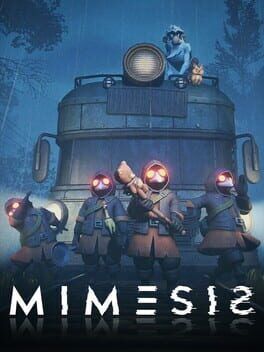

Breaking down MIMESIS’s early access core loop, tension-filled maps, and how its AI-driven impostors compare to Lethal Company and Phasmophobia, framed around the current MMORPG.com key giveaway.
A cursed rain, an unreliable squad, and a free shot to get in
MIMESIS has slid into Early Access on Steam and is already quietly huge, passing a million sales in about 50 days and riding a wave of streamer clips and TikTok jump scares. Right now, MMORPG.com is running a sweepstakes that gives away 50 full Steam keys, making it a good moment to ask a simple question: if you score a free copy or are thinking of buying in, is MIMESIS worth jumping into this early?
The answer hinges on how much you want a more directed, extraction-style spin on the social horror that made Lethal Company and Phasmophobia explode. MIMESIS is not just another job-board co‑op chiller. It builds its entire identity on AI‑driven impostors that literally clone your friends.
Core loop: tram runs, scrap, and the lurking impostor
At its best, an extraction game is simple to explain and stressful to execute. MIMESIS keeps the structure tight.
You and up to three friends spawn in at a tram station in a ruined, rain‑soaked world. Your goal is to keep that tram powered, push it deeper into the map, gather scrap and resources along the way, then call it back and extract before the cursed rain and its creatures grind you down.
Every run follows a rhythm. You fan out for scrap and fuel, announce finds over voice, and debate how far from safety you are willing to go before calling the tram back. All the while you are listening for something that sounds almost like your friend in your ear. The game requires a microphone, and that is not a gimmick. Enemies called Mimesis record and replay your team’s actual voice lines and copy your movement patterns, turning simple callouts into psychological weapons.
The loop works because risk is always tied directly to communication. If you play greedy, pushing farther from the tram for better scrap, you rely more on verbal coordination to stay alive and regroup. The longer this goes on, the more chances the AI has to record you and echo you back at the worst possible time. The tension is not just in whether you make it back with a backpack full of loot, but whether the voice telling you it is safe to sprint across that courtyard is still human.
Compared to the more sandboxy feel of Lethal Company, MIMESIS feels closer to a horror‑inflected extraction shooter like a minimal, PvE‑only Tarkov. Runs are structured around a clear objective and a moving safe zone rather than a simple in/out drop ship. You are not just looting and leaving. You are escorting your lifeline deeper into danger.
Map design: linear tracks with branching paranoia
Where Phasmophobia and Lethal Company lean on small, discrete locations, MIMESIS builds its tension across longer, tram‑linked stretches of level. Maps are designed around routes and chokepoints that the tram will pass through, creating a sense of a campaign inside each match.
You have hubs like stations and depots, where light and visibility give you a momentary feeling of control, then long, broken corridors of streets, underpasses, and industrial yards where the cursed rain falls harder and visibility drops. Side alleys and interior pockets hide scrap and upgrade materials, dangling optional risk off the main path. The deeper your team pushes while the tram is parked, the more exposed you feel. The game makes that exposure tactile with audio design: distant echoing footsteps, a half‑heard voice line you swear you said five minutes ago, the sudden cut of rain noise when you duck inside a building.
Early Access builds already include multiple maps and variations, and KRAFTON’s updates have layered in new monster types and more scrap interactions so that repeat routes do not feel identical. It is still less procedurally wild than a Lethal Company shift or a late‑game Phasmophobia investigation, but the spatial tension comes from knowing roughly where safety is and deciding to leave it anyway.
PvE tension vs loot risk: where it sits next to Lethal Company and Phasmophobia
If you are coming from Lethal Company, the first big difference is how MIMESIS handles risk and reward. Lethal wraps its risk around a hard day timer and quota; you can fail a run and feel it on the company ledger. Phasmophobia gates progression through equipment unlocks and contract difficulty, but individual deaths mostly just sting your wallet.
MIMESIS borrows the extraction shooter mentality, where the value of a run is in what you bring back to the tram and eventually out of the level. Scrap and resources fuel things like gear upgrades and cosmetic unlocks, encouraging you to play just a little greedier each time. Because your safe transport is an object in the world that you must protect and feed resources into, the loot loop feels bound more tightly to moment‑to‑moment survival than in either Lethal or Phasmo.
The tension curve is different too. Phasmophobia builds slowly toward identifying a ghost type, with bursts of activity and a clear investigation structure. Lethal Company spikes tension with physics disasters, chaos creatures, and that looming deadline. MIMESIS frontloads paranoia. From the moment you step off the tram, you are doubting footsteps and voices, wondering if the person walking ahead of you is still the same player.
When loot is on the line, this paranoia hits harder. Do you drop the high‑value scrap to sprint back when you hear your name screamed behind you in your friend’s voice? Or do you keep running and hope that is just the real them panicking, not an impostor dragging you into a kill zone? That blend of extraction risk and social uncertainty is where MIMESIS feels freshest.
It is worth stressing that this is a pure PvE experience. There is no actual traitor mechanic like Among Us or Deceive Inc hiding in the code. All the betrayal feeling comes from AI, not your teammates secretly throwing. If you like the cooperative purity of Lethal Company runs but wish there was more mistrust without someone intentionally griefing, MIMESIS threads that needle.
AI impostors and voice cloning: gimmick or game‑changer?
Everything in MIMESIS orbits around its titular monsters. These AI‑driven creatures are built to learn from your squad mid‑run. They watch how you move and, crucially, listen to what you say through your microphone. Then they use that data to imitate you, from callouts to nervous chatter.
In practice, this does a few things to the core loop. It makes split‑offs feel dangerous, because separating from the group means less shared context to verify who is who. It raises the floor on random tension spikes. While a Lethal Company run might go quiet until a sudden giant monster appears, MIMESIS can keep you on edge with subtler scares, like your own joke echoed back through comms from somewhere you cannot see.
It is not flawless. Early Access impressions point out that once you learn certain tells, you can often sniff out fakes by asking direct questions or giving specific orders that AI currently struggles to answer convincingly. The game counters this somewhat with weather escalation and additional enemy types so that even when you identify the Mimesis, actually dealing with it while juggling loot and tram objectives is the real challenge.
Still, compared to the static ghosts of Phasmophobia or the more traditional creature roster of Lethal Company, MIMESIS’s AI tricks make its PvE feel unpredictable in a way that most scripted horror cannot match yet.
Progression and replayability in Early Access
Since launch, KRAFTON and ReLU have pushed several notable updates into the Early Access branch. New maps, expanded AI behavior, a tram upgrade system, and gear tweaks have all landed in the first couple of months, on top of lighter touches like new emotes.
The tram upgrade layer is important for the long‑term hook. Gathering scrap is not just about short‑term survival and score chasing. You invest it back at your base in mechanics that make future runs more flexible or survivable. Tuning how fast the tram can move, how resilient it is, or how much you can carry changes the meta call of how long to stay out looting. In contrast, Phasmophobia is still mostly about unlocking more specialized gear for the same basic contract loop, and Lethal Company largely leans on map variety, quota pressure, and the emergent comedy of its physics.
There are gaps. Some reviewers have criticized MIMESIS for repetition during longer sessions and for not always capitalizing on its deception hook with strong mechanical payoffs. If you are expecting the intricate role guessing of a social deduction title layered on top of extraction, you will not find that here yet. It plays more like a tense co‑op PvE crawler where the monsters are very good at gaslighting you.
How the current key giveaway fits in
The MMORPG.com sweepstakes is straightforward. It is offering 50 Early Access Steam keys for the full game, no purchase required, with the drawing set for December 19. You log in with an MMORPG.com account, enter, and wait to see if your name is pulled.
Because the keys are for the current Early Access version and there is no indication they are time‑limited, it is basically a chance to get into the ongoing development cycle for free. If you win, you are not locked into a beta that will vanish. You are getting what paying players have: access to all the current content and future Early Access updates up to 1.0.
Given how volatile multiplayer horror can be on player counts, the timing is good. MIMESIS’s population is currently strong, with its million‑plus sales, streamer visibility, and fresh updates keeping lobbies active. Grabbing a key now lets you learn the meta, practice with friends, and ride those early patches as the AI and maps get refined.
Should you jump in now?
Whether MIMESIS is worth it in Early Access depends on where you sit on a few axes.
If you love Lethal Company’s basic loop but often find that the biggest villain is your own group’s boredom after a few identical shifts, MIMESIS’s structured tram runs and AI impostors give you a more guided, cinematic kind of session. The cost of an Early Access buy‑in is modest, and if you land one of the MMORPG.com keys, the value proposition is hard to argue with.
If you live for Phasmophobia’s evidence hunting and deep mechanical ghost behavior, you should treat MIMESIS more as a side dish than a replacement. It is less about studying patterns and more about surviving escalating chaos and deception while squeezing runs for loot.
Most importantly, if you have a regular group that plays on mics and loves yelling at each other, MIMESIS is already in a fun place despite some repetition and AI rough edges. The core loop is coherent, the maps support good stories, and the mix of PvE tension and extraction‑style risk feels distinct in a crowded co‑op horror field.
Given the active updates, big player base, and present key giveaway, this is a rare case where getting in early does not feel like a gamble so much as an invitation to watch a neat idea sharpen over time. If that sounds appealing, it is worth throwing your name into the sweepstakes and, if you miss, keeping MIMESIS on your short list the next time you and your squad are looking for a new friendship‑testing horror night.