
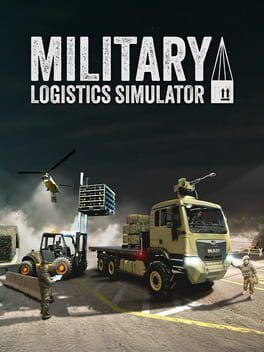

A grounded, behind-the-lines sim about convoys, supply chains, and keeping a modern battlefield moving.
Military Logistics Simulator is not interested in killstreaks or cinematic set pieces. Instead, it zooms in on the unglamorous spine of any modern army: the trucks, pallets, fuel bowsers, and overworked drivers that make sure the frontline does not grind to a halt. It is a fresh angle for a military game and a compelling new niche for sim fans who prefer torque and tonnage over twitch reflexes.
A combat zone where your weapon is the supply line
Rather than casting you as a special forces hero, Military Logistics Simulator starts you as a low-ranking support soldier. Your job is to move materiel where it needs to go and to keep critical routes open. That means threading convoys through dangerous valleys, edging slowly past burned-out wrecks, and making tough calls when things go wrong.
Enemy contact is a constant risk, but you are not a one-man army. Threats come in the form of ambushes, mortar fire, and drones that harass your column or probe your base defenses. Your task is to keep the convoys alive, not to clear every enemy from the map. It creates a mood that is tense rather than power-fantasy driven, closer to crisis-management sim than shooter.
There is also a strong sense of escalation. Early on, you may be tasked with straightforward delivery jobs to nearby outposts. As your reputation and responsibilities grow, missions stretch further into contested territory and carry heavier consequences if you fail. Running out of fuel, losing a flatbed full of munitions, or arriving too late with med supplies can completely alter how the wider operation unfolds.
FOSCON and the art of convoy command
The standout feature that defines the moment-to-moment play is the Field Ops Console, or FOSCON. This tactical interface lets you treat a convoy like a controllable formation instead of a loose line of AI trucks following blindly behind you.
From the cab or when dismounted, you can quickly switch between issuing Follow, Go-To, and Hold commands to each vehicle. Under fire, that lets you split the column, push a lead truck through a kill zone, or lock down a fuel tanker at a safer position while an armored escort screens the route.
This mix of direct driving and light tactical command gives Military Logistics Simulator a distinct rhythm. One moment you are wrestling a heavy transport over rutted dirt, the next you are pausing behind cover to redirect your convoy around a blocked street or suspected IED. Instead of driving from marker to marker, you are constantly thinking about sightlines, spacing between vehicles, and the risk of bunching up under a potential airstrike.
The FOSCON system also doubles as a way to keep co-op play organized. In multiplayer, up to four players can divide duties between leading the column, escorting in armored vehicles, scouting ahead, or dismounting to secure chokepoints. The same tactical commands that govern AI trucks help human teammates coordinate in tense situations without turning the game into a full-blown RTS.
A garage full of military hardware
Of course, this is still a vehicle sim at heart, and a big part of the appeal lies in the driveable hardware. Military Logistics Simulator lets you clamber into a range of modern logistics and support vehicles, from troop carriers and cargo trucks to heavier specialist platforms designed to haul fuel, containers, or recovery equipment.
Each vehicle feels distinct. Light transports are quicker and easier to thread through urban bottlenecks but leave your supplies dangerously exposed. Larger, armored rigs soak up more punishment but are clumsy to maneuver on narrow roads and steep village streets. Learning the quirks of each platform, such as braking distances under heavy load or how they handle off-road shortcuts, becomes part of the long-term mastery.
Vehicles are not just stat blocks. Expect to manage damage, tire blowouts, and occasional mechanical failures in the field. Convoy planning becomes a puzzle of redundancy and risk management. Do you assign an extra truck for spare parts and recovery gear or use that slot for one more crate of ammunition that frontline units are begging for
On top of ground vehicles, some missions expand the scope to include operations around an aircraft carrier. These scenarios give a different flavor to logistics, focusing on loading and unloading in tight decks, managing traffic during flight operations, and ensuring the constant flow of supplies that keeps sorties in the air.
Missions that are about consequences, not just completion
What sets Military Logistics Simulator apart from typical mission-based games is the way every job is rooted in cause and effect. Delivering construction materials might unlock new base structures. Getting a generator to the front line could be the difference between a radar system staying online or leaving an entire sector blind.
Between runs, you invest those successful deliveries into strengthening the hub that supports your operations. Bases start out as fragile, makeshift camps with minimal defenses. Over time, your supply runs allow you to build out stronger walls, heavier weapons, and better infrastructure. There is a real sense that the facilities around you are physical proof of all those careful, often nerve-wracking drives through dangerous territory.
The game also does not ignore the human side of logistics. Some missions involve rescuing stranded allies or bringing in the resources needed to rebuild shattered towns and villages. That pushes the fantasy away from detached number-crunching and into a more grounded role as the lifeline threading through a war-torn region.
A different kind of tension for sim fans
The obvious comparison point for many players will be more traditional military shooters where logistics are invisible, abstracted into spawn timers and ammo resupplies that appear from nowhere. Military Logistics Simulator flips that perspective. Here, every bullet, sandbag, and fuel canister has a journey, and you are the person responsible for that journey succeeding.
For fans of truck sims and realistic vehicle games, this is an opportunity to take familiar systems into a more dangerous, story-driven context. The controls and feel of operating heavy machinery are still front and center, but there is always the knowledge that an unexpected drone strike or ambush might turn a routine delivery into a desperate escape.
Co-op is another big draw for sim enthusiasts. There is inherent satisfaction in carving out specialized roles in a convoy, working with friends to plot safe routes, or setting up overlapping fields of fire when parking your column in a vulnerable valley. The social side of logistics, from divvying up responsibilities to arguing over whether to risk a shortcut, gives the game a replayable, emergent quality.
Why Military Logistics Simulator stands out
By putting the spotlight on supply chains and support crews, Military Logistics Simulator offers something different in a crowded field of war-themed games. It is grounded in the realities of modern operations without leaning on spectacle. Tension comes from planning, improvisation, and the weight of responsibility rather than from racking up headshots.
If you enjoy slow-burn sim experiences, complex vehicles, and the satisfaction of seeing a bigger operation come together because you did your job correctly, this is one to watch. Military Logistics Simulator turns what is usually background noise in other games into the main event, and in the process, makes logistics feel as vital and dramatic as any firefight.