
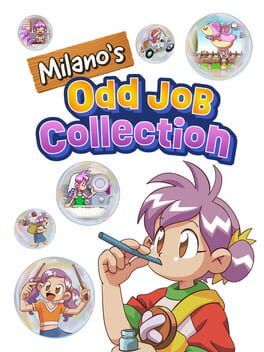

How a 1999 Japan‑only part‑time job sim quietly survived through fan translators and finally found its moment in the modern cozy‑game boom.
Milano’s Odd Job Collection was never meant to be a trendsetter. When it slipped onto Japanese PlayStation store shelves in 1999, it looked like a small, eccentric summer‑vacation sim in a library already crowded with RPGs and mascot platformers. There was no Western release, no big marketing push, and no clear audience outside Japan.
More than twenty‑five years later, that same game has arrived worldwide on PC, Xbox, PlayStation, and Switch, talked about as one of Steam’s latest cozy hits. Its pixel‑art apartments and gentle part‑time jobs suddenly sit alongside Stardew Valley, A Little to the Left, and Unpacking. It feels oddly current for a game that predates the “cozy” label by a full generation.
Tracing how Milano went from regional curiosity to global comfort game is a story about fan translators, changing tastes, and how a 40‑day PS1 summer vacation accidentally predicted what many players would crave in 2025.
A small PS1 experiment that stayed in Japan
In 1999, Milano’s Odd Job Collection launched in Japan as a low‑key PlayStation title centered on the simplest of setups. Eleven‑year‑old Milano’s mother is in the hospital and her uncle is away on business. Milano is left to spend forty summer days in his house, taking on part‑time work to get by.
Instead of battles or dungeon crawls, Milano offers a slow rhythm of odd‑job mini games. You deliver pizzas through sleepy streets, help out at an orchard, tend patients as a kid volunteer, and even milk flying cows when the game veers into the surreal. Between shifts, you return to your uncle’s place, decorate and upgrade rooms, relax with Milano’s cat, and pick an evening activity that restores her energy or nudges a stat upward so better‑paying gigs open up.
For late‑90s console design, it was an oddball. The structure is closer to a life‑sim calendar than a traditional adventure. Days tick by at a steady pace, money trickles in, and progress is measured in small comforts instead of high scores. It sat next to titles like Harvest Moon and Boku no Natsuyasumi in spirit, but without their brand recognition or export plans.
Because there was no official localisation, Milano became one of countless Japan‑only curios preserved mostly through import shops and magazine write‑ups. If you did not read Japanese, the structure was approachable enough to fumble through, but you missed the flavor of Milano’s conversations, her worries about her mom, and the textures of the town around her.
How fan translators kept Milano alive
The big twist in Milano’s story is that it did not truly fade away. Years after its release, PS1 enthusiasts, preservationists, and cozy‑adjacent fans discovered it through import collections and emulator libraries. Screenshots of its warm pixel art and snippets of its premise began to circulate on forums and niche blogs.
Fan translators eventually stepped in. Although the original code and font work were never meant for Western text, hobbyists spent years pulling apart the script, wrestling with memory limits, and re‑inserting translated dialogue so that non‑Japanese players could finally understand who Milano was and what she was going through.
These unofficial patches were never massive headline news, but they became the only real gateway into the game for English speakers. Videos, fan write‑ups, and longform impressions all leaned on those translations. The tone of the coverage is telling. Fans did not frame Milano as a technical marvel or a cult challenge. They described it as gentle, melancholy, and quietly hopeful, a summer of small responsibilities handled by a child trying to keep her world together.
That reputation travelled further than the PlayStation disc itself. For many people who would not or could not patch an ISO, Milano existed as an idea: a Japan‑only PS1 game that felt like a prototype for modern comfort games. That perception, nurtured for years by fan translators and import fans, helps explain why a full official localisation suddenly made sense in the 2020s.
Why 2025 is finally the right time
When the new version of Milano’s Odd Job Collection appeared on Steam and consoles, it was quickly labeled a cozy game. That word did not exist in 1999’s marketing lexicon, but it is a neat fit for what Milano has always been doing.
Part of the timing is broader audience taste. After a decade filled with endless live‑service checklists and high‑intensity action, there is an enormous appetite for games that feel safe, finite, and low pressure. Cozy players talk about wanting something they can dip into after work without anxiety, a world that is contained enough to feel manageable but rich enough to feel lived in.
Milano’s design snaps into that niche almost perfectly. The forty‑day structure gives a clear arc without demanding dozens of hours. The stakes are intimate, centered on Milano’s day‑to‑day survival and her emotional response to her mom’s absence. Failing a mini game does not erase progress, it just nudges earnings down and reshapes that day’s routine. Even the busiest stretch of odd jobs never feels like a grind, because the game rarely punishes experimentation.
The new release adds just enough modern support to lower the friction without rewriting the game. Faster loading, save states, and a rewind feature make its late‑90s pacing easier to live with on a portable or during short sessions. Full English text and voice work finally let international players understand all the small jokes and side conversations that fan translators had been documenting for years, while the original Japanese audio remains for those who want the authentic PS1 cadence.
Put simply, the market finally caught up to what Milano was quietly offering all along. A game that might have been dismissed as too small for Western shelves in 1999 now looks like a perfect fit for digital storefronts that celebrate niche comfort titles.
The cozy structure hiding in a PS1 shell
Look closely at how Milano is put together and you can see the shape of the contemporary cozy game years before the term took off.
The first ingredient is its daily loop. Every morning you decide what job to take, knowing it will cost time and energy but earn some cash and maybe improve a stat. Afternoons are for returning home, rearranging furniture, and thinking about how to make the house feel more like your space. Evenings are quiet moments, spent studying, resting, or hanging out with the cat that curls up in the corner. Each day ends with a feeling of closure. You did enough, and tomorrow will bring more of the same, not a sudden crisis.
Modern cozy games rely on exactly this pattern. They provide small, repeatable rituals that players can learn and personalize. The jobs in Milano are simple mini games by modern standards, but they are framed in a way that foregrounds rhythm over mastery. Delivering pizzas is less about speedrunning a course and more about feeling the town’s pace at different times of day. Nursing work is not a medical simulation but a way to place Milano in a caring role, letting players embody kindness within constraints.
The second ingredient is how the game treats space. Milano’s uncle’s house is not a sprawling base but a modest home that slowly fills with decorations and upgrades. Every new piece of furniture, every small purchase is a tangible reminder of the work you have done. Cosy design thrives on this scale. Instead of building a city, you make one kitchen corner feel right. Instead of commanding armies, you place one plant on one shelf and remember how you earned it.
That sense of proportion is what lets Milano slide so easily into the playlist of someone who loves house renovation games, gentle farm sims, or object‑arranging puzzlers. It is about dwelling in a space, then watching it bend slightly toward comfort.
Big emotions told through small jobs
If structure is what makes Milano cozy, its themes are what make it linger. For all its lightness and surreal flights of whimsy, the game is built around an uncomfortable truth: Milano is a child doing odd jobs because the adults in her life cannot be there.
Her mother’s hospital stay hangs over the entire summer. The uncle’s absence is practical, but it also puts Milano in an in‑between state, technically looked after yet emotionally on her own. The jobs are playful and sometimes absurd, but they are also coping strategies. Working means not thinking too hard about what might be happening in a hospital room somewhere else.
Modern cozy audiences have proved remarkably open to this kind of soft melancholy. Games like Spiritfarer and A Short Hike blend comfort with grief or uncertainty, trusting players to sit with complex feelings in gentle spaces. Milano fits neatly into that lineage despite being created years earlier. Its world is safe, its colors warm, yet its premise acknowledges that worry and responsibility can arrive very early in life.
Because you directly manage Milano’s schedule, you become complicit in how she balances self‑care with obligation. Do you pile on jobs to afford a bigger upgrade, or do you give her an early night and a quiet movie instead? Do you chase optimal income routes, or do you pick the job that feels right for her on that particular day? Those questions echo the way many cozy fans talk about their own lives, navigating burnout and trying to make room for rest.
This subtle emotional throughline is something fan translators often highlighted in their notes and write‑ups. Freed from the need to sell copies, they were able to frame Milano not as just another retro curiosity but as a story about a child carrying more than she probably should. Passing that perspective forward has been crucial to how the modern release is being received.
From niche patch to official preservation
The new console and PC versions of Milano’s Odd Job Collection do more than provide a convenient way to play. They close a loop that started with burned discs and fan forum posts.
For years, the only people who could talk with authority about Milano in English were those who had installed fan patches or pored over partial scripts. Their work kept the game from disappearing into the long tail of PS1 obscurities. It also created a ready‑made audience, one that had been quietly evangelising the game every time a conversation about overlooked cozy experiences came up.
When a publisher finally stepped in to do a full official release, it did so into a world that already understood why Milano mattered. Press coverage of the new version foregrounded the fan translation history as part of its pitch. Steam and console store pages leaned into the cozy framing that fans had effectively written years in advance. Features like dual audio, robust English text, and quality‑of‑life tools reflect lessons learned from decades of community tinkering.
In that sense, Milano’s Odd Job Collection is a small case study in how fan work can become a bridge rather than a dead end. Instead of replacing those old patches, the official release validates them. It acknowledges that a late‑90s game survived long enough to be commercially viable in 2025 precisely because unpaid translators thought it was worth the trouble.
A PS1 summer that finally found its season
Taken as a whole, Milano’s journey shows how much game culture has changed around it. What was once too gentle, too small, and too local for Western shelves is now an easy recommendation for anyone who keeps a folder of relaxing games installed at all times.
Its routine of jobs and evenings, its tiny but meaningful home, its quiet emotional stakes, and the care of its fan community all line up with what many players now actively seek out. In the process, Milano’s Odd Job Collection stops being just a rescued artifact of PS1 history and becomes something more immediate: a reminder that the urge to make and play cozy games is not new, and that sometimes all it takes for a forgotten summer to feel current is the right translation and the right moment.
Milano has finally stepped outside that one region‑locked disc and into the wider world, not as a relic, but as a cozy contemporary with a long memory.