
Former Rockstar senior designer Kris Roberts says Midnight Club 5 entered early development with London map work before internal conflict, missed deadlines, and GTA comparisons helped end the racing series.
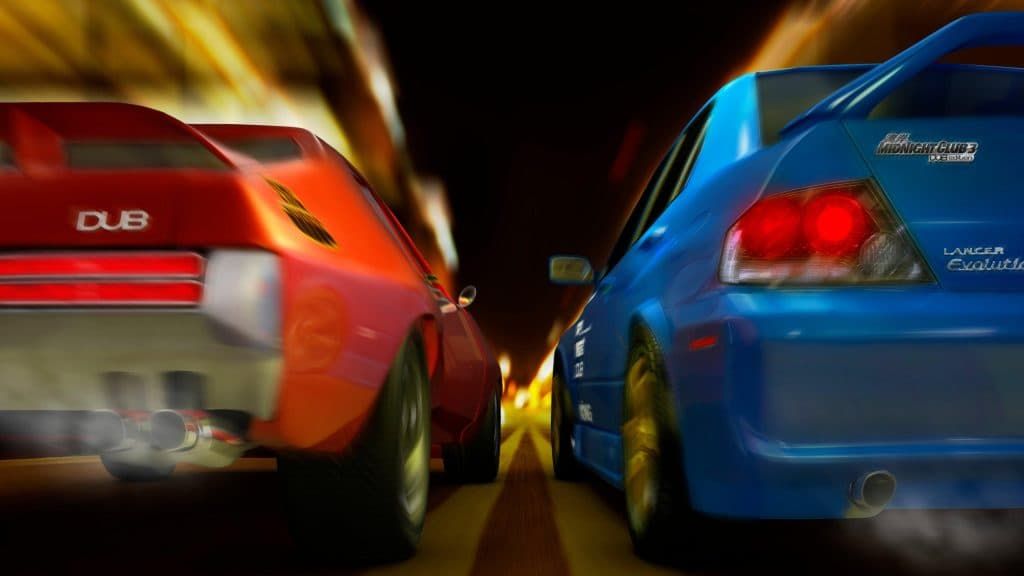
Image: dexerto.com
A fifth Midnight Club was started, then stopped
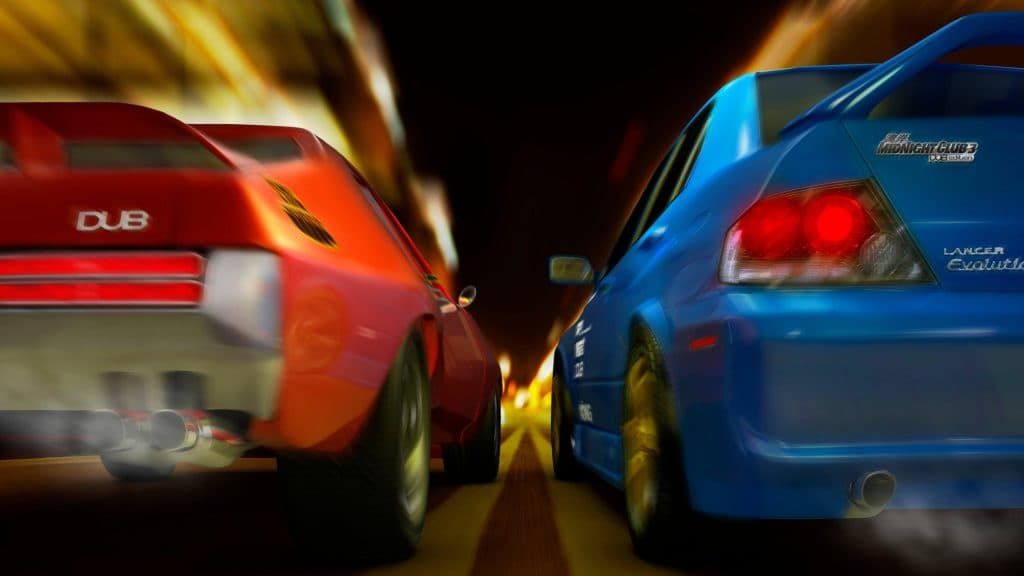
Former Rockstar senior designer Kris Roberts says a fifth Midnight Club game was in the works at Rockstar San Diego after Midnight Club: Los Angeles, with early location work that included London, before the project was canceled. That is the strongest new detail from Roberts’ interview with Insider Gaming and Kiwi Talkz, and it reframes the long silence around Rockstar’s arcade racing series as the result of an internal decision rather than simple neglect.
According to Insider Gaming, Roberts said that when he left Rockstar, “the core Midnight Club team continued to develop” and had “some prototype cities,” with London being the one he recalled as map development was underway. He added that the team was “starting Midnight Club 5, or whatever they were going to call it,” but that the effort “didn’t last” and was canceled.
That account does not amount to a current Rockstar announcement, and none of the provided reports cites a Rockstar statement confirming a new Midnight Club project, a remake, or a remaster. It does, however, give the clearest reported explanation yet for why Midnight Club 5 canceled speculation has followed the series for years: the next Rockstar racing game appears to have existed in an early development form, but never reached the public reveal stage.
The reported conflict was about delivery, control, and GTA’s shadow
Roberts’ explanation, as reported by Insider Gaming, IGN, Kotaku, Operation Sports, and Notebookcheck, points to more than one cause. He described a “non-trivial conflict” between Rockstar New York and the Rockstar San Diego team that made Midnight Club. Part of that conflict, he said, was legitimate because Midnight Club: Los Angeles had missed multiple development deadlines.
In game production, missed schedules are rarely abstract. Insider Gaming notes that falling behind, especially in the pre-digital distribution era, could carry major financial consequences. For a city-based racing game, delays can pile up quickly because the product depends on a large navigable map, traffic behavior, route design, vehicle tuning, and a steady frame-rate target all lining up together. The sources do not provide technical postmortem data for Midnight Club: Los Angeles, so the exact causes of those missed deadlines remain unknown, but Roberts’ comments make clear that schedule credibility was part of the internal dispute.
The sharper claim is cultural. Roberts told Insider Gaming that “creative control” was also involved, and that the San Diego team felt Midnight Club would have been treated as a strong project in another studio environment. His most quoted line captures the tension: “The New York perspective was, ‘You’re not GTA’.” In his view, the racing team believed it was doing “world-class” work while being treated as a “red-headed stepchild project.”
Midnight Club had racing credibility, but not GTA leverage
The most revealing part of Roberts’ claim is not simply that Rockstar compared Midnight Club with Grand Theft Auto. It is that, by his account, Midnight Club could be successful within the racing genre and still lose the internal resource fight.
Insider Gaming describes Midnight Club as an arcade street racing series that began in 2000 on PlayStation 2 and produced four games across nine years. Kotaku and IGN both report Roberts’ claim that Midnight Club performed strongly against rival racing franchises such as Need for Speed and Burnout, with Roberts saying there was data showing players spent longer with Rockstar’s racing game than with competitors. Those figures are not published in the provided material, so they should be treated as Roberts’ recollection rather than independently verified player-retention data.
Even with that caveat, the comparison explains the series’ difficult position. Midnight Club did not need to be a weak racer to be vulnerable. It only needed to be smaller than GTA inside a publisher where Grand Theft Auto had become the defining franchise. A racing game can win on handling feel, city flow, customization, and repeatable event design, yet still struggle to command attention if leadership is measuring opportunity cost against a far larger open-world property.
Rockstar San Diego’s lane narrowed after Los Angeles
Midnight Club: Los Angeles was the last main entry in the series, arriving in 2008 for PlayStation 3 and Xbox 360, with a Complete Edition following in 2009 according to EGW. IGN notes that Rockstar San Diego was the studio behind Rockstar’s arcade racing franchise and also led development on the first Red Dead Redemption. Roberts himself, per Insider Gaming and EGW, worked on the Midnight Club series and on Red Dead Redemption’s multiplayer.
IGN reports that after Midnight Club 5 was canceled, remaining staff moved on to Red Dead Redemption or other Rockstar projects. Roberts’ quoted assessment was blunt: “When they cancelled it, it was pretty clear that there would be no more Midnight Club and everything was going to be GTA and stuff moving forward.” That is a former developer’s interpretation of the moment, not a formal Rockstar roadmap, but it aligns with the franchise’s visible absence since Midnight Club: Los Angeles.
For racing fans, that absence has been felt because Midnight Club occupied a specific space: illegal street racing through dense urban routes, with arcade speed and city knowledge doing much of the work. Other open-world racers continued elsewhere in the industry, but Rockstar’s own racing brand stopped at the exact point where HD-era city racing was becoming more technically demanding and more expensive to produce.
The London prototype raises questions Rockstar has never answered
The reported London work is important because it suggests Midnight Club 5 was not merely a name on a planning sheet. Roberts recalled prototype cities and specific map development, which indicates early production effort around place and layout. For a Midnight Club game, the city is the chassis. Road width, sightlines, traffic density, shortcuts, and district variety all define how the racing feels before any car setup or progression system is layered on top.
Still, the sources leave major questions unanswered. They do not confirm a final title, target platforms, planned release window, budget, feature set, car list, online structure, or whether London would have been the sole city. EGW says the project never made it to full-scale development, while other reports describe it as early development. Those accounts are compatible, but they also underline how far the project appears to have been from a public product.
There is also no indication in the provided reporting that Rockstar has commented on Roberts’ claims. Until Rockstar or Take-Two addresses the series directly, the cancellation story rests on a former developer’s recollection as reported by Insider Gaming and repeated by other outlets.
A comeback remains unannounced, despite fan demand
For anyone searching for Midnight Club 5 canceled details because they hope the project has resurfaced, the practical answer is simple: there is no announced release, no store page, no platform list, no price, and no upgrade path. The current news concerns a canceled historical project, not an active Rockstar racing game.
Operation Sports frames the report as a reason not to expect a comeback soon. IGN adds that Rockstar’s future after GTA 6 remains unclear, while noting that the company is publishing Remedy’s Max Payne remakes and that it remains to be seen whether Rockstar revisits dormant franchises such as Midnight Club, Bully, or L.A. Noire. Those are open questions, not confirmed plans.
Roberts’ account does give the Midnight Club series a clearer place in Rockstar history. It was a credible racing franchise with a team that believed in its work, but it sat beside GTA inside the same corporate garage. According to Roberts, that comparison was decisive. Midnight Club could race well, retain players, and carry a loyal audience, yet still be judged against a franchise operating at a scale few games can match.