
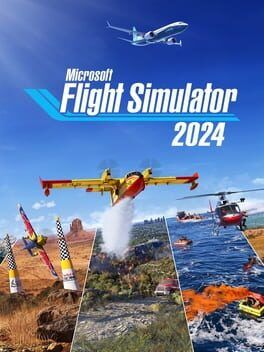

How Microsoft Flight Simulator 2024’s PS VR2 mode aims to redefine cockpit immersion on PlayStation, from GT7 inspired design to comfort, control, and performance breakthroughs.
Microsoft Flight Simulator 2024 arriving on PS5 is already a big deal, but its dedicated PS VR2 mode has the potential to be one of the most important releases in the headset’s life so far. It is not just another “VR support” tick box. Asobo Studio and Microsoft have rethought interface design, rendering tech, and even how pilots physically move their heads to make aviation work inside Sony’s headset.
A big part of the story is that the team openly cites Gran Turismo 7’s PS VR2 implementation as a key inspiration. GT7 proved that a complex, simulation heavy game can feel natural and comfortable in VR on console. For Microsoft Flight Simulator 2024, the goal is similar, only in three dimensional airspace instead of on a racetrack. You are not simply placing a floating camera inside a cockpit. The developers want you to inhabit the seat the way GT7 makes you feel welded to the car.
The payoff is most obvious in cockpit immersion. Traditional flat screen flight sim fans already know how dense a modern airliner’s flight deck can be, but viewing it through PS VR2 changes that from a 2D puzzle of labels into a spatial environment your brain can map. Leaning forward to read the text on a Boeing 737 8’s MCP, glancing down to the pedestal, or looking up toward overhead panels is done by physically moving your head, not tapping a right stick. Helicopters benefit even more. In something like the Guimbal Cabri G2, the wraparound visibility and the feeling of hanging in the air comes alive when you can crane your neck toward the skid or peek around the frame to judge your hover.
Scale is where VR turns Microsoft Flight Simulator 2024 into a different experience entirely. The PlayStation Blog highlights how mountains, city skylines, and towering storm clouds feel intimidating once you are actually inside the cockpit, instead of viewing them through a letterboxed window on a TV. Approaches through bad weather become more visceral when you are leaning in toward the windscreen to pick out runway lights or glancing to the side windows to check your alignment. Red Bull Air Race style events are singled out because you can physically look into the turn, spot the next pylon, and anticipate high G forces in a way that reads instinctively to the body.
None of this works unless the VR implementation respects comfort, and Asobo seems very aware of that. Flight happens at high speed but with relatively smooth motion compared to something like a first person shooter. That gives PS VR2 an advantage, yet the team still had to think carefully about seating position, cockpit framing, and how much camera motion is acceptable. Keeping the player grounded in a solid virtual seat, avoiding artificial head bob, and letting your own physical movements do the work are lessons the studio appears to have taken directly from Gran Turismo 7. The result should be a mode that feels stable enough for long haul flights rather than short novelty hops.
Control options are another cornerstone of why this release matters. On PS5, many players will approach Microsoft Flight Simulator 2024 with only a DualSense controller or the PS VR2 Sense controllers, rather than full HOTAS hardware. To make that viable, Asobo has reworked cockpit interaction so that switches, dials, and buttons feel natural and readable in VR. Reaching out with Sense controllers to flip a landing light or rotate an altitude knob demands careful hitboxes, sensible hand poses, and clear visual feedback. The developers talk about how every cockpit is a unique puzzle to solve in VR, from compact trainers to sprawling airliner flight decks, and that attention to detail could set a new bar for complex sim controls on PS VR2.
Performance is where this mode might quietly become a technical milestone for Sony’s headset. Flight Simulator is notoriously demanding on high end PCs, yet the PS VR2 version needs to maintain a comfortable frame rate while rendering dense cockpits and a full world outside the windows. The team leaned heavily on foveated rendering combined with PS5 specific optimizations like Flexible Scaled Rasterization. This lets the game prioritize resolution where your eyes are actually looking while reducing cost in the periphery. They also engineered a custom frame duplication technique that allows the camera pose to update between frames, smoothing head motion even when the underlying render workload is substantial. These kinds of bespoke solutions suggest Microsoft is treating PS VR2 as a serious technical showcase rather than a side platform.
There is also an interesting design feedback loop at play. Jorg Neumann and other developers describe how real pilots on the team instantly recognized their own habits in VR. They naturally leaned forward to check runway numbers, looked over their shoulder for traffic, or used side windows for orientation during base to final turns. That physical mapping of real world cockpit behavior into VR space is what turned Gran Turismo 7 from a neat add on into a must try experience for PS VR2 owners, and Microsoft Flight Simulator 2024 is aiming for the same sort of authenticity. When a pilot says the sim “feels right” in VR, it is often because the headset lets muscle memory take over.
All of this points to why Microsoft Flight Simulator 2024’s PS VR2 mode could be one of the headset’s most important releases. The game arrives with a huge fleet of aircraft, from nimble aerobatic machines that shine in air races to heavy airliners that test your instrument skills, and VR touches every part of that content. For many console players, this will be their first taste of a full scale flight simulator in virtual reality, not a pared down spin off. If Asobo and Microsoft deliver on their promises, PS VR2 will gain a flagship sim that can sit alongside Gran Turismo 7 as proof that high fidelity, system heavy games can thrive inside Sony’s headset. That kind of showcase matters both for current owners looking for deep experiences and for the long term perception of PS VR2 as more than a curiosity.