
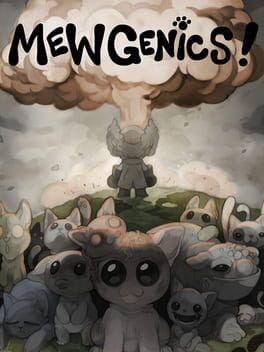

Mewgenics recouped its budget in three hours and blew past The Binding of Isaac’s launch record. Here is how it happened, what the early numbers really say, and what it tells us about premium indie roguelikes in 2026.
Mewgenics did not just have a strong launch. It instantly redrew the ceiling for premium indie roguelikes.
In under half a day, Edmund McMillen and Tyler Glaiel’s feral tactics roguelike about cursed cats sold roughly a quarter of a million copies. According to the developers, the entire budget was recouped in the first three hours. In pure business terms, this is the kind of opening that large publishers chase for years with huge marketing spends. For a two person led indie project that spent more than a decade in public development limbo, it is extraordinary.
The numbers behind the explosion
Across reports from Polygon, IGN and TechRaptor and the developers’ own posts, a consistent launch picture has emerged.
Mewgenics arrived on February 10, 2026 and immediately shot to the top of Steam’s global sales charts. Within around six hours it had sold over 150,000 copies. By the 12 hour mark that figure had passed 250,000 units, at which point the game was already well into profit.
Steam’s concurrent player peak hovered just under 66,000 at launch, matching what you would expect from a high attachment rate on early adopters. With an 89 Metacritic score and extremely positive Steam reviews, there is little sign of the usual post launch dip caused by poor word of mouth. Instead, Mewgenics landed in the rare sweet spot where critical reception, pre launch hype and a clearly communicated hook all aligned.
Beating The Binding of Isaac at its own game
To understand how dramatic this opening really is, it helps to compare it to McMillen’s previous phenomenon. The Binding of Isaac and its remake Rebirth are among the most influential roguelikes ever made, but their commercial arc looked very different.
McMillen has said that Rebirth’s strongest previous day one performance was around 40,000 copies sold in its first 24 hours. That was considered a smash hit for a small indie in 2014. Mewgenics cleared nearly four times that number in a quarter of the time.
If you plot those trajectories, you get two very different curves. Rebirth launched strong and built a decade long tail through DLC, console ports and constant community rediscovery. Mewgenics starts with what looks like the third or fourth year of Isaac scale audience already on board. Part of that is brand gravity. Before release, one analytics snapshot circulated on social media claiming that about 78 percent of Mewgenics wishlists belonged to players who already owned The Binding of Isaac: Rebirth. The new game benefited from thirteen years of Isaac converting random Steam users into lifetime McMillen fans.
The contrast suggests that Mewgenics is less a new IP in the classic sense and more a premium sequel in everything but name. Where Isaac had to invent its audience, Mewgenics launched straight into a pre existing fandom hungry for another infinitely replayable McMillen design.
How fast did it really make its money back?
The developers confirmed that the game’s full development budget was recouped within three hours of launch. Without public line items, the exact figure is private, but the timing and early unit counts allow for a reasonable back of the envelope model.
At launch, Mewgenics was priced as a mid tier premium indie on Steam. If you account for platform fees, regional pricing and launch discounts, a ballpark blended revenue per copy in the range of 12 to 16 US dollars after Valve’s 30 percent cut is plausible. At 150,000 copies sold somewhere between the three and six hour window, that implies several million dollars in gross developer revenue on day one.
Recouping the budget at the three hour mark, well before the 150,000 milestone, suggests a comparatively lean production cost for a project this long in gestation. Mewgenics was built by a tiny core team, with McMillen handling design and art and Glaiel handling engineering and systems. That structure keeps salaries, overhead and management layers low even across many years, especially compared to studio style indie productions that carry larger staff for shorter bursts.
What matters for the broader market is not the precise budget number but the ratio. The game appears to have earned back many years of development spend before most global regions were even awake. Every copy sold after that point is largely profit, funding future support, possible expansions and whatever McMillen and Glaiel decide to build next.
Design that sells: why this pitch worked
From a design and positioning perspective, Mewgenics is not a safe project. It is a dense, turn based, text and numbers heavy tactics roguelike about breeding unstable cats with cursed traits. On paper that sounds niche. In practice, the team framed those same qualities as selling points.
The concept is readable in a single image: a party of misshapen cats marching through a grimy fantasy neighborhood, item icons spilling everywhere, status effects stacked on their heads. Anyone who has ever watched Isaac footage instantly recognizes the familiar language of min maxed chaos and emergent storytelling. That made it easy to communicate on store pages and social media without needing AAA scale trailers.
Mechanically, Mewgenics leans into deep draft style decision making, long term progression of a bloodline across runs and a constant risk reward push around mutations and synergies. Those are exactly the values that the modern roguelike audience has been trained to seek out by games like Hades, Slay the Spire and Into the Breach. The difference is that McMillen wraps them in a distinct audiovisual style and a tone that is sickly, mean and oddly tender, tapping into the same offbeat identity that carried Isaac and Super Meat Boy for years.
All of that translates efficiently into business outcomes. Systems heavy design encourages replay and streaming. High run variety gives creators something new to react to every session, which in turn feeds discoverability on Twitch and YouTube. Once early players confirm that the game is both punishing and fair, word of mouth carries it further than any advertising budget could.
What Mewgenics says about premium indie roguelikes in 2026
Despite recurring discourse that Game Pass, subscriptions and free to play economies are squeezing out premium indies, Mewgenics is a strong counterexample. It shows that in 2026 there is still room for a 20 to 30 dollar, single purchase, single player roguelike to perform at the level of a mid tier publisher release.
Several conditions seem important.
First is accumulated trust. Mewgenics benefits from more than a decade of McMillen’s games proving that a single purchase will be supported and expanded for years. The Binding of Isaac grew through repeated expansions and updates that massively over delivered on the box price, and players are implicitly betting that Mewgenics will follow the same pattern.
Second is the long tail friendly structure of roguelikes. Once the core engine and content set are built, new items, enemies and events are relatively low cost additions that dramatically increase the combinatorial space of a run. That is a strong business fit for tiny teams that want to deliver visible value without ballooning budgets.
Third is the continued hunger for games that are “owned,” not rented. In a subscription heavy landscape, there is a segment of players that specifically seek out titles they can return to for thousands of hours without worrying about license churn. Complex roguelikes are ideal for that role, and Mewgenics slots into it perfectly.
If anything, Mewgenics suggests that the ceiling for premium roguelikes has risen since Isaac’s original heyday. The audience is larger, more comfortable with complex mechanics and more willing to pay for depth instead of breadth. The tradeoff is that expectations for polish, onboarding and long term support have also climbed.
A new baseline for indie success
It would be a mistake for other small studios to treat Mewgenics as a replicable blueprint. Very few teams can walk into launch with more than half a million wishlists and thirteen years of cult classic momentum behind them. Nor can most indies afford a twelve year development odyssey backed by personal savings, previous hit money and sheer stubbornness.
What Mewgenics does provide is a new reference point for what is possible when several favorable forces line up. A distinctive creative voice, a genre that rewards longevity, a community that already trusts the developer and a premium price that respects both player time and team effort.
For the health of premium indie roguelikes, the message is optimistic. If you build something dense enough to live on a desktop for years, and if your studio can survive long enough to finish it, the market is clearly still willing to reward that work. Mewgenics just did it in three hours.