
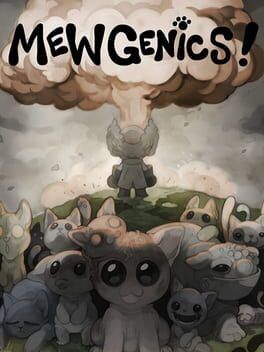

How Mewgenics’ first DLC can add chaos, cats, and clarity without burying its tactics roguelike core in unreadable noise.
Mewgenics already feels like a game built out of overflow. It is a tactics roguelike, a cat-breeding sim, a mutation sandbox, a legacy campaign and a pile of overlapping item synergies pulled straight from Edmund McMillen’s design brain. That density is a big part of why people are hooked. It is also why the first DLC will be unusually delicate work.
In a new interview about early DLC plans, programmer and co-designer Tyler Glaiel talks about “DLC 1” with a mix of excitement and caution. He expects to do “at least two” expansions over the game’s life, with the first one intentionally scoped as a smaller add-on, roughly targeted for late next year. Before that, the team wants a few solid months simply to stabilize the base game: bug fixes, polish passes and quality-of-life updates responding to the flood of launch feedback.
That timing matters, because almost all of the current community discussion feeds into the same question the DLC will have to answer. How do you make Mewgenics bigger without making it even harder to read?
Clarity is the real endgame
The interview spends as much time on UI and information clarity as it does on DLC itself, and that is not accidental. Mewgenics is already a cognitively demanding game. Runs can be long, with dozens of battles, evolving cats, permanent scars from bad decisions and a meta layer of breeding that links everything together. That structure magnifies every small information gap.
Players have been asking for clearer numbers on skills, easier access to health bars, better overview tools for comparing cat stats and more explicit boss mechanics. Right now, much of that information exists only implicitly. You are meant to infer ranges from experimentation, memorize odd interactions and discover patterns through repetition.
That approach fits the spirit of roguelikes and reflects McMillen’s history with The Binding of Isaac, where wikis and community knowledge became a second layer of the game. In Mewgenics, though, that opacity runs into the tactical layer. When you are planning turns on a grid and committing a carefully bred cat to an exposed tile, not knowing the exact range or timing of an enemy ability feels less like mystery and more like missing data.
Glaiel stresses that the team is wary of simply turning on a firehose of information. Every tooltip, range indicator or advanced stat line takes up space, adds UI complexity and risks overwhelming new players before they even understand the basics. Any future DLC that widens the decision space will sit on top of this tension.
A small first DLC is exactly right
Given that context, the choice to make the first DLC “small” is not just about production realities, it is a smart design move. Mewgenics does not need a giant slab of new systems right away. It needs focused layers that deepen what is already there and give the team room to refine how the game explains itself.
A smaller expansion can test the waters. It can add a few well chosen slices of content and a couple of new mechanical wrinkles, then dial in new UI patterns that make those additions legible. If that goes well, later DLC can build on proven templates instead of inventing fresh ways to present information every time.
For a tactics roguelike this dense, the safest route is not to expand the ruleset horizontally with dozens of new subsystems. It is to enrich existing loops vertically, adding more interesting outcomes to familiar decisions.
Where new cats and mutations can actually help readability
One of Mewgenics’ best tools for digestible complexity is its cats themselves. Every cat is a container for stats, traits, mutations and gear, and players already think about them as cohesive builds instead of loose collections of numbers. DLC that leans into that mental model can make the game feel deeper without bloating the on-screen information.
New breeds or trait families that cluster around clear tactical identities are a natural fit. Imagine a lineage focused on turn manipulation, with abilities that delay enemy actions or reorder initiative, or a set of traits that bundle positional control like pulls, pushes and tiles that alter movement costs. These packages could be surfaced through a handful of strongly themed icons and short descriptions instead of another page of scattered options.
Mutations, too, can be tuned for readability. The base game already toys with visible, embodied changes. Leaning harder into obvious visual cues and predictable patterns gives players a way to “read” board states at a glance. If a DLC mutation type always adds a particular tile effect or a recognizable trigger condition, players learn to parse it quickly even if the underlying math is complex.
The trick is to avoid mutations that quietly hinge on obscure percentage shifts or conditional bonuses that only show up in cramped tooltips. DLC content should push toward effects that are expressive on the grid. If something changes movement rules, area control or targeting logic, it is easier to feel its impact and spot it in the chaos of a long run.
Items, relics and the temptation to go full Isaac
The most obvious DLC path, given McMillen’s track record, is to just add more stuff. More items, more relics, more trinkets and more bizarre synergies have worked spectacularly in Isaac expansions. In a turn-based context like Mewgenics, that strategy needs more guardrails.
Every additional passive effect has to be visualized somewhere. Isaac can often get away with hidden variables and subtle stat nudges because combat is fast and failure is cheap. In Mewgenics, spiral losses can take half an hour to fully play out. When a run dies because of an edge case interaction between three different DLC relics, the postmortem needs to be understandable.
That does not mean avoiding wild effects. It means making them legible. Strong, narrow-scope items that change one or two aspects of how a cat plays are easier to read than sprawling laundry lists of situational bonuses. An item that turns a cat into a reliable ranged overwatch unit or a sturdy frontline displacer is simpler to track than another small stack of generic crit chance.
DLC relics should also respect the limits of on-board communication. If a synergy matters, it should show up in a way that is visible on the grid: colored tiles, altered targeting shapes, temporary status markers that stand out from the base set. The more often players can understand “what just happened” without digging through submenus, the more headroom the game has to add complexity.
New biomes and bosses as information labs
Where Mewgenics can probably afford to go loud is in its world structure. New zones, enemy families and bosses are a natural DLC hook, and they offer a great opportunity to rethink how the game teaches its systems.
Each biome can act as a controlled environment for a specific set of rules. If a DLC region revolves around, say, manipulating obstacles or environmental hazards, that theme can be reinforced by everything in the zone. Enemy abilities, tile layouts and event text can all point toward the same core ideas. Players then only need to learn a few new concepts to feel comfortable, rather than an eclectic grab bag of mechanics.
Bosses are a special case because they tend to be the culmination of a run. Right now, many of their mechanics are intentionally obscure, discovered through failure. That is fun the first few times, but it is also where the demand for clearer information is loudest.
DLC bosses can lead the charge on better telegraphing. Distinct animations before big attacks, clear turn order markers for phase transitions and simple indicators for “this part of the arena is now unsafe” all reduce confusion without spoiling the puzzle. If new bosses land with better clarity, those patterns can be retrofitted back into existing fights in later patches.
UI clarity as a DLC requirement, not a side project
The interview makes it clear that UI and information design are front of mind for the team, yet there is understandable hesitation about overcorrecting. Players always want more data, and Mewgenics is the kind of game that invites spreadsheet thinking. The solution is not to flood the screen with numbers. It is to create layers of readability.
Optional advanced views are an obvious candidate. The article’s author suggests an Isaac style advanced stats overlay, and something in that spirit could work in Mewgenics. A toggle that shows exact ranges, damage bands and proc rates on demand would let high level players optimize without forcing every newcomer to parse combat logs.
Crucially, those tools should be built in parallel with DLC content, not as a separate effort after the fact. Any new trait family, mutation type, relic category or biome specific rule needs a plan for how it will be surfaced. That means deciding up front what the default presentation looks like, what an advanced tooltip adds and how that information is echoed on the battlefield.
Even basic quality-of-life features like global health bar toggles and party stat overviews are more than simple checkboxes. They are the foundation for future complexity. If players can quickly scan their team’s state and see at a glance which cat is built for which role, designers are freer to introduce richer interactions between roles in later DLC.
Discovery without obscurity
Underneath all this is the tension between discovery and opacity. Mewgenics works best when you feel like you are untangling a strange ecology of cats, items and enemies across runs, not consulting a manual before every turn. Secret interactions, emergent synergies and weird edge cases are part of its charm.
Discovery does not have to mean hiding the rules. It can mean revealing them at the right time and in the right place. A new DLC trait that seems useless until combined with a particular mutation is much more satisfying when the game lightly hints at that possibility, then rewards experimentation with a visible, dramatic effect.
The first expansion is a chance to refine that philosophy. By adding a controlled amount of new content that is loud, thematic and visually expressive, the team can keep Mewgenics feeling surprising without burying players in opaque modifiers. If they pair those additions with stronger UI patterns and optional depth for number hungry tacticians, later DLC can afford to be much more ambitious.
Mewgenics has already proven that there is an audience for a messy, maximalist tactics roguelike. The question the first DLC will answer is how far that chaos can stretch before it snaps the game’s readability. If McMillen, Glaiel and company treat clarity as a design constraint rather than a post launch patch note, they might be able to have it both ways: a stranger, wilder Mewgenics that somehow feels easier to understand.