
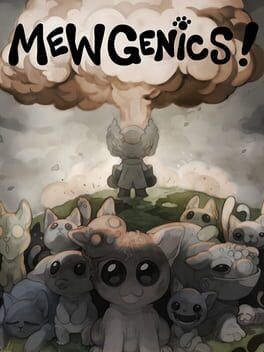

Mewgenics’ stunning first‑week sales are more than a feel‑good comeback for Team Meat. They are a data point that suggests premium, single‑player roguelites are not just alive in 2026, but thriving – if you can hit the right mix of legacy fanbase, systemic depth, and smart pre‑launch positioning.
Mewgenics took more than a decade to materialize, but it only needed a few hours to pay for itself. Within six hours of its February 10, 2026 launch on Steam, the cat‑breeding strategy roguelite from Edmund McMillen and Tyler Glaiel had already recouped its roughly eight‑year development budget. Within a week, it crossed 1 million copies sold, all on a single platform and at a premium price.
For a project that spent years as a punchline about vaporware, that is a remarkable commercial turn. It is also an important bellwether for the health of premium, single‑player roguelites in 2026.
From cult curiosity to seven‑figure hit
Pre‑launch, Mewgenics looked like a classic cult‑indie setup: a strange premise, an even stranger art style, and a design pitch that was hard to explain in a sentence. A “turn‑based legacy roguelike draft sim about cats” is not obvious mass‑market material.
The numbers tell a very different story. According to multiple reports and social posts from programmer and co‑creator Tyler Glaiel, Mewgenics:
Reached roughly 150,000 copies sold in its first six hours on Steam.
Became profitable in around three hours as those early sales exceeded the entire eight‑year development cost.
Passed 500,000 copies in about a day and a half.
Crossed the 1 million mark before its first week was over, despite being PC‑only.
Steam reviews are “Very Positive” and the game sits at roughly an 89 on Metacritic, providing the social proof that tends to turn a strong launch into a sustained tail. Analytics firms like Alinea have already estimated more than $20–25 million in gross revenue across platforms in the launch window, making it one of 2026’s first big indie hits.
How it stacks up to Super Meat Boy and The Binding of Isaac
Part of why Mewgenics’ performance is so striking is that McMillen’s older hits were already considered outliers for indie success.
Super Meat Boy, released in 2010, was a breakout platformer that helped define the modern digital indie boom. Exact numbers have shifted over the years as it hit more platforms and bundles, but public comments from McMillen have put it north of 2 million copies over its lifetime. It did not hit seven figures in a week. It climbed there gradually, powered by Xbox Live Arcade visibility, word of mouth, and years of discounts and ports.
The Binding of Isaac had a similarly long tail. The original 2011 Flash release was followed by the Rebirth remake and multiple expansions. McMillen has said in the past that Isaac’s various editions sold several million copies combined, but again, that arc played out over years and across PC, console, and handheld.
Mewgenics is different in two key ways.
First, it is front‑loaded. What Super Meat Boy and Isaac did over months or years, Mewgenics has compacted into days. Hitting 1 million sales in a week, on one storefront, is a magnitude shift in launch velocity compared to McMillen’s earlier work.
Second, it is doing this as a premium, single‑player only game in a far more crowded market. Back in 2010 and 2011, Super Meat Boy and Isaac were competing in a relatively sparse digital landscape. In 2026, indie releases are constant, platform holders promote live‑service hooks, and discoverability on Steam is a daily fight. That Mewgenics can still break through suggests the ceiling for well‑positioned premium roguelites is higher than many expected.
The power of a long tail fanbase
Mewgenics would not be selling like this without the foundation laid by Super Meat Boy and The Binding of Isaac. Analytics shared publicly indicate that a huge portion of Mewgenics buyers already own Isaac, underscoring how a decade of consistent design identity can compound.
McMillen has built a recognizable personal brand around tightly tuned systems, high replayability, and a particular strain of gross‑out surrealism. Isaac players effectively trained on his style of risk‑reward loops and item synergies are an ideal audience for Mewgenics’ sprawling, mutation‑driven cat builds.
That legacy does more than sell copies. It lowers marketing friction. When you can market a new game as “from the creator of The Binding of Isaac and Super Meat Boy,” you inherit not just awareness, but trust that the systems will be deep, secrets will be worth chasing, and the game will be supported after launch. In an era where early access, battle passes, and live‑service pivots can fray that trust, a track record of delivering complete, replayable packages becomes a competitive edge.
Pricing, scope, and the premium proposition
Mewgenics is not a free‑to‑play experiment or an early access test balloon. It launched as a full premium product. That alone puts it in contrast with the service‑heavy direction of many big publishers.
What helps the game sell that proposition is scope. By most accounts, Mewgenics is an enormous roguelite. To “see everything” can take upward of 200 hours. Runs remix themselves with mutations, traits, and events to a degree that makes even repeat biomes feel unpredictable. That kind of density turns a premium price into a relatively easy sell for fans of the genre.
In other words, Mewgenics leans into everything that makes premium roguelites compelling in the first place. It promises endlessly recombining runs, skill expression through clever play, and a steady drip of surprises, all without daily quests, login streaks, or an endgame treadmill. The product is the loop itself.
For an audience exhausted by live‑service grinds, that is part of the appeal. You buy it once, you own the whole toybox, and you engage on your schedule. Roguelites that can deliver on this loop find themselves insulated from some of the churn and fatigue that hit more traditional single‑campaign indie games.
Smart pre‑release positioning, not a marketing blitz
Looking at the marketing, Mewgenics is not an example of a giant ad budget overwhelming the market. The game did not dominate platform showcases in the way a major AAA would. Instead, it followed a pattern that is becoming increasingly common among successful indie roguelites.
The team spent years talking candidly about its tortured development as the “cursed” follow‑up to Super Meat Boy. That narrative built a mythos around the project. Press outlets documented its many reboots, cancelled prototypes, and eventual rebirth as a tactics‑heavy roguelite. Every new interview or dev commentary was another reminder that Mewgenics was still out there, slowly mutating.
On Steam, the game quietly accumulated wishlists over a long period. Multiple data‑driven breakdowns point out that those wishlists were exceptionally high for an indie release at this budget level. That gave the launch a huge day‑one audience. Once the reviews landed positive and the player reception on Steam was strong, algorithmic visibility took over. Mewgenics climbed the global top‑sellers chart and stayed there, which in turn generated more coverage and word of mouth.
Crucially, this happened without diluting the game’s very specific identity. The marketing leaned into its weirdness: the grotesque cats, the unsettling humor, the dizzying tangle of stats and mutations. Mewgenics did not attempt to sand down its edges to chase a broader audience, yet the audience showed up anyway.
What Mewgenics signals about the roguelite market in 2026
For developers and publishers watching from the sidelines, Mewgenics is a useful data point in a few ongoing debates about the viability of premium roguelites.
First, it shows there is still significant upside in the space. The genre is not “over” after Hades, Slay the Spire, and Vampire Survivors. If anything, players are more fluent in roguelite structures now, more willing to try new spins, and more accepting of runs that can go sideways. That literacy lets a game as structurally dense as Mewgenics meet its audience halfway.
Second, it highlights that single‑player focus is not a handicap. Many publishers have been nervous about funding single‑player only projects without live hooks or DLC plans. Mewgenics’ early profitability, without battle passes or cosmetics, undercuts the idea that multiplayer or service features are required to hit meaningful numbers in 2026.
Third, it suggests that “weird” can be a selling point rather than a risk factor. Mewgenics is not a safe theme. It is unapologetically gross, darkly comedic, and often abrasive. Yet those qualities help it stand out in a sea of cozy and neon‑synth aesthetic clones. For roguelites in particular, where long‑term engagement depends on players wanting to live in your world for dozens or hundreds of hours, a distinctive tone can matter as much as any mechanical innovation.
Finally, the game reinforces the role of trust and track record. Many of the recent breakout roguelites come from teams with proven histories in the genre. Supergiant took lessons from Bastion and Transistor into Hades. Motion Twin’s work on fast, crunchy action translated into Dead Cells. McMillen’s years refining item‑driven chaos in Isaac clearly inform Mewgenics. In each case, players bought not just a product, but confidence in the designer’s ability to make that product worth learning.
The risks hiding behind the headline
It is tempting to treat Mewgenics as a roadmap that other indies can follow, but the story is more cautionary than it looks at first glance.
The project benefitted from factors many teams cannot replicate. Super Meat Boy and The Binding of Isaac gave McMillen a megaphone and a built‑in fanbase. The “lost project finally reborn” narrative gave the press a hook. The game survived a lengthy and expensive development cycle that would have sunk less financially secure studios.
Even the success numbers carry some danger. A million copies in a week risks recalibrating expectations upward for publishers and investors who do not live in the indie trenches. Most premium roguelites will never come close to that. Treating Mewgenics as a baseline instead of an outlier could make it harder, not easier, to pitch smaller, stranger projects.
There is also the question of saturation. For every Mewgenics or Hades, there are dozens of competent roguelites on Steam that quietly sink despite solid design. The same player literacy that helps a top‑tier game land makes the middle of the market more competitive than ever.
A healthy, but demanding, landscape
In the larger context of 2026, Mewgenics does not rewrite the rules for premium roguelites, but it affirms that the space remains commercially vibrant for teams that can hit a high bar on depth, identity, and pre‑launch groundwork.
The lesson is not that every indie should spend a decade on a sprawling roguelite. It is that the audience for premium, single‑player, highly replayable games is still growing, even as the broader industry wrestles with layoffs, service fatigue, and rising budgets.
What Mewgenics really proves is that players will still show up, in huge numbers, for a game that knows exactly what it is, offers a bottomless well of systems to explore, and trusts them to lose a lot on the way to mastery. For a genre built on death and repetition, that feels like a pretty healthy sign of life.