
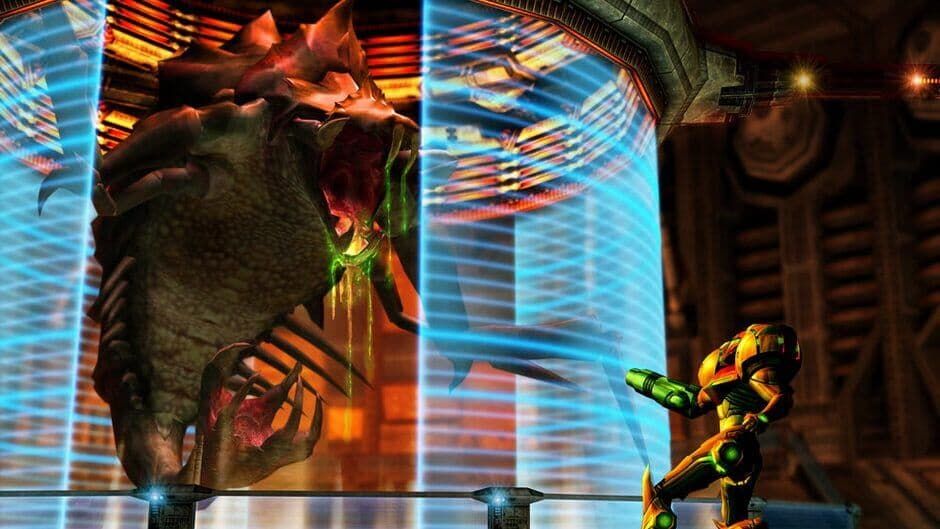

Metroid Prime Origins is an unofficial 2D fan demake of Nintendo's GameCube classic, released for Metroid's 40th anniversary while its download links face familiar uncertainty.
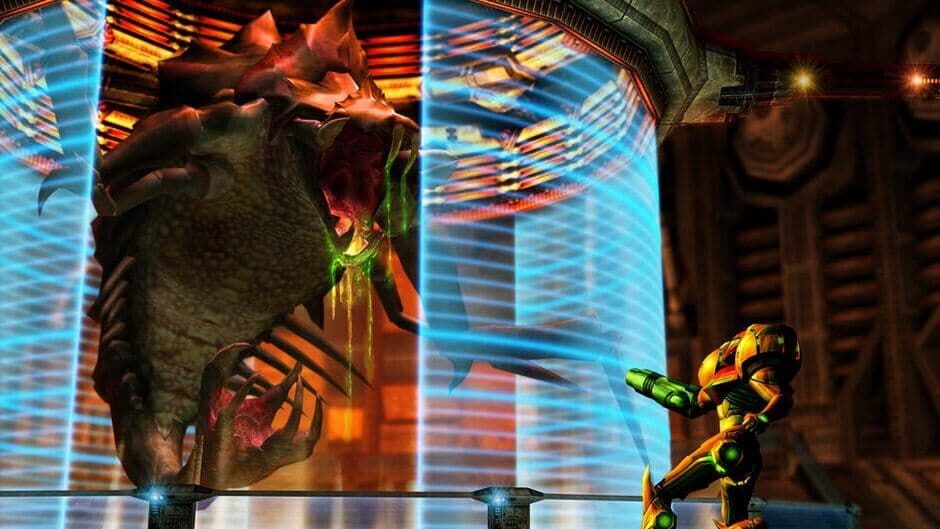
Image: gamers.wiki
A complete 2D Prime arrives with a familiar risk
Metroid Prime Origins, an unofficial Metroid Prime demake from Lv.4 Games, launched on August 6, 2026 to coincide with Metroid's 40th anniversary, according to Gamers.Wiki and multiple reports covering the Reddit release post. The immediate tension is already familiar to anyone who follows Nintendo fan game culture: the project is playable, public, and drawing praise, while its long-term availability is uncertain.
The fan project is described by its creators on Reddit, as quoted by Console Creatures, as “a fully complete adaptation of Metroid Prime for the GameCube in 2D, complemented by a fake-bit aesthetic.” Nintendo Life reports that the scope runs from the opening frigate sequence through the final confrontation with Metroid Prime itself. That makes this a larger swing than a proof-of-concept room, a tech demo, or a vertical slice. It is a full Metroid Prime 2D fan game built around reimagining Retro Studios' 2002 first-person adventure as a side-scrolling Metroid.
That scale is the reason it has spread quickly online, and also the reason fans are watching the download links. Gamers.Wiki reports that an Archive.org link was removed, while a Google Drive download was still available at the time of its coverage. Kotaku and Nintendo Life both noted that a trailer had already been removed from YouTube, with Kotaku saying the page cited unspecified Terms of Service violations. The sources provided do not establish that Nintendo ordered those removals. Lv.4 Games said, according to Kotaku and Gamers.Wiki, that it had not received a cease-and-desist notice. For now, the confirmed story is narrower and more interesting: a substantial Nintendo fan project escaped development secrecy, reached players, and immediately entered the unstable zone between celebration and takedown fear.
What Metroid Prime Origins actually changes
Metroid Prime Origins is built on a sharp design question: what happens to Metroid Prime when the camera is pulled out of Samus' visor and placed back on a 2D plane? Before Prime launched on GameCube in 2002, Nintendo's Metroid series had been a 2D franchise, as Nintendo Life notes. Prime's breakthrough was translating isolation, scanning, lock-on combat, and environmental routing into first person without losing the series' slow-burn exploration. Origins reverses that historical move.
The result, based on the source descriptions, is not an attempt to make an NES game in the strict technical sense. Console Creatures says it resembles the series' early Nintendo Entertainment System look but carries far more pixel detail than the NES could manage. Gamers.Wiki, citing PC Gamer's reporting, describes the visual style as more detailed than the original Metroid while still sitting in a retro space below Super Metroid's richer 16-bit presentation. The developers themselves call it “fake-bit,” a useful term because it frames the style as an aesthetic choice rather than a hardware limitation.
Nintendo Life says the project includes original sprites, sound effects, and music, with 8-bit interpretations of areas and themes such as Phendrana Drifts and Tallon Overworld. Console Creatures also quotes Lv.4 Games as saying the fan release was made with no generative AI, with all sprites and music created by fans. The same creator statement says the in-game lore was rewritten while based on the original NTSC lore.
That last detail matters for the adaptation. Prime's world is carried heavily through environmental reads and scan logs. If Origins keeps the scan structure but rewrites the text, it is taking on one of Prime's hardest translation problems: preserving atmosphere when the player is no longer looking through the visor at three-dimensional space. A 2D demake can reproduce doors, rooms, pickups, and bosses, but the tone of Tallon IV depends on pacing, silence, and the way information is discovered. The reported inclusion of rewritten lore suggests Lv.4 Games understood that the project needed its own cadence rather than a simple flattening of the GameCube script.
How Prime's combat rhythm becomes side-scrolling action
The most useful details reported about Metroid Prime Origins concern the way it handles movement and aiming. Gamers.Wiki's coverage, citing PC Gamer, says Samus has fluid movement that includes ledge grappling, and that the control layout supports both free aiming and aim lock. According to that report, the left bumper is used for free aim while the right bumper is used for aim lock, giving players a way to target enemies without constantly repositioning Samus.
That is a sensible answer to a core Prime problem. In 3D, Metroid Prime's lock-on system shapes combat like a duel: circle, strafe, read the animation, fire at the opening. In 2D, the same encounter logic can become stiff if Samus has to stop, pivot, and shoot on narrow platforms. Free aim allows precision. Aim lock preserves the readability and aggression of Prime's combat. Together, they point toward a demake that is trying to capture Prime's battle tempo rather than copy only its room order.
The scan visor also returns, according to Gamers.Wiki, with players able to scan creatures to build a bestiary and uncover lore through scan entries. That is one of the most Prime-specific systems the fan developers could have kept. Without it, Origins would risk becoming a 2D action remix wearing Prime's map. With it, the side-scroller keeps some of the original game's investigative pulse: enter an unfamiliar room, identify threats, read the remains of a place, then move on with a little more understanding of where Samus is and what happened there.
Gamers.Wiki also reports an extensive options menu, again citing PC Gamer, including autosave, hints, damage scaling, damage numbers, room-name displays, controller vibration, and mouse aiming. Those details point to a project made for modern PC habits rather than a purity test. Hints and room names can soften backtracking friction. Damage scaling can widen the audience. Mouse aiming suggests the team considered keyboard-and-mouse players alongside controller users. None of those features make Origins official or immune from rights issues, but they do help explain why the project is getting attention beyond novelty. It appears to be built with the friction points of a full-length fan release in mind.
A stealth fan project shaped by Metroid's anniversary gap
Lv.4 Games is described by Console Creatures and Kotaku as a small fan team, with Console Creatures noting its previous fan-made title Castlevania ReVamped. Kotaku reports that the creators said Metroid Prime Origins took three years to make. Gamers.Wiki says the project was created in secret over that period and released for Metroid's 40th anniversary.
That timing gave the release a ready-made audience. Kotaku framed the launch against Nintendo's apparent lack of public anniversary activity, saying a check of Nintendo's website and Nintendo of America's X page showed no acknowledgement of Metroid's 40th, no birthday message for Samus, and no celebratory sale on Metroid Prime 4 or Metroid Dread at the time of its article. That is Kotaku's observation, not a Nintendo statement. Nintendo has not announced or endorsed Metroid Prime Origins in the provided sources.
The anniversary context helps explain the reaction, though. Metroid fans are accustomed to long waits, sudden revivals, and uneven corporate attention. The sources also refer to Metroid Prime 4: Beyond releasing the previous year after a long and troubled development path. Kotaku says the game had spent almost a decade in development and cites the widely reported 2019 development reboot with Retro Studios. Console Creatures characterizes Prime 4's reception as “less-than-stellar,” while Kotaku says it was generally well received but felt flat compared with earlier Prime games. Those are outlet judgments, not hard metrics, and they do not fully agree. What they share is the sense that the official Prime lineage carries unusually high expectations.
Origins lands inside that pressure pocket. It lets fans imagine an alternate path for Prime, one where the GameCube game's structure is folded back into the lineage of 2D Metroid. For action-adventure players, the appeal is obvious: the space station opening becomes a side-scrolling infiltration, Tallon IV becomes a pixel labyrinth, and boss encounters become timing tests on a horizontal stage. The project's hook is clean enough to travel in a single screenshot, but its ambition is in the attempt to preserve Prime's pacing from first-person set piece to 2D room flow.
The takedown concern is real, but the evidence is specific
Nintendo fan games often generate the same two reactions at once: excitement that a community project exists at all, and anxiety that it may disappear. Metroid Prime Origins has already triggered both. Nintendo Life quotes the Reddit announcement's postscript: “I know I am now a target of the Nintendo ninjas, no need to tell me.” Console Creatures quotes a similar version of the joke. The line is playful, but it reflects a serious pattern in how fans talk about projects based on Nintendo-owned properties.
For Origins specifically, the confirmed public record is limited. The trailer's removal from YouTube has been reported by Kotaku, Nintendo Life, and Gamers.Wiki, but the provided sources say the stated reason was an unspecified Terms of Service issue rather than a verified Nintendo copyright notice. Gamers.Wiki says an Archive.org download link was also removed. The same report says Lv.4 Games had not received a Nintendo takedown notice. That distinction should not be blurred. A missing trailer and removed archive link are signs of instability, but they are not proof, on their own, that Nintendo directly acted against the project.
The concern persists because the project uses Metroid Prime, a Nintendo-owned game and brand, as its foundation. Even when fan teams create their own sprites, music, and rewritten lore, they remain exposed if the project is built around protected characters, names, settings, and game identity. That is why a Metroid Prime fan project can be admired for craftsmanship while also feeling temporary the moment it becomes widely visible.
Community discussion shows the same mix of admiration and caution. A Famiboards thread highlighted the release and described it as a surprisingly faithful 2D remake, while one user pointed to an earlier Prime 2D project as having been DMCA'd by Nintendo. That forum claim is part of the community conversation rather than a verified legal record in the supplied material, but it shows the backdrop against which players are interpreting Origins. Fans do not need a new notice to worry. They have learned to treat visibility itself as a risk.
Where players can find it, and what to keep in mind
Metroid Prime Origins is an unofficial Windows fan release, according to Gamers.Wiki and the Famiboards discussion linking back to the Reddit post. It is not sold through Nintendo, not listed as an official Metroid release, and not endorsed by Nintendo in any provided source. The available reporting points readers to the Reddit announcement as the hub for current links, with Gamers.Wiki saying a Google Drive download remained available at the time of its coverage after an Archive.org link was removed.
Because this is a fan game, practical guidance has to be cautious. Availability may change without warning. The removal of the trailer and at least one download mirror means any article about where to get it can age quickly. Players interested in the Metroid Prime 2D fan game should treat the Reddit post as the closest thing to an official source from Lv.4 Games, verify links carefully, and understand that the project could disappear from public hosting even though the creators said they had not received a Nintendo cease-and-desist at the time reported.
The other caveat is expectation. Origins is being discussed as a complete adaptation, but it is still a fan-made demake, not a commercial remaster, remake, or Nintendo product. The appeal is the act of translation: Prime's visor-led exploration, lock-on combat, scanning, and lonely route-finding compressed into a handcrafted 2D format. For some players, that will be the perfect anniversary tribute. For others, the fake-bit style and altered perspective will be a curiosity beside the original GameCube game and Nintendo's official Prime releases.
The safest way to frame Metroid Prime Origins is as a notable act of fan authorship with an uncertain shelf life. It has the confidence to stage Prime's major journey in 2D, the systems work to preserve some of its combat and scanning identity, and the legal shadow that follows many high-profile Nintendo fan games. That combination is exactly why it is spreading online now: players can see the craft, they can feel the nostalgia, and they know the window to experience it may not stay open.