
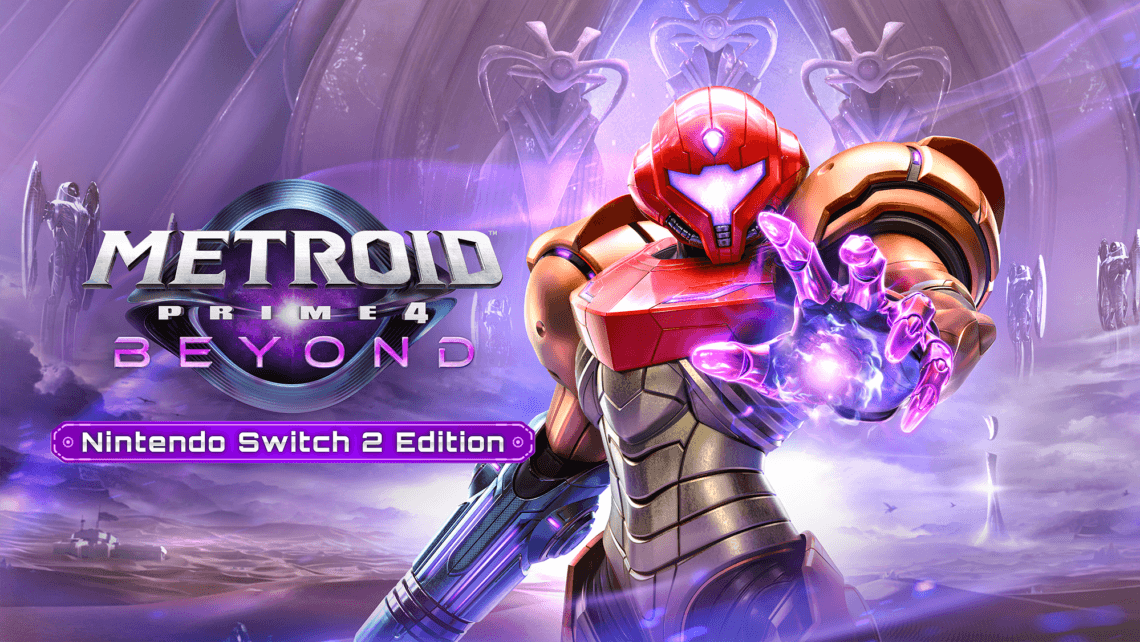

Metroid Prime 4: Beyond is back in the UK physical top 10, climbing from No. 20 to No. 9 as discounts and Metroid Ravenous interest give Nintendo late-2026 momentum.
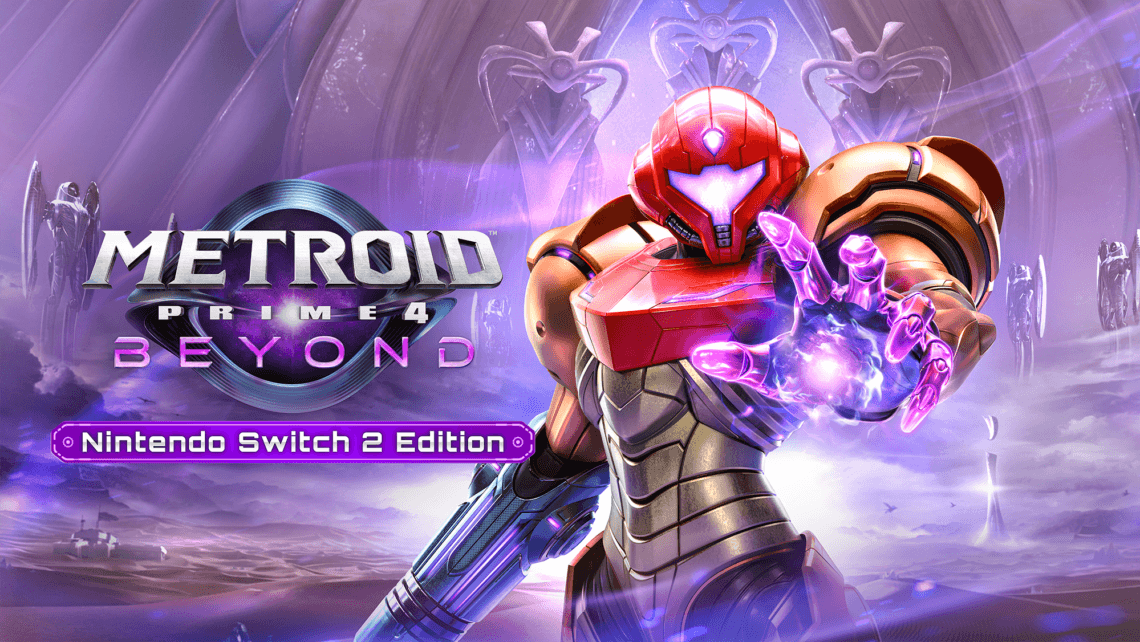
Image: omegametroid.com
Samus climbs back into a crowded October chart
Metroid Prime 4: Beyond has returned to the UK top 10, moving from No. 20 to No. 9 in the software sales chart for the week ending October 3, 2026, according to chart reporting from Nintendo Everything and Nintendo Life. That is the concrete movement at the center of the story: a Nintendo-published action-adventure released in December 2025 is gaining ground again nearly ten months later, in a week that also brought a major new Switch 2 debut and heavy multiplatform competition.
Nintendo Everything lists Metroid Prime 4: Beyond at No. 9, published by Nintendo, up from No. 20 the prior week. Nintendo Life’s chart table gives the same placement and adds a platform split of 57% on Switch 2 and 43% on the original Switch. The outlets do not provide unit sales, revenue, or digital breakdowns in the supplied chart data, so the safest read is a retail chart rebound rather than a complete picture of total UK demand.
The timing is what gives the climb its edge. EA Sports FC 27 remained at No. 1, Minecraft Dungeons II debuted at No. 2 with 70% of its reported platform split on Switch 2, and Marvel’s Wolverine, Mario Kart World, Ace Combat 8, The Witcher III, Pokemon Pokopia, and Tomodachi Life: Living the Dream all sat above or around Nintendo’s older first-party release. Metroid Prime 4 did not return in a quiet week. It forced its way back into a release-season top 10 where new games, evergreen sellers, and platform-showcase titles are all fighting for shelf space.
For Nintendo, that matters because late 2026 momentum is not only about the newest boxed release. It is also about whether the Switch 2 library has depth beyond launch-window curiosity. A game such as Beyond climbing back up the Metroid Prime 4 UK charts suggests that players are still entering Samus Aran’s orbit after the initial rush, especially when price activity and franchise news give them a reason to move.
Discounts appear to be the spark, but the demand signal is broader
Nintendo Life attributes Metroid Prime 4: Beyond’s return to the chart to “some discounts here and there,” saying the game came back the prior week and is now performing well. Nintendo Everything also points to retailer sales, while adding that there may have been a slight bump from the Metroid Ravenous announcement. Those are not identical claims, but they line up around the same practical explanation: price cuts helped reopen the door, and wider Metroid conversation may have pushed more players through it.
That distinction is important. A discounted game can climb because the price is finally right for the undecided audience. It can also climb because the audience was waiting for a nudge, especially with a series that tends to inspire long memory rather than annual habit. Metroid is not FIFA, and it does not behave like Minecraft. Its sales rhythm often depends on enthusiasm from action-adventure players, completionists, series loyalists, and hardware owners looking for a technical showpiece with a different tempo from Nintendo’s brighter multiplayer staples.
The current chart does not prove a dramatic expansion of the franchise. It does not tell us how many copies were sold, how much of the movement came from discounts, or whether digital sales followed the same pattern. It does show that when UK retailers created a better entry point, Metroid Prime 4: Beyond had enough latent demand to rise eleven places into the top 10. For a game with a long development history and a demanding first-person adventure identity, that is a meaningful pulse.
The platform split adds another layer. Nintendo Life reports 57% of the week’s Metroid Prime 4: Beyond sales on Switch 2 and 43% on Switch. A prior New Game Network report on the previous UK physical retail chart placed the game at No. 20 with a 70% Switch 2 and 30% Switch split. Those figures are from different weeks, so they should not be treated as a direct contradiction. Instead, they suggest that the game’s renewed retail life is not confined to one audience. Switch 2 is leading, but the original Switch version is still doing visible work.
Switch 2 is leading Metroid, while the original Switch still refuses to fade
The 57% Switch 2 share reported by Nintendo Life makes sense in context. Metroid Prime 4: Beyond was released for Nintendo Switch and Nintendo Switch 2, and reference listings for the game describe the Switch 2 version as supporting Joy-Con 2 mouse controls for more precise aiming. For a first-person Metroid Prime game built around scanning, combat reads, beam precision, and environmental navigation, an input feature tied to aiming is commercially relevant even without performance data in the provided sources.
At the same time, the 43% original Switch share is too large to ignore. Late in a platform transition, older hardware can become either a drag or a safety net. Here, at least in this week’s UK retail chart, it looks like a safety net. Players who have not upgraded to Switch 2 are still buying one of Nintendo’s marquee adventure games, while newer hardware owners are carrying the larger share. That helps explain why Metroid Prime 4 Beyond sales can reappear in the top 10 rather than living only as a Switch 2 showcase.
The surrounding chart reinforces that Nintendo is operating across both generations. Pokemon Legends: Z-A is listed by Nintendo Life with a 58% Switch 2 and 42% Switch split at No. 19. Animal Crossing: New Horizons shows 56% Switch and 44% Switch 2 at No. 26, while Super Mario Bros. Wonder shows 54% Switch and 46% Switch 2 at No. 28. These are separate games with different audiences, but they point to the same transitional market: Switch 2 is growing, yet the original Switch audience remains commercially active.
That is a useful position for Nintendo in late 2026. It can sell new Switch 2 software like Minecraft Dungeons II, which Nintendo Life and Nintendo Everything both report debuted at No. 2 with 70% of its platform split on Switch 2, while continuing to draw value from cross-generation Nintendo releases. Metroid Prime 4’s top 10 return sits right in that overlap. It is a premium adventure from the old generation’s final stretch and the new generation’s early library, and this week’s UK data shows that both sides of that bridge still have traffic.
A long development shadow makes every second wind more valuable
Metroid Prime 4: Beyond arrived with more history behind it than most late-2025 releases. Public reference material lists it as a Retro Studios-developed, Nintendo-published action-adventure released on December 4, 2025 for Nintendo Switch and Nintendo Switch 2. It followed Metroid Prime 3: Corruption by eighteen years. Nintendo announced Metroid Prime 4 at E3 2017, later restarted development in 2019 with Retro Studios, and revealed the Beyond subtitle in June 2024 before confirming the Switch 2 version in April 2025.
That background changes the meaning of a chart rebound. This was never going to be judged like a routine sequel arriving on schedule. It carried the weight of a restarted project, a long-dormant first-person adventure subseries, and the expectation that Retro could recover the mood, pacing, and tactile exploration that made Prime distinct. When a game with that kind of runway returns to a national top 10 almost a year after launch, it suggests that the conversation around it has not closed.
The game’s structure also matters for its staying power. Reference summaries describe Beyond as retaining the first-person design of prior Metroid Prime games, with non-linear environments, enemy encounters, ability upgrades, scanning, psychic abilities for controlling beam shots and manipulating objects, and a hub world crossed with Samus’s Vi-O-La motorcycle. Those are not annualized sports hooks or party-game loops. They are adventure-game promises: atmosphere, route mastery, combat rhythm, backtracking, and the pleasure of turning a hostile map into known territory.
That kind of design can benefit from late adopters. Some players wait for patches, some wait for price drops, and some wait until the release calendar gives them room for a denser campaign. The October 2026 rebound does not tell us which group is largest. It does tell us that Metroid Prime 4 has enough identity to resurface when conditions improve. In a market crowded by licensed action, sports dominance, survival horror, RPGs, and evergreen Nintendo games, that is a stronger signal than a one-week launch spike would be on its own.
The Metroid Ravenous factor gives Nintendo a runway into January
Nintendo Life frames the next question around whether Metroid Prime 4: Beyond can maintain a chart presence in the lead-up to Metroid Ravenous in January 2027. Nintendo Everything also mentions the Metroid Ravenous announcement as a possible contributor to renewed interest, though it phrases the effect cautiously. Based on the supplied sources, the confirmed point is that both outlets connect Beyond’s movement to a wider Metroid moment; the unconfirmed part is how much of the sales bump came from Ravenous rather than discounts.
Still, the timing is commercially useful for Nintendo. A returning top 10 entry in early October gives the company a bridge from autumn retail activity into the new year. If Ravenous is the next Metroid beat on Nintendo’s calendar, then Beyond’s renewed visibility helps reacquaint players with Samus before January. That can matter for a franchise whose audience often spans players who grew up with Metroid Prime, Switch-era fans who came through Metroid Dread or remasters, and newer Switch 2 owners looking for a serious single-player adventure.
The risk is that chart rebounds driven by discounts can fade quickly once the sale window ends. Nintendo Life explicitly ties Beyond’s return to discounts, and UK retail charts can shift sharply when new boxed releases arrive. Silent Hill: Townfall, for example, is listed at No. 10 this week after being No. 2 previously in Nintendo Everything’s table, while Lego Batman: Legacy of the Dark Knight fell from No. 5 to No. 13. That volatility is normal in physical retail, but it means one top 10 return should be read as momentum, not permanence.
Even with that caution, the placement gives Nintendo a better late-2026 story than a simple fadeout. Metroid Prime 4 is not sitting outside the conversation while the company waits for January. It is back among the week’s most visible boxed games in the UK, and it is doing so while sharing attention with Mario Kart World, Pokemon Pokopia, Tomodachi Life, Donkey Kong Bananza, Pokemon Legends: Z-A, and Fire Emblem: Fortune’s Weave. That breadth is exactly the kind of catalogue pressure Nintendo wants during a hardware transition.
How to read the UK chart if you are deciding whether to buy
For players, the practical takeaway is simple but worth framing carefully. The current UK games chart October 2026 data says Metroid Prime 4: Beyond is available and selling across both Switch 2 and the original Switch, with the Switch 2 version taking the larger reported share this week. If you own both systems and care about input options, public listings describe the Switch 2 version as supporting Joy-Con 2 mouse controls for more precise aiming. The supplied sources do not provide comparative frame rate, resolution, loading, file size, upgrade pricing, or digital discount details, so those questions require checking Nintendo’s store pages and retailer listings directly before purchase.
If you are waiting for a lower price, the reason for the chart climb is also your cue. Nintendo Life reports that discounts helped bring Metroid Prime 4: Beyond back into the chart, and Nintendo Everything points to retailer sales. That means the current retail environment may be friendlier than launch, but the sources do not establish how long any discounts will last or which retailers are participating. The Metroid Prime 4 top 10 return is evidence of buying activity, not a guarantee of a permanent price shift.
For players wondering whether to catch up before Metroid Ravenous, the argument is stronger if you are already drawn to Prime’s methodical rhythm. Beyond is described in public reference material as a first-person action-adventure built on scanning, ability progression, non-linear spaces, psychic powers, and vehicle traversal. That is a particular pace: tense rooms, readable enemy patterns, set-piece escalation, and the slow satisfaction of turning mystery into map knowledge. If that structure appeals to you, the current discount-driven resurgence may be a sensible entry point.
For Nintendo, the bigger question is endurance. Metroid Prime 4: Beyond has gone from No. 20 to No. 9 in the UK retail chart, with Switch 2 leading its platform split and Switch still contributing heavily. That does not make it a mass-market phenomenon on the scale of EA Sports FC 27 or Minecraft. It does show that Samus still has pull when price, platform transition, and franchise timing align. In late 2026, that is the kind of demand signal Nintendo can build around.