
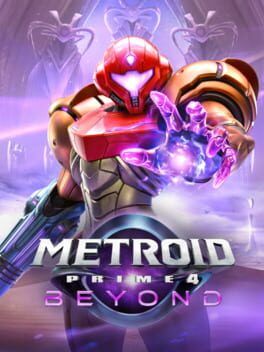
Nintendo’s new timeline clarification and fresh developer interviews reveal exactly where Metroid Prime 4 fits between Super Metroid and Fusion, what it means for Samus’ character arc, and why its traditional structure became a flashpoint on Switch 2.
Nintendo has quietly solved one of Metroid’s longest running headaches: where the Prime series actually fits in Samus Aran’s life. With Metroid Prime 4: Beyond now out on Switch and Switch 2, a new round of interviews in Famitsu and follow up coverage from outlets like Nintendo Everything and My Nintendo News has finally pinned the game down in the official chronology, while also explaining why this long delayed sequel feels so traditional next to modern open world blockbusters.
Between Super and Fusion, but in a different reality
For years, the rough rule of thumb was that the Prime trilogy and its spin offs slotted between the original Metroid / Zero Mission and Metroid II. Nintendo has now confirmed that Metroid Prime 4: Beyond breaks from that pattern. In the recent Famitsu interview, relayed in English by Nintendo Everything and My Nintendo News, Nintendo states plainly that Prime 4 is set after Super Metroid and before Metroid Fusion.
The key twist is how the game manages to move Samus forward in time without tangling itself up in the 2D canon. Early in the story, Samus is pulled into another dimension centred on the world of Viewros. Nintendo describes this as a deliberate move to create a “free and original setting” for the Prime series that does not interfere with events leading into Fusion and, later, Dread. In practical terms, Prime 4 is now the bridge between the destruction of Zebes in Super and Samus’ fateful mission to the BSL station in Fusion, but most of its drama plays out in a pocket reality that the mainline games can safely ignore.
That choice lets Retro Studios reset the board: Space Pirates, Phazon style corruption and mysterious precursor ruins can all coexist with the post Super era without forcing the script to constantly reference the X Parasites or the Federation’s secret bioweapons program. Samus has already blown up a planet and lost the only Chozo who ever felt like family, but the dimension hop gives Prime 4 the freedom to tell a self contained adventure that still carries that emotional weight.
What this means for Samus’ character arc
Placing Prime 4 after Super Metroid has a quiet but important impact on who Samus is when the game begins. She is no longer the up and coming hunter of Prime 1, still half defined by her work for the Galactic Federation. By this point she has defied her military handlers, saved the infant Metroid and then chosen to sacrifice that last link to the species to stop Mother Brain. Prime 4 picks up with a veteran who has already endured profound loss and is increasingly sceptical of the institutions around her.
The recent Famitsu interview about the game’s story framing hints at this by talking about Samus’ isolation and self reliance. Stranded in an unfamiliar dimension, she has no Federation back up, no Adam AI in her ear and no guarantee that her actions will ever be acknowledged back home. It is a natural emotional stepping stone toward Fusion, where she finally breaks from the Federation for good. You can feel that trajectory in the way Beyond characterises her silence. She rarely speaks, but her body language in cutscenes and the environmental storytelling around Pirate laboratories and Federation outposts on Viewros imply a bounty hunter who has stopped assuming her employers are on the right side.
Sylux’s expanded role underlines this shift. Previous cameos painted him as a mysterious pursuer. Here, interviews describe him as a self righteous extremist whose hatred of the Federation almost mirrors Samus’ own disillusionment, just stripped of empathy. Putting their confrontation in the post Super, pre Fusion window turns Prime 4 into a story about what kind of person Samus will become. She has every reason to share Sylux’s anger after being used as a weapon for so long, yet the game consistently shows her choosing to protect bystanders on Viewros rather than settle for vengeance. That choice helps explain why, by the time Fusion arrives, she is ready to defy direct orders to save innocents on the BSL station.
Even the “other dimension” device folds into her arc. It literalises how cut off Samus feels from anyone who might understand her, while giving Retro a space to play with Chozo ruins and strange alien ecologies without contradicting Dread’s revelations about the Chozo’s fractured history. Beyond becomes a kind of emotional exile story for Samus that threads neatly into the more openly rebellious hero we meet in Fusion and Dread.
A conscious return to traditional Prime design
Just as the timeline clarification grounds Samus’ place in the story, the same Famitsu discussion and follow up pieces shed light on why Prime 4 feels so classically structured. When development first spun up in the late 2010s, Nintendo was in the middle of the Breath of the Wild moment. The team saw constant calls online for an open world Metroid, and early planning tried to grapple with that demand.
The developers ultimately concluded that a true go anywhere from the start structure does not sit comfortably with Metroid’s identity. The series is built on gated progression, on the satisfaction of winning a new ability and then rethinking spaces you thought you understood. Removing those gates risks erasing the sense of deliberate route planning and backtracking that defines both the 2D games and the original Prime trilogy.
Their answer was a compromise rather than a full conversion. Prime 4 revolves around a large central expanse on Viewros that you can roam more freely, linked to tighter, more directed regions that evoke classic Prime zones. Samus’ new bike, the Vi O La, was designed to make that central area feel kinetic, acting as a breather between denser, slower puzzle and combat sequences. Nintendo repeatedly stresses that this was an intentional pacing tool, not an attempt to turn Metroid into a modern racing or open world checklist game.
The project’s tortured schedule magnified that conservative design choice. Prime 4 was announced back in 2017, scrapped, and then restarted at Retro in 2019. By the time the team realised that player attitudes toward open worlds and high speed shooters had shifted again, ripping out the established hub and traversal systems for a second reboot was off the table. The developers say they chose to “move forward with our original vision” even though they knew the wider market had moved toward snappier, more kinetic action.
That decision flows through every part of the finished game. Combat sticks to deliberate strafing and lock on shooting instead of adopting twitchy arena shooter trends. Exploration leans into scanning, deciphering architecture and slow burn environmental puzzles. There are spectacle heavy set pieces, but they are spaced out to preserve what Nintendo calls the “tempo of an adventure game.” In their own words, Prime 4 is “divorced from the changing of times,” a statement that sounds apologetic until you play it and realise how intentionally it chases the mood of the GameCube originals.
How the structure landed with fans on Switch 2
Reactions to this back to basics approach on Switch 2 have been complicated. Critics sympathetic to Metroid’s roots have largely praised Beyond as a confident return to the series’ strengths. Reviews from traditional Nintendo focused outlets and long time fans highlight the thrill of re learning a three dimensional labyrinth, the satisfaction of slowly mastering Viewros’ hostile biomes and the pleasure of a design that trusts the player to get lost now and then.
Elsewhere, the response has been more mixed. Aggregated scores sit below those of some other first party Switch 2 showpieces, and interviews acknowledge that parts of the audience bounced off Beyond’s stubbornly old school pacing. The wide central region and bike traversal, conceived as a way to nod toward open world sensibilities without abandoning Metroid’s structure, have been flashpoints. Players who wanted a more radical reinvention saw these elements as half measures. Others felt the sections built around the bike diluted the claustrophobic tension that made earlier Prime games memorable.
Context from the Famitsu interview helps make sense of that split. Prime 4 was conceived in a moment when “open world everything” felt inevitable, then shipped into a landscape where players had begun to tire of that formula. At the same time, first person games had accelerated around it, leaning into higher movement speeds and more aggressive enemy design. By refusing to chase those currents, Retro delivered something that can feel almost retro in spirit, especially on new hardware that easily powers more sprawling, reactive worlds.
Yet that same stubbornness is part of what makes Prime 4’s placement between Super and Fusion work so well. Samus’ story in this era is about pushing back against forces trying to reshape her into a simple weapon. It feels fitting that her latest outing also pushes back against external pressures to turn Metroid into something it is not. In carving out a quiet, self contained adventure in another dimension, Beyond manages to deepen her arc without overcomplicating the timeline, and to give Switch 2 one of its most distinctively authored big budget games, precisely because it is not chasing the changing of times.