
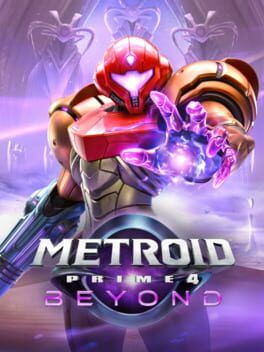

How Metroid Prime 4’s post‑launch roadmap, Mario Tennis Fever, and Fire Emblem: Fortune’s Weave sketch out Nintendo’s first‑party future on Switch 2.
Nintendo heads into 2026 in a rare position of clarity. Switch 2 hardware is out, Metroid Prime 4: Beyond has given the new system its first prestige single‑player epic, and Japanese players are already telling us what they want next through Famitsu’s most‑wanted charts. When you put that data next to NintendoLife’s speculative 2026 roadmap, a picture starts to form of how Nintendo plans to feed Switch 2 over the next 18 months.
At the center of that picture is Metroid Prime 4. Not just as a launch window showpiece, but as a long‑tail platform that can quietly define the system’s early years.
Metroid Prime 4: Beyond as Switch 2’s first long‑tail epic
Metroid Prime 4: Beyond arrived in December 2025 as the first fully built‑for‑Switch‑2 cinematic adventure. It puts Samus and rival hunter Sylux on Viewros, a dense, multi‑layered world that shows off Nintendo’s new hardware with big draw distances, richer lighting and more complex enemy behavior than the original Switch usually managed.
Nintendo has not laid out a full live service style roadmap for the game, but there are already strong hints that Beyond is designed for a slow burn. The in‑game structure leans on optional side sectors, lore hooks about the ancient Viewran civilization, and a handful of doors and artifacts that feel deliberately underexplored at launch. It is the same sort of design that Metroid Prime Remastered fans noticed when they speculated about follow‑up patches and it fits with NintendoLife’s view that 2026 will be a year of expansions, remasters and spin offs rather than a constant flood of totally new IP.
Expectations for post launch support revolve around three pillars.
First there is downloadable content. A mid 2026 story expansion would slot neatly into Nintendo’s typical cadence. Think of how Xenoblade and Splatoon have been handled in recent years, with a chunky expansion that both deepens the lore and gives the marketing cycle a second wind. Prime 4’s unused corners and its emphasis on Samus’ new psychic toolkit are natural places to bolt on an extra region or a self‑contained Sylux campaign.
Second is quality of life and performance work. Switch 2’s first wave of games will quietly serve as a tech shakedown, and a prestige title like Prime 4 is almost certain to get multiple patches in 2026. That gives Nintendo an easy way to roll in fan requested features like expanded control options, more robust analytics in the scan visor log and perhaps even a photo mode to showcase the game’s lighting on social media.
Finally there is the question of cross generation longevity. Prime 4 spans both Switch and Switch 2, and NintendoLife’s prediction piece raises the idea that late Switch titles will increasingly serve as evergreen bridges rather than one and done launches. Continued support for Beyond through balance tweaks, cosmetic bonuses or NSO themed rewards would send a clear message that your Switch library is meant to travel with you to the new hardware.
Metroid may not be the sales monster that Mario or Pokémon is, but as the prestige single player headliner of Switch 2’s first year, Prime 4’s treatment in 2026 will signal how Nintendo values narrative blockbusters on its new machine.
Mario Tennis Fever shows Nintendo leaning into live sports energy
If Metroid Prime 4 is the moody system showpiece, Mario Tennis Fever is its loud, day one crowd pleaser. The game entered Famitsu’s December 28, 2025 most wanted chart at number nine as one of the few Switch 2 exclusives in the top ten, sharing space with heavyweights like Dragon Quest VII Reimagined and a new Pokémon.
The title alone tells you what Nintendo is aiming for. After the more traditional, content‑light launch of Mario Tennis Aces on the original Switch, Fever looks positioned as the opposite: a dense, evergreen, online‑first sports hub that can occupy the same space that Mario Kart 8 Deluxe did for the previous generation. NintendoLife’s 2026 predictions emphasize how important it will be for Nintendo to prove that Switch 2 can handle big online games and modern sports titles, and Mario Tennis is the safest possible proving ground.
The timing matters. Dropping in the same window that Prime 4 is receiving its first wave of support lets Nintendo contrast two styles of first party engagement. On one side you have methodical single player exploration and on the other a recurring calendar of online tournaments, ranked ladders and seasonal cosmetics. If Nintendo follows the Splatoon model, 2026 could see regular content drops for Fever across new courts and minigames, dribbling out reasons to refresh the eShop icon on a monthly basis.
Famitsu’s chart position suggests Japanese players are ready for that approach. Slipping into the top ten with only teaser‑level information behind it speaks to Mario’s continued pull in sports spin offs and to how hungry the market is for structured, competitive Switch 2 games. If Nintendo pairs that demand with a more robust online backend that matches what third parties expect, Fever could become the de facto testbed for Switch 2’s matchmaking and netcode before the inevitable Mario Kart follow up lands.
Fire Emblem: Fortune’s Weave and Nintendo’s strategy RPG pillar
On the same Famitsu chart, Fire Emblem: Fortune’s Weave landed right behind Mario Tennis Fever at number ten. It is a very different game aimed at a narrower audience, but its presence in the top ten is just as revealing.
After Three Houses brought the series to a new global high and Engage doubled down on fan service, Fortune’s Weave looks like the banner strategy RPG for Switch 2’s early years. NintendoLife’s outlook for 2026 leans on the idea that established series will carry much of the load while new IP incubates in the background, and Fire Emblem is one of the few Nintendo franchises that can reliably occupy the 60 hour campaign slot that third party RPGs might otherwise fill.
The subtitle suggests a narrative with strong fate and choice theming, which ties into Nintendo’s broader experimentation with structure. Three Houses used diverging routes, Engage played with legacy characters, and a Switch 2 entry has the horsepower to go further with branching timelines and more elaborate battle maps without compromising handheld performance.
From a scheduling perspective, Fortune’s Weave is a perfect Q3 or Q4 anchor that pairs well with a lighter, more family oriented title in the same window. A year where players bounce between late cycle Metroid Prime 4 DLC, Mario Tennis Fever’s competitive ladder and a fresh Fire Emblem campaign would echo the comfortable variety that defined the original Switch, only with more modern tech behind it.
Famitsu’s early enthusiasm also matters for third parties. Seeing a meaty, turn based Nintendo exclusive earn a top ten spot alongside multiplatform giants reinforces that Switch 2 has an audience for slower, text heavy experiences in Japan. That is exactly the kind of signal publishers like Square Enix and Atlus look for when deciding which RPGs get full parity on Nintendo hardware.
How the first party pipeline is shaping up around these tentpoles
Zooming out, the trio of Metroid Prime 4, Mario Tennis Fever and Fire Emblem: Fortune’s Weave fits almost too neatly into NintendoLife’s speculative forecast for 2026.
The first party slate the site imagines leans on a blend of one or two big new adventures, at least one multiplayer evergreen and a reliable niche anchor in the RPG or tactics space. Mario Tennis and Fire Emblem have already claimed the latter two slots. Metroid Prime 4 gives Switch 2 its prestige narrative pillar. That leaves room for the next wave of unannounced games to fill in the classic Nintendo spectrum that fans expect from any given year.
Luigi’s Mansion 4 is at the top of many prediction lists. Luigi’s Mansion 3 quietly sold over 10 million copies and became a mainstay on Switch charts. A follow up on Switch 2, even if cross gen, would give Nintendo a visually rich, co op friendly adventure to sit between Metroid’s moody sci fi and Mario Tennis’ bright stadiums. Whether it hits in 2026 or slips to 2027, it is exactly the kind of midcore release Nintendo leans on when it wants to keep the calendar from looking too core‑gamer heavy.
Then there is 3D Mario. NintendoLife’s panel is split on whether a brand new 3D Mario is realistic for 2026, but everyone agrees it is the trump card waiting in Nintendo’s pocket. If Metroid is the tech showpiece and Mario Tennis is the online workhorse, a new 3D Mario would be the cultural event that pushes late adopters toward Switch 2. In that scenario, Mario Tennis and Fire Emblem function as warm ups, acclimating players to the new ecosystem before the flagship platformer arrives.
On the quieter side of the lineup, the prediction feature expects remasters and NSO drops to fill gaps between these bigger releases. GameCube additions like Super Smash Bros Melee are practically guaranteed candidates for Nintendo Switch Online, with dreams of Eternal Darkness, the Baten Kaitos games and Sonic Adventure 2 not far behind. Those services matter because they help Nintendo keep Switch 2 in the conversation even when there is no giant boxed release on shelves.
Taken together, it creates a pipeline where 2026 and early 2027 are less about surprise and more about consolidation. Nintendo has identified which of its brands can carry what kind of load. Metroid handles prestige adventure, Mario Tennis takes online sports, Fire Emblem secures the strategy audience and unannounced entries like Luigi’s Mansion or 3D Mario will provide the broad four‑quadrant appeal.
What this means for the original Switch
NintendoLife’s roundtable spends time on the aging original Switch as well. Their consensus is that while 2026 will not shut the door completely, the system’s role will shift from receiving new tentpoles to acting as a bridge.
Cross generation releases like Metroid Prime 4 already show how Nintendo intends to handle this. Games built for Switch 2 will arrive in trimmed down but still functional form on Switch, preserving the massive install base and giving late adopters a path to upgrade with their library intact. The prediction feature floats the idea that a few remaining first party projects such as rhythm titles or life sim updates could still hit Switch 1, but any truly ambitious projects are now firmly in the Switch 2 camp.
In that world, the post launch life of Metroid Prime 4 becomes doubly important. Well handled updates, smart performance patches and perhaps a final expansion that pushes Switch 2 features without abandoning Switch owners would let Nintendo close the cross gen chapter on a high note.
A clearer picture of Nintendo’s near future
By the end of 2026, we are likely to look back at Metroid Prime 4: Beyond as more than just the long awaited fourth Prime. It will have served as the framing device for Switch 2’s early years, proof of what the hardware can do and a test case for how Nintendo supports a prestige adventure in an era where players expect long term engagement.
Alongside it, Mario Tennis Fever and Fire Emblem: Fortune’s Weave look set to claim their own corners of the ecosystem. One delivers evergreen online competition, the other a sprawling, narrative heavy tactics campaign that keeps RPG fans rooted to Nintendo’s hardware even as PC and PlayStation circle with their own offerings.
NintendoLife’s predictions and Famitsu’s charts are not gospel, but they give us a strong sketch. The Switch 2 era will likely be defined less by a single breakout hit and more by how a carefully assembled first party roster works in concert. If Nintendo can keep that roster fed with smart post launch support, thoughtful NSO additions and a few well timed surprises, 2026 could be remembered not just as the year after Switch 2 arrived, but as the year its identity truly solidified.