
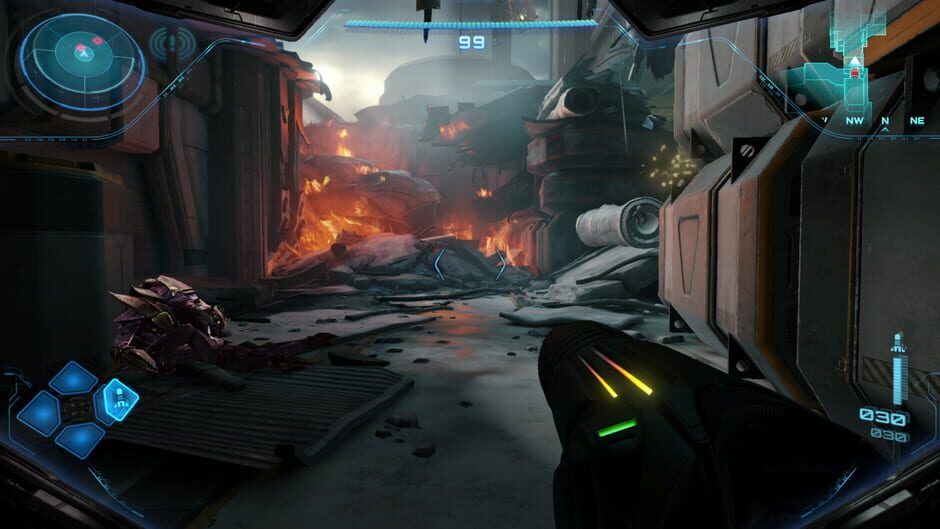

Using Nintendo’s new Metroid Prime 4: Beyond Switch Online icons and recent official info as a springboard, we break down everything confirmed so far – structure, abilities, planets, and story setup – then dig into how Retro might push exploration and controls into the Switch 2 era.
Nintendo quietly tipped that Metroid fever is about to spike again. The latest Nintendo Switch Online icon drop is themed entirely around Metroid Prime 4: Beyond, letting subscribers spend Platinum Points on profile art of Samus, Sylux and the eerie vistas of Viewros. Paired with Nintendo’s recent “Metroid Mondays” overview and the updated official game pages, we now have the clearest picture yet of what Retro Studios is actually building.
Below is a breakdown of everything that is firmly confirmed, followed by careful speculation on how Prime’s trademark exploration might evolve now that it is straddling the original Switch and the more powerful Switch 2.
The structure: Classic Metroid Prime with a modern hub
Nintendo’s own descriptions and trailers are surprisingly direct about structure. Metroid Prime 4: Beyond sticks to what it calls a “classic Metroid Prime” loop. You guide Samus through interconnected, mostly non-linear areas, scanning everything in sight, fighting hostile creatures and Space Pirates, then using newly acquired abilities to open shortcuts and access fresh regions.
The twist is the introduction of a large, central hub space on the new planet Viewros. Sol Valley appears to serve as that hub, a sweeping desert basin that Samus can cross using a new vehicle called the Vi O La. Rather than a traditional world map of totally isolated biomes, Beyond seems to stitch its regions together through this open intermediary space. Wide stretches of dunes, canyons and ruins sit between more focused dungeons and research complexes, with Vi O La turning backtracking into something fast and stylish instead of a chore.
Nintendo describes this as a natural extension of Prime’s exploration rather than a full open world. Expect familiar gated progression, but with more “macro” routing decisions. Do you drive across Sol Valley to reach a newly powered tower, detour into an offshoot cave that demands advanced psychic abilities, or dive back into earlier facilities for 100 percenting your logbook? That rhythm of choice, then constraint, is at the heart of Beyond’s structure.
Planet Viewros and its key regions
Beyond relocates Samus to Viewros, a once thriving world tied to an ancient psychic civilization called the Lamorn. Official materials call it both scenic and dangerous, and the latest footage has already highlighted several distinct zones.
Sol Valley itself is a scorching, sand-swept region that functions as a traversal hub. Here you call in Vi O La, skim over shifting dunes, dodge environmental hazards and slip through narrow rock arches at high speed. Structures like Chrono Tower rise out of the desert, hinting that even “open” areas hide dense, multi-level interior spaces.
Deeper in, we see industrial complexes such as Volt Forge, where crackling generators, rotating machinery and flowing energy conduits form the core of both puzzles and combat encounters. Elsewhere, dense jungles and subterranean caverns echo Prime’s tradition of shifting between natural and artificial spaces. Across these areas, environmental storytelling links back to the Lamorn, whose ruins and psychic technology underpin both the narrative and Samus’s new toolset.
Whatever the exact zone list, Viewros is presented as a single planet with strongly themed sub regions connected through Sol Valley and other chokepoints, not a scatter of unrelated worlds. That cohesion should make its geography as memorable as Tallon IV or Aether.
Samus’s toolkit: familiar Prime abilities plus the psychic edge
Nintendo has made it clear that Beyond is not throwing away the foundation laid by the earlier Prime games. The core verbs are intact. You still rely on the Arm Cannon in multiple beam configurations, the Missile Launcher for burst damage and destructible objects, and the Scan Visor for filling out the logbook and surfacing weak points and lore. Morph Ball returns in full, complete with environmental tracks, tunnels and Morph Ball puzzles.
Layered on top is a suite of Psychic Abilities that fundamentally changes how you interact with Viewros. These powers originate from a Psychic Crystal embedded in Samus’s helmet, awakening dormant functionality in her suit and granting her access to the new Psychic Visor.
The immediate headline power is control over the trajectory of charged shots through the new Control Beam. Instead of simply locking on and firing, you can steer certain projectiles mid flight, curving them around obstacles, threading them through vents or lining up multiple targets before detonating. In puzzles, this might mean guiding power through a web of nodes to activate machinery. In combat, it invites trick shots, hitting shielded foes from behind or simultaneously triggering scattered weak points.
Other psychic moves expand traversal. Nintendo mentions using psychic energy to operate mechanisms and interact with distant switches. Previews talk about psychic grapples that pull heavy panels free or latch onto specific anchors, effectively a telekinetic Grapple Beam. Psychic Bombs hang in mid air as chargeable detonations, powering devices or breaking reinforced barriers when placed precisely.
Crucially, these abilities fit seamlessly into Prime’s language of color coding and visual telegraphing. Violet trackways, shimmering psychic threads and distinct Lamorn glyphs tell you where a power applies. Beyond is not about scripted set pieces so much as expanding the systemic puzzle vocabulary. When you look at a room, you are now thinking about ballistic trajectories and invisible psychic attachment points, not just “red doors need missiles.”
Vi O La: the bike that rewires how you traverse a Prime world
Vi O La, Samus’s new hoverbike, is mixed into almost every official description of the game. In motion, it looks closer to a sleek speeder than a bulky vehicle. Nintendo emphasizes that you can summon Vi O La instantly in compatible zones, then dismiss it to drop back into tight first person exploration.
Functionally, Vi O La addresses a recurring pain point in Prime style design. Backtracking and long runs between points of interest can be atmospheric but occasionally tedious, especially when hard performance limits kept older games from filling big spaces with complex enemy behaviors. On Viewros, wide connective zones now become playgrounds. You dash across Sol Valley, drifting around ruins, smashing psychic crystals for energy, performing quick mounted attacks and chaining jumps off dunes or collapsed machinery.
Because Vi O La is fully integrated into the first person view rather than pulling the camera out to third person every time you mount up, it keeps you in Samus’s visor and preserves Prime’s trademark sense of immersion. Moments where you dismount, slip into Morph Ball form to clear a tunnel, then whistle the bike back in on the other side promise to give traversal a tactile, almost stunt like rhythm.
Story setup: Sylux, the Lamorn and a galaxy in crisis
Beyond finally cashes in on the tease Nintendo has been seeding since Metroid Prime 3 and Federation Force. Sylux, the enigmatic blue armored hunter first introduced in Metroid Prime Hunters, is front and center as Samus’s rival.
The opening sequences take place at a Galactic Federation facility that comes under attack from Sylux and an army of Metroids he has wrested away from the Federation’s control. A confrontation around a mysterious Artifact goes sideways, engulfing the base in light and hurling Samus across space. She awakens on Viewros, stripped of many suit functions, in the shadow of the Chrono Tower.
From there, the plot focuses on uncovering the fate of the Lamorn, the psychic species that once called Viewros home. Through scanning and Psychic Visor readings, Samus learns that their legacy is now bound up with her new powers. The Federation, meanwhile, is in retreat, their troopers scattered across the planet and other fronts as Sylux escalates his warpath using Metroids and alien technology. You encounter Federation squads in various states of disarray, sometimes assisting them in pitched battles, other times arriving just a little too late.
Thematically, Beyond leans hard into memory, inheritance and the ethics of power. Samus’s status as a perennial outsider is reframed as that of an unwilling torchbearer for a dead civilization, even as she tries to keep the living galaxy from repeating the same mistakes with Metroid biotech and psychic weaponry.
How exploration might evolve for the Switch 2 era
At a mechanical level, Beyond on base Switch aims to preserve the feel of the original trilogy. Dual stick controls, optional gyro aiming and traditional lock on are all present, with performance targeting the familiar 30 to 60 frames per second range. The real leap, according to Nintendo’s own breakdown, comes with the Switch 2 Edition.
On Switch 2, you can choose between two performance profiles. One favors 4K visuals at up to 60 frames per second, using the extra power to sharpen textures and boost effects across Viewros. The other caps resolution at Full HD in exchange for up to 120 frames per second, which has big implications for a game about precise aiming and reactive traversal.
There is also support for mouse style controls when the system is docked. This is a first for mainline Metroid, and it potentially changes how fine grained aiming puzzles and high difficulty combat encounters can be tuned. You could imagine optional challenges built around threading Control Beam shots through intricate mazes in real time, or bosses that demand rapid target swapping in ways that were less feasible when everyone was using a stick or gyro.
Retro has also talked about more nuanced input remapping and advanced control modes. Expect options to separate turning and aiming sensitivities, tweak gyro deadzones, and assign psychic powers to convenient buttons or quick radial menus. For exploration, that matters because the friction of using your full toolkit is reduced. If switching from Arm Cannon to Scan Visor to Psychic Grapple to Vi O La is instantaneous and readable, designers are freer to demand layered interactions in a single room without overwhelming players.
Smart speculation: where Retro could push Prime next
A lot of the most exciting ideas around Beyond are not wild guesses so much as extrapolations from what Nintendo has already shown.
The first area where Retro is likely to push is verticality. With psychic grapples, steerable projectiles and Morph Ball trackways laced through open spaces, large outdoor arenas can function almost like three dimensional puzzles. Imagine cresting a dune on Vi O La, leaping off a collapsed bridge, using a mid air Psychic Bomb to trigger a rotating platform, then latching onto a distant lamppost like anchor to land on a hidden balcony. None of that contradicts what Nintendo has confirmed. It simply layers existing tools into more complex traversal chains.
Second, Switch 2’s horsepower and faster streaming should enable denser connective tissue between areas. Rather than stepping through frequent loading doors or elevators, Beyond could stream seamless transitions across long stretches of Sol Valley, with Vi O La serving as the pacing valve. Subtle enemy ambushes, dynamic sandstorms and roaming mini bosses would keep those journeys tense. This sort of design lightly surfaced in Prime 3, but hardware limits capped its ambition. Here, Switch 2 can quietly erase those constraints.
Third, mouse support hints at the possibility of optional control centric challenges. Retro might include a “precision mode” for players on Switch 2 that leans into sniper like encounters, intricate beam routing puzzles or time trial style challenges that feel best with ultra fine aim. None of this would be required for the main story, but as post game or optional content for hardcore players, it fits squarely with the series’ penchant for hidden layers.
Finally, the Switch 2 Upgrade Pack structure suggests Nintendo sees Beyond as a potential long tail platform. It would not be surprising to see post launch expansions that introduce new regions on Viewros or side missions featuring Federation troopers. From a systems perspective, psychic abilities and Vi O La are extensible pillars. New psychic tools, alternate bike modules or experimental control modes could all slot into that framework as Retro learns how people actually play.
A Prime built for the gap between eras
The new Switch Online icons might feel like a small promotion, but they underline something important. Nintendo is positioning Metroid Prime 4: Beyond as a pillar release for the very end of the Switch’s lifecycle and the dawn of Switch 2. Everything about the game’s design reflects that split focus.
On one side, Beyond is comfortingly familiar. It is still about scanning every wall, mapping labyrinthine structures and earning that end screen percentage by tracking down obscure expansions. On the other, it experiments just enough with psychic systems, vehicular traversal and advanced controls to make Prime feel contemporary on far more capable hardware.
If Retro can balance those forces, Viewros might join Tallon IV and Aether in the pantheon of all time great Metroid worlds, and Metroid Prime 4: Beyond could end up being the game that properly bridges Nintendo’s first person masterpiece series into the Switch 2 era.