
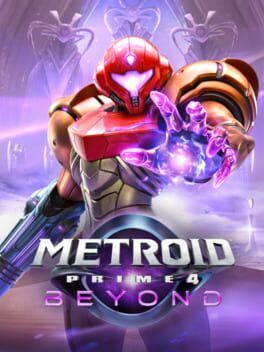

Metroid Prime 4: Beyond is exploding on the Switch 2 eShop, and its breakout character isn’t another hardened space marine but Nora Armstrong, a chatty Samus superfan. Here’s how a single rookie soldier reframes Samus Aran for a new generation while fueling the game’s unlikely digital dominance.
Metroid has never really been a series about other people. For decades, Samus Aran has stalked alien ruins in near silence, with other characters kept at arm’s length or shunted to lore logs. Metroid Prime 4: Beyond changes that calculation in a big way, and the surprise is that the game’s breakout star isn’t Samus herself or even its flashy Switch 2 upgrades. It’s Nora Armstrong, a rookie Galactic Federation soldier who treats Samus the way players have for 30 years: like a legend.
At the same time, Metroid Prime 4 is quietly dominating the Nintendo Switch 2 eShop. Despite relatively subdued marketing, it has locked down the top spot on both Switch and Switch 2 digital charts, even before launch via preloads and continuing through its release week. Together, the game’s commercial momentum and Nora’s instant cult status signal what Nintendo is trying to do with Prime 4: make Samus feel current, visible, and aspirational to a new audience without relitigating old arguments about suits, poses, or merch.
A quiet series finds its loudest voice
In Prime 4, Samus spends more time around other humans than in almost any previous Metroid. Stranded Federation squads are scattered across the new planet Viewros, and each biome pairs her with different soldiers who act as guides, puzzle partners, and walking hint systems.
Most of them talk a lot. Pre-release discourse fixated on Myles MacKenzie, a quippy, fourth-wall-adjacent trooper whose jokey Marvel-lite tone clashed sharply with Metroid’s moody isolation. Post-launch reviews have largely agreed that he embodies the worst fears fans had about Prime 4 trying too hard to be chatty.
Nora Armstrong could easily have fallen into the same trap. On paper, she is another talkative Federation grunt: young, nervous, clearly out of her depth. In practice, she works because she channels that energy into sincere awe for Samus instead of self-conscious wisecracks. She gushes, but she never undercuts the gravity of what is happening on Viewros. That distinction has made all the difference for players.
Who Nora Armstrong is, and why she clicks
Nora first appears deep into the Flare Pool region, after Samus has already spent time with the gruff Sergeant Ezra Duke. Where Duke is all hard edges and clipped orders, Nora is a pilot-mechanic who apologizes when she stumbles, over-explains what she knows, and radiates a kind of nervous competence. She is good at her job, but she knows she is sharing a dropship with the most decorated bounty hunter in Federation history.
Her official bio frames her as a structural and vehicular specialist, which justifies the way she interacts with the world: pointing out weakened walls, identifying power conduits, offering to help re-route energy or open bulkheads. Mechanically, she is a contextual hint system. The key is that she is obviously thrilled to be doing it for Samus.
Nora reacts to meeting Samus the way a fan at a convention might react to meeting a childhood hero. She recognizes classic tools on sight, calls out ability names with barely contained excitement, and studies Samus’ armor not as military hardware but as a myth brought to life. That puts her in an unusual space for a Metroid character: she is both an in-universe ally and a stand-in for the players who grew up idolizing Samus from afar.
A fangirl as diegetic HUD
Metroid Prime 4 leans harder on companions and guidance than past entries, which risked turning it into a corridor of waypoints and glowing breadcrumbs. Nora’s writing is one of the main reasons that shift has not sunk the atmosphere.
Because she knows Samus’ greatest hits inside and out, her hints feel like enthusiastic commentary instead of tutorial pop-ups. When she spots a narrow vent and blurts out a breathless remark about how incredible the Morph Ball is in person, the game has just told you exactly what to do without ever flashing a button prompt. When she gasps about how she has read mission reports of Samus using missiles to bring down fortified doors, she is also nudging you toward the correct solution.
This approach solves a long-standing tension in modern Metroid design: how to keep the series approachable without smothering its sense of discovery. By making the hint system a character with clear motivations, Retro Studios gives itself permission to be more explicit while staying true to the fiction. Nora does not explain things because the player is assumed to be lost. She explains things because she cannot believe she is watching her hero work.
Reframing Samus as a living legend
Beyond utility, Nora’s presence reshapes how the Metroid universe treats Samus. For most of the series, we have been told that Samus is famous, but very few games have shown us what that looks like from the ground level. Nora is a small but potent corrective.
Her starstruck behavior is the first time a mainline Metroid really lingers on the idea that Samus’ feats have circulated through the Federation like urban legends and declassified briefings. To Nora, Samus is not just a colleague. She is the figure at the center of every mission report, the lone armored silhouette that walks out of catastrophes no one else survives.
That matters for two reasons. First, it anchors Samus more firmly in a social context. She is still laconic and distant, but Prime 4 finally surrounds her with people who react to her the way a real military apparatus would react to its most effective wild card. Second, it retroactively sharpens later conflicts in the series timeline, particularly the strained relationship between Samus and the Federation in games like Metroid Fusion and Metroid Dread. If rookies like Nora grew up idolizing Samus, the institutional decision to treat her as a liability hits even harder.
In this way, Nora helps bridge the gap between the mythic, solitary Samus of the early games and a more nuanced, fully inhabited universe. She acknowledges the legend while reminding us that legends have fans, detractors, and real-world consequences.
Fan reception: from eye-rolling to instant favorite
The response to Prime 4’s supporting cast has been mixed, with critics and long-time fans often frustrated by over-expository dialogue and tonal clashes. Nora is the clear exception. On social media, in review roundups, and across message boards, you can see the same arc play out: wary players brace for another Myles-style chatterbox, then soften as Nora’s earnestness and specific admiration for Samus win them over.
Part of this positive reception comes from how smartly her scenes are staged. She often plays off Duke, whose annoyance at her rambling lets the game vent any irritation the player might feel. That makes her quirks feel like part of a character dynamic instead of noise imposed on the player. Where other soldiers come across as generic archetypes, Nora’s blend of competence, anxiety, and open fandom feels recognizably human.
She has also become a lightning rod for fan creativity. Within days of launch, fan wikis catalogued her quotes and mission history, fan art framed her as Samus’ co-pilot or nervous bodyguard, and shipping communities picked up on the subtext in her dialogue: the lingering looks, the puppy-dog energy, the way she talks about Samus’ exploits in a register that sounds less like professional respect and more like a long-running crush finally rewarded.
Not everyone is on board. Some players still find any constant companion chatter intrusive in a series that built its reputation on wordless exploration. Others wish she faded into the background more quickly in repeat visits. But even among critics of Prime 4’s new direction, Nora is more often described as the exception that proves the rule, a character who makes the expanded cast feel justified instead of obligatory.
Updating Samus for a new generation
The other half of the equation is timing. Metroid Prime 4 is not just another sequel. It is one of the first big banners on the Nintendo Switch 2 eShop, and its success there is central to how younger or lapsed players will perceive Samus going forward.
Metroid has historically lagged behind Mario, Zelda, and Pokémon in sales, even when critics adored it. Early Switch 2 charts tell a different story. On both the original Switch and Switch 2 storefronts, Metroid Prime 4 climbed to the top through preloads alone, outpacing heavy hitters like new Marvel tie-ins and a fresh Octopath Traveler entry. Post-launch, it has held that spot, turning what could have been a niche nostalgia piece into a genuine system showcase.
Nora fits neatly into this broader repositioning. For newer players who might know Samus primarily as a Smash Bros. fighter or a character their parents talk about, Nora provides a point of entry. She is young. She is in over her head. She has heard the stories and now finds herself in one. Her delight at watching Samus pull off impossible feats becomes an on-ramp for players who are experiencing those feats for the first time.
Crucially, she does this without dragging the conversation back to old debates about Samus’ armor design or merchandising. In the 2010s, attempts to humanize or diversify Samus’ portrayal often got mired in arguments about character models, marketing art, or amiibo poses. Prime 4 sidesteps that entire discourse by letting another woman in the universe articulate why Samus is aspirational.
Through Nora’s eyes, Samus is cool because of what she does. She is admired for her problem-solving under pressure, her history of standing up to corrupt institutions, and the way she treats impossible odds as just another job. It is an image built on competence and courage rather than costume tweaks.
Queer subtext without a sermon
Another major reason Nora has resonated with fans is the clear vein of queer subtext in her interactions with Samus. Metroid has long attracted queer readings, from Samus’ androgynous early depictions to the series’ focus on bodily transformation and alienation. Nora brings those undercurrents closer to the surface without ever turning the game into an explicit romance.
Her dialogue is suffused with the kind of nervous energy that is instantly recognizable to anyone who has ever had a crush on a public figure. She overcompensates with technical talk, stumbles when Samus looks directly at her, and occasionally veers into gushing monologue territory. The game never names these feelings outright, but it does not need to. Fans immediately filled in the blanks.
This has two important knock-on effects. First, it gives queer players and women who love women a clear emotional hook inside a series that has often kept Samus emotionally opaque. Second, it allows Nintendo and Retro to modernize Metroid’s tone in step with a broader cultural moment where fandom itself, and queer fandom in particular, is more visible and vocal.
The timeline realities of Metroid mean it is unlikely that Samus and Nora will ever be canonized as a couple in-game. Samus’ story is already packed with galactic catastrophes and long stretches of isolation. But the point here is not to chart a new romance arc so much as to validate a way of seeing Samus that has existed in the fandom for years. Prime 4 quietly says: if you have read her that way, the universe has room for you.
A character built for the long tail
The Switch 2 launch window is only the beginning of Prime 4’s life. As more players pick up the game through discounts, word of mouth, or a future PC or cloud release, Nora is positioned to become one of those secondary characters who define an era of a franchise. Think Midna for Twilight Princess or Tatsuya for certain Persona entries. Not the protagonist, but the one fans bring up whenever they talk about what made that specific installment feel different.
Because her role is deeply tied to how Prime 4 delivers its guidance, she will also be a reference point in future design discussions. If later Metroid games scale back companions, Nora will be remembered as the one that worked. If they double down on talking partners, she will be the template people ask them to follow: embedded in the fiction, emotionally readable, deeply attached to Samus in a way that reflects how players feel.
As Metroid Prime 4: Beyond continues to anchor the Switch 2 eShop charts, that kind of resonance matters more than ever. The commercial story is that Metroid can finally hang with Nintendo’s heaviest hitters in digital storefronts. The creative story is that the series can introduce new characters, experiment with new tones, and still feel like Metroid.
Nora Armstrong sits at the crossroads of those two stories. She is the rookie who tells us that Samus Aran is a legend, the fan who mirrors our own admiration, and the friendly voice that guides newcomers through an intimidating world without talking down to them. In doing so, she helps carry Samus’ image beyond the confines of retro nostalgia and into a future where the galaxy’s greatest bounty hunter can be both a myth and a mentor, both solitary and seen.