
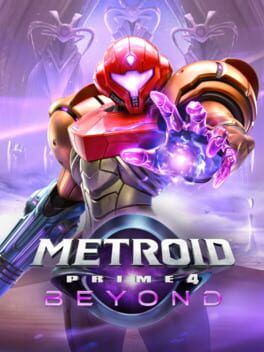
We dig into early community reactions to Metroid Prime 4: Beyond across polls, podcasts, and Japanese launch chatter, looking at what fans love, where they’re frustrated, and how Nintendo has marketed the game alongside other first‑party heavy hitters like Donkey Kong.
Metroid Prime 4: Beyond is finally out after one of the longest, strangest roads to release of any Nintendo game this side of Breath of the Wild. Reviews from critics have landed in a broadly positive but surprisingly divided place, and now that fans have had time to roll credits and mop up secrets, the community temperature is starting to stabilize.
This feature looks at that temperature from a few different angles: how fans are scoring the game in community polls, what podcasters and early adopters are saying about the big new ideas, and which pain points keep coming up around performance, pacing, and controls. We will also touch on how Nintendo has chosen to market Prime 4 alongside other first‑party projects like Donkey Kong, and where this leaves the Prime series going forward.
How fans are scoring Metroid Prime 4: Beyond
On the critical side, Metroid Prime 4: Beyond is sitting around the low‑80s on aggregate sites, with many outlets calling it a technically impressive return that sometimes gets in its own way. What is more interesting right now is how actual players are rating it.
Nintendo Life’s community poll for both the Switch 2 edition and the original Switch version paints a clear picture. The bulk of reader votes cluster around 8, 9, and 10 out of 10, which tracks fairly closely with the outlet’s own critic scores of 9 for Switch 2 and 8 for Switch 1. For a lot of people, this is exactly what they wanted: a modern Prime that feels like Prime.
Dig into the comments, though, and you see more nuance. Many long‑time fans land in the 7 to 8 range, praising the production values and atmosphere while questioning some of Retro’s structural choices. Others plant a flag at 9 or 10, arguing that it is the closest Nintendo has come to recapturing the magic of the GameCube original since, well, the GameCube original.
Outside that one poll, a similar split shows up in general community discussion and early podcast commentary. On shows like the Pure Nintendo Podcast, hosts talk about the game with genuine affection, often focusing on standout moments and the thrill of finally having a new Prime at all. At the same time, they acknowledge that some design swings will not be to everyone’s taste.
If you wanted to summarize the fan score so far, it would look something like this: a strong, upper‑tier Metroid that is falling just short of consensus classic status because of a handful of divisive design bets.
The new mechanics fans are loving
A big part of why Prime 4 is resonating with so many players comes down to how familiar movement and combat feel without getting stale.
From podcasts and comment threads, there is a consistent chorus praising the way Samus handles on both hardware revisions. Strafing and lock‑on targeting keep that old‑school Prime rhythm alive while modern aiming options ease the transition for players coming from more contemporary shooters. People talk about how fluid it feels to weave between scanning, platforming, and combat encounters once the control scheme clicks.
Exploration remains the heart of the experience. Many of the game’s new gadgets and traversal upgrades are being singled out for how elegantly they fold into the environment. Sequence puzzles that combo morph ball movement, new beam functions, and kinetic contraptions are sparking the same kind of “aha” stories that defined the earlier games. Fans recount getting lost in a single facility for an hour because they were experimenting with how different tools interact with the world, not because they were hard‑stuck.
Bosses are another common highlight. Across podcasts and early impressions, specific encounters are already being talked about as series greats, often thanks to layered arenas that force you to use new tools under pressure rather than just pumping missiles into a weak point. The scripting can get weird and occasionally veer into spectacle over subtlety, but in the moment‑to‑moment, players seem to love the set pieces.
On Switch 2 in particular, the technical solidity is its own “mechanic” in how it supports all this. Higher resolution, steadier performance, and faster loading keep the focus on atmosphere and puzzle‑solving rather than on hardware strain. Even Switch 1 players, who are dealing with longer loads and lower fidelity, often remark that the game feels remarkably stable for what it is trying to do.
Areas and moments that are getting the most praise
Looking at fan chatter, one thread appears over and over: when Metroid Prime 4 corrals you into dense, interconnected complexes, it sings.
The indoor spaces, whether research labs, ruined temples, or hybrid biomechanical facilities, are being celebrated for their art direction and spatial design. Players love the way routes loop back into themselves, how shortcuts slowly reveal a three‑dimensional jigsaw of corridors and shafts, and how scanning tells small environmental stories around every corner. It is the kind of slow‑burn, immersive exploration that made the original Metroid Prime a cult favorite.
Atmosphere is a major point of agreement. Across Japanese coverage, Western podcasts, and comment sections alike, you will find fans lauding the soundtrack and sound design. Sparsely used musical motifs, eerie environmental hums, and the clank of Samus’s boots in metallic hallways all sell that sense of deep‑space isolation, even when story elements occasionally push back against it.
A lot of affection is also directed at the smaller, optional spaces. Side caverns that hide upgrades, off‑path test chambers, and tucked‑away environmental vignettes are described as some of Prime 4’s best content. When the game leans into claustrophobic, carefully authored rooms rather than broad traversal fields, most players seem delighted.
Where the community is split: Sol Valley, pacing, and structure
If there is one location that has become shorthand for Prime 4’s controversies, it is the central desert hub area that many players liken to an open‑world hub. Some enjoy it as a stark, lonely space that calls back to classic sci‑fi deserts. For a larger group, though, it is the weakest link in the entire experience.
The complaints are consistent. The hub can feel empty, with stretches of sand and rock that are light on interesting objectives. Traversal through this hub is sometimes seen as padding, especially when the main story asks you to backtrack across it multiple times. In a series that built its reputation on tight, layered map design, long slogs through minimally interactive terrain stick out.
This ties into a broader critique around pacing. Long‑time Metroid fans often praise the first half of Prime 4, where unlocks and discoveries flow steadily, only to feel that the back third loses steam. Late‑game key‑hunt sequences and forced fetch phases are singled out as culprits. Several players mention that these sections feel like they stretch playtime rather than deepen the experience.
Linearity and guidance are another flashpoint. Compared to earlier Prime entries and especially to 2D high points like Super Metroid, Prime 4 is far more direct in telling you where to go next. For some, especially those new to the series, this is a welcome change that keeps them from bouncing off obtuse progression. For veteran fans, the steady stream of waypoints and hints reduces the thrill of piecing together the world purely through observation.
The end result is a game that many finish feeling satisfied with, but not necessarily haunted by, the same way the original Prime or Dread might have lingered.
NPCs, chatter, and the Metroid identity crisis
Another major talking point, both on the Pure Nintendo Podcast and in comment threads, is how Prime 4 handles NPCs and story delivery.
Metroid, especially in its Prime incarnation, has traditionally been about solitude. Scans deliver lore quietly, and Samus herself is famously reserved. Prime 4 experiments with this formula by giving you more radio chatter and a recurring side character presence. The character Myles, in particular, has become a lightning rod.
Some players like having another voice in the mix. They argue that after such a long gap, it is interesting to see Samus in a more populated universe and to get clearer narrative stakes. When this works, they say it gives Prime 4 a sense of modern cinematic scope without overwhelming the core exploration.
For others, the tone and frequency of the chatter cut against what they come to Metroid for. The comparison you see most often is that it feels a bit too much like a modern action movie riffing on itself in the middle of serious moments. They worry that this pushes Metroid toward a more generic blockbuster mold instead of leaning into the stoic, mysterious vibe that made it stand out.
This friction around NPCs and tone feeds into the broader conversation about what Metroid should be in a post‑Switch 2 landscape. Fans are not united on the answer, but they are very invested in the question.
Performance and control options: where things stand on Switch and Switch 2
On the technical front, community feedback is relatively positive, though not without caveats.
Switch 2 owners report the smoothest experience. Higher frame rates, sharper image quality, and brisk loading times minimize friction. While a handful of players and publications have noted minor frame pacing hitches or streaming hiccups during large outdoor segments, those are usually described as brief and not game‑breaking.
On the original Switch, expectations are more tempered. The downgrade in resolution and effects is visible, and loading between large regions can be noticeable. Yet the consistent sentiment from players actually using the older hardware is that Retro squeezed about as much as they could out of it. The game retains its atmosphere and plays responsively enough that most are willing to accept the technical compromises.
Controls have been a quieter but important talking point. Prime 4 offers multiple schemes and sensitivity options, which fans appreciate. Stick‑based aiming that still respects the lock‑on heritage strikes a good balance for many. Some long‑time players wish for even more granular customization, especially around motion aiming and gyro tweaks, but there is no widespread frustration here compared to the more structural issues with pacing and linearity.
Taken together, performance and control chatter indicates that technical execution is one of Prime 4’s strengths rather than a central controversy.
Japanese launch, Donkey Kong ads, and Nintendo’s marketing balance
Interestingly, part of the conversation around Prime 4 is not about the game at all, but about how Nintendo has chosen to present it, especially in Japan.
Coverage of the Japanese launch notes that Prime 4 has had to share spotlight with a new Donkey Kong title and its associated promotions. In some cases, fans on social media pointed out that public spaces, storefronts, or broadcast slots seemed more dominated by Donkey Kong imagery than by Samus’s long‑awaited return.
On paper, this is not entirely surprising. Donkey Kong reaches a wider demographic in Japan and has a long history of selling big numbers on Nintendo systems. Metroid, by contrast, has always been a more niche, core‑gamer property, historically underperforming in its home market compared to its Western footprint.
Still, for a segment of the community that has waited more than a decade for a new numbered Prime, there is some frustration. They see Prime 4 as a system‑defining showcase for Switch 2, the kind of game that should be front‑and‑center in every marketing beat. When they compare that expectation to the reality of mixed promotional focus, it reinforces the sense that Metroid is treated as a prestige side act rather than a headliner.
Other fans push back on this narrative, noting that Western marketing, trailers, and dedicated Nintendo Direct segments have given Prime 4 plenty of attention. From this perspective, pairing Metroid and Donkey Kong in the same season is not a slight, but a way to cover different audiences and keep the release calendar feeling varied.
Regardless of which side you land on, the conversation reflects a familiar tension: Nintendo’s portfolio is deep, but marketing bandwidth is finite. Balancing long‑running series like Mario and Donkey Kong with more specialized, atmosphere‑driven experiences like Metroid is always going to be tricky.
Where the Prime series could go next
With Prime 4 in players’ hands and the community openly debating its strongest and weakest ideas, attention is already turning to what is next for Samus in first‑person.
One likely route is refinement. A hypothetical Prime 5 could keep Prime 4’s technical foundation and core combat feel while revisiting what made the original trilogy so beloved. That might mean dialing back overt handholding, placing a renewed emphasis on labyrinthine map design, and treating NPC interaction as a seasoning rather than a main course.
Another possibility is that Nintendo and Retro take a more experimental fork. Prime 4’s divisive hub structure and story delivery show that they are willing to stretch the formula. If they choose to double down, we might see a future entry that embraces larger, more contiguous spaces, more pronounced RPG‑style progression, or even some form of cooperative or asynchronous play built around multiple bounty hunters.
A third angle, which some fans whisper about, is that Prime as a subseries could evolve into a platform for distinct arcs. Prime 1 through 3 told one story, Prime 4 might be the bridge into a new era, and future games could explore smaller, more self‑contained missions in different corners of the galaxy. In that model, the series would focus more on atmosphere and mechanical experimentation than on long‑running metanarratives.
Whatever direction Nintendo chooses, Prime 4’s mixed but passionate reception sends a clear message. Players are deeply attached to the exploratory, lonely, tactile qualities that make Metroid Prime different from other first‑person adventures. They are happy to see the series modernize, but only as long as it does not lose sight of the quiet, eerie spaces that made stepping onto Tallon IV such a revelation.
Closing thoughts from the community
Early fan reception to Metroid Prime 4: Beyond is not neatly unanimous, and that is part of what makes watching it develop so fascinating.
You rarely see anyone call it a bad game. Instead, you see people arguing over whether it is a great Metroid, a good Metroid that occasionally forgets its roots, or something in between. Some are already replaying it, adjusting their community poll scores upward as the finer details of the world design sink in. Others finish, nod in appreciation, and then go back to older entries with a new sense of what they value in the series.
In the middle of all that debate, one sentiment keeps bubbling up: relief. After cancellations, restarts, and a long silence, Metroid Prime is not only alive but ambitious enough to start arguments. For a series that once seemed perpetually on the brink of fading into nostalgia, that alone feels like a victory.