
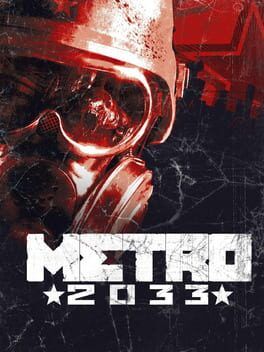

Industry look at the rumored Metro 2039 reveal, what it could mean for setting, technology, and how 4A Games might evolve the series without overstating unconfirmed details.
Industry insiders are once again circling around the Metro series, this time pointing to a new mainline entry widely referred to as “Metro 2039” and suggesting a reveal could arrive as early as next week. While nothing has been officially announced by 4A Games or Embracer’s subsidiaries, the level of smoke around this rumor is worth a closer look, especially for what a next Metro could represent for the franchise’s evolution rather than just the headline of a new sequel.
Reports from gaming insiders, including NateTheHate, have indicated that a new Metro announcement is “true,” with some speculation tying it to a mid‑April PlayStation showcase. Those event details remain unconfirmed, and even the leakers themselves frame the timing as a possibility rather than a lock. From an industry‑watch perspective that matters because it keeps expectations grounded. Players should treat any specific date or event as tentative, but the overarching signal is that the next Metro is almost certainly approaching reveal phase.
The title “Metro 2039,” as referenced by some insiders, suggests a continuation of the time jump pattern the series has followed since Metro 2033. Metro: Last Light and Metro Exodus both pushed the calendar forward while inching the world away from the confined tunnels of the Moscow metro and toward a wider, more fragmented post‑apocalyptic landscape. If 2039 is accurate, it positions the new game several years beyond Exodus, long enough for meaningful changes to the world’s ecology, factions and technology to feel believable.
That timeline opens the door for a setting where humanity has had just enough time to start rebuilding in pockets, without erasing the harsh survival tone that defines Metro. Exodus established that life outside Moscow was possible, but fragile, with scattered communities and competing ideologies. A 2039 setting could deepen that idea and present a world where small settlements have developed stronger identities, fortified defenses and limited but improved infrastructure. Instead of a binary “underground ruins vs. deadly outdoors” contrast, the series could move into a layered world of fortified towns, dangerous wilds and remnants of old world military installations that have slowly become accessible again.
Technology expectations for the next Metro are particularly interesting because 4A Games has historically used the series as a showcase for cutting‑edge rendering. Metro 2033 and Last Light became early benchmarks for PC graphics, and Metro Exodus took a major leap with global illumination and ray tracing. With PC, PlayStation 5 and Xbox Series hardware now fully mature, a 2039 entry has room to push physically based lighting, large‑scale weather systems and dense environmental detail in a way that keeps the series near the visual forefront.
One likely direction is an even heavier reliance on ray‑traced lighting and shadows as a baseline feature rather than an optional high‑end mode. Metro’s atmosphere depends on stark contrasts between darkness and harsh artificial light, and modern hardware can support more accurate bounce lighting through cramped interiors and foggy exteriors. Combined with volumetric effects, toxic storms and long‑distance visibility across ruined landscapes, the technical focus almost naturally aligns with Metro’s mood. This is not about spectacle for its own sake, but about reinforcing tension and uncertainty through light, shadow and sound.
There is also room for 4A to refine its approach to semi open‑world environments. Metro Exodus experimented with large hub areas instead of a strictly linear tunnel crawl, giving players the freedom to explore but still anchoring the story to a directed path. A new entry on current hardware could expand that idea into more interconnected regions without turning Metro into a sprawling sandbox that loses its focus. The sweet spot for the series sits between tightly authored, claustrophobic missions and open regions that encourage stealth, scavenging and improvisation. Expectation should be less about full open world design and more about a maturing of Exodus’s structure with smarter AI behaviors, more reactive encounters and deeper systemic survival elements.
From a systems perspective, Metro has always derived tension from scarcity and vulnerability. Limited ammunition, unreliable gear and a constant push‑and‑pull between stealth and open conflict have been hallmarks since Metro 2033. In 2039’s likely timeline, it would make sense for 4A Games to evolve scarcity into something more dynamic rather than simply rarer loot. That could mean more robust crafting and maintenance tied to settlement economies, more visible degradation of weapons and armor, and a stronger interplay between environmental hazards and player preparation. Looking at broader genre trends, survival shooters are leaning toward systemic depth rather than pure scarcity, and Metro is well positioned to adopt that direction while keeping its grounded tone.
Narratively, the series sits at a crossroads. Metro Exodus concluded major character arcs, but it also expanded the canon beyond Moscow, hinting at disparate pockets of humanity each interpreting the catastrophe in their own way. A 2039 entry can take advantage of that expanded canvas. Without speculating on specific returning characters or plot twists that have not been hinted at, it is fair to expect the next game to continue Glukhovsky’s tradition of psychological, morally ambiguous storytelling. Thematically, the franchise has always balanced bleakness with fragile hope. Advancing the timeline provides space to explore what happens when that hope is tested by emerging mini‑civilizations, old world tech resurfacing and moral compromises required to protect new communities.
4A Games itself is another key part of why industry watchers are paying attention to the Metro 2039 rumor. The studio has spent over a decade refining a specific blend of immersive sim flavor, survival mechanics and atmospheric shooter design. With each release it has taken learnings from PC‑first technical experimentation and then brought them to console ecosystems. As development pipelines increasingly converge around multiplatform engines and feature parity, a new Metro could act as one of the clearest showcases of what a focused, single‑player, narrative shooter can deliver on modern hardware. While the wider AAA landscape continues to wrestle with live service risks and ballooning budgets, a visually ambitious, story‑driven Metro is well placed to stand out.
At the same time, it is important to keep expectations calibrated. The only semi‑solid signal so far is that multiple credible insiders believe a reveal is imminent. There has been no confirmation of a title, platforms, release window or specific feature set. Metro Awakening, the VR entry, reminded the industry that 4A and its partners are willing to explore different formats, but that does not automatically translate into VR requirements or platform exclusivity for the next mainline game. Until official word arrives, any confidently stated specifics should be treated as speculation rather than fact.
For fans and industry observers, though, next week is worth watching. Even if the rumored April showcase window shifts, the timing suggests 4A Games is moving toward the stage where marketing beats begin to roll out. That moment matters not only for longstanding Metro supporters eager for a new journey into the irradiated ruins, but also for a genre space that has thinned out as big publishers pivot toward multiplayer‑driven experiences. A well received Metro 2039 reveal could reaffirm that there is still room for atmospheric, tightly crafted single‑player shooters that push hardware without abandoning their identity.
Until official details arrive, the smartest approach is cautious anticipation. Keep an eye on the upcoming events calendar, watch how platform holders position their third‑party showcases, and be ready for the possibility that the next chapter in Metro’s slow crawl toward the surface will be unveiled. Whether it is called Metro 2039 or something else, the next reveal has a chance to signal how one of gaming’s most distinctive post‑apocalyptic series plans to grow into the rest of the generation while staying true to its roots in the tunnels of 2033.