
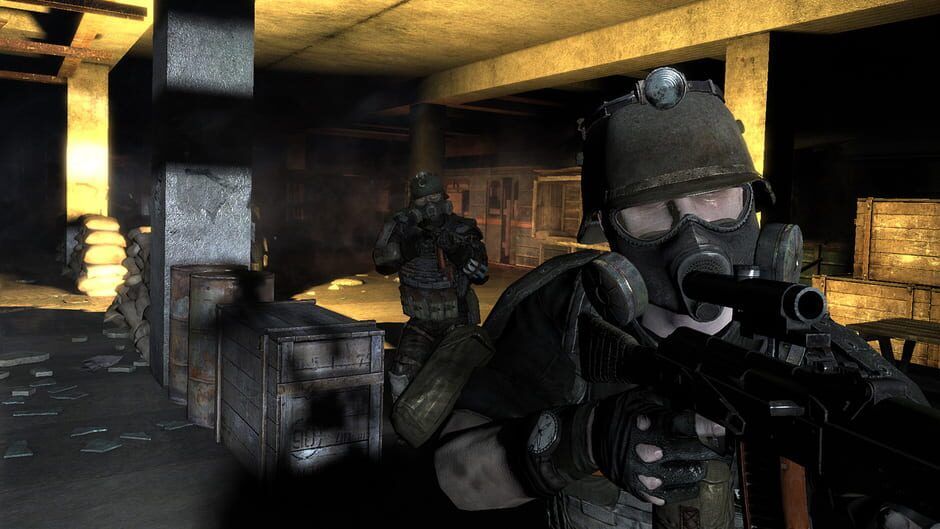

The original, non-Redux versions of Metro 2033 and Metro: Last Light just joined GOG’s Preservation Program. Here is why fans still care about these specific builds, why DRM-free archival efforts matter, and what this means for long-term PC game preservation.
The tunnels of Moscow’s Metro just became a little safer for archivists.
With the original, non-Redux versions of Metro 2033 and Metro: Last Light Complete Edition entering the GOG Preservation Program, two important slices of PC FPS history have been pulled back from the brink of unavailability. On Steam, only the Redux remasters are sold and over time that has turned the original releases into an odd sort of digital ghost: referenced, modded, and benchmarked, but functionally out of reach for anyone who did not already own them.
GOG’s move is not just a convenient reissue of older executables. It is a glimpse of what a healthier future for PC game preservation can look like and a reminder that the first shipped version of a game often matters as much as its shinier remaster.
Why players still care about the non Redux Metros
At a glance, Redux versions of Metro 2033 and Metro: Last Light look like simple upgrades. They add graphical bells and whistles, unify technology across the two games, and smooth over performance and balance issues. For many players, Redux is the more welcoming way to experience the Metro story today.
Yet the originals have never really gone away. They are still used in old benchmark charts, early YouTube playthroughs and technical breakdowns of 4A’s engine. That history matters to fans who followed the series from 2010 onward and it is part of why there has been a steady, low level demand for those initial releases to be easily purchasable again.
The original Metro 2033 in particular is a time capsule of PC gaming on the cusp of the DirectX 11 era. Its lighting model, rougher animation blending and more punishing stealth and resource economy all add up to a grimmer, more abrasive experience than Redux. The audio mix is harsher, AI behavior a little more unpredictable and the pacing less guided. To long time fans this is not just jank. It is the texture of a specific moment in FPS design when Eastern European shooters were defined by their hostility and atmosphere rather than smooth onboarding.
Metro: Last Light’s first release occupies a similar space. Redux made a number of balance changes and visual upgrades that arguably made it the better version for newcomers, but the original Last Light represents 4A’s first real attempt to broaden Metro’s appeal without losing its identity. Its initial encounter design, stealth detection values, and even UI framing tell a slightly different story about where the studio thought the series should go after 2033. Playing that original build is like reading the first edition of a novel before the author’s revised printing.
For preservationists and fans alike, those differences are not trivial. They affect the feel of movement and gunplay, the tension of every gas mask filter change, and the way the Metro world communicates scarcity and dread. Without accessible versions of those original builds, the community is left with second hand accounts and archival footage rather than a playable piece of history.
GOG’s Preservation Program and what it actually preserves
The GOG Preservation Program is built around a simple but crucial idea. Games should remain playable on modern hardware and operating systems without being fundamentally altered from their original design. In practice that means more than just flipping a flag to allow a Windows 11 installer.
For Metro 2033 and Metro: Last Light Complete Edition, GOG and 4A Games have put in the work to make these old versions feel stable on current PCs without drifting into new remaster territory. The GOG releases have Windows 10 and 11 support, modern controller profiles, VSync toggles and better behavior at higher resolutions. These are compatibility layers, not changes to mechanics or content. The bullets still hit as they did in 2010 and 2013. The lighting still carves tunnels the way players remember from those first PC builds.
That distinction between compatibility and revision is where GOG’s program shows its value. It acknowledges that games are software, and software has to be maintained to stay functional. At the same time it treats the original design as something to be conserved rather than endlessly adjusted. For historical purposes the question is not whether Metro looks as good as possible today, but whether we can still inspect and experience the actual game that shipped.
By integrating these releases into the Preservation Program rather than burying them as unpatched “legacy” branches, GOG is also signalling that they are part of the active catalog rather than an afterthought. They are treated like first class citizens in the store, searchable and buyable without digging through obscure menus.
Why DRM free distribution matters for long term survival
PC preservation is not just about what is sold, but how it is sold. The originals returning in a DRM free form is arguably the most important detail of this story.
Digital rights management ties the ability to run a game to the continued operation of a platform or an account authentication system. When stores close, online checks fail or companies change hands those dependencies become fault lines in the historical record. Entire chunks of game catalogs can become unlaunchable overnight without technically being deleted from existence.
A DRM free Metro 2033 or Last Light, once purchased and downloaded, exists as a self contained artifact. It can be backed up to offline storage, migrated between fresh installs of Windows, and, crucially for cultural institutions, archived in libraries or museums without a permanent tether to a particular storefront. If GOG, 4A or even entire publishing labels were to disappear years from now, those versions of the games would persist among collections that bothered to save them.
For individual players the benefits are more mundane but no less real. Keeping a personal archive of installers is a small but meaningful act of resistance against the constant churn of launchers and subscriptions. It gives PC users a measure of control over their own libraries at a time when “you own nothing, you are renting access” has become the default reality for digital entertainment.
From a preservation standpoint DRM free executables also make future research and documentation possible. Scholars who study rendering techniques, localization trends or accessibility options need the ability to observe and compare different builds directly. Locked down, server dependent editions turn that kind of work into a legal and technical minefield. Open versions in player hands give the community a chance to participate in keeping the record alive.
Originals versus Redux and the problem of the “definitive” version
The Metro series sits at an interesting crossroads in how the industry talks about definitive editions. Redux releases were marketed as the best way to play, with cleaner visuals and more consistent performance. Over time this framing tends to crowd out the originals, which become framed as obsolete even when they contain design decisions that never migrated forward.
For critics and fans this frequently leads to a strange situation where the most discussed or recommended version of a game is not the same one that shipped, received initial reviews, or inspired later developers. The discourse around Metro’s atmosphere, difficulty and systems often points back to the originals, but new players up until now were typically steered toward the Redux builds on the only major PC store that still sold them.
By putting the first editions back on sale with modern support GOG has quietly challenged the idea that there must be a single canonical Metro for each story. Instead there is a lineage. Metro 2033 as it was, Metro 2033 Redux as a reinterpretation, and the same for Last Light. All are valid, but they are not interchangeable. Having both branches active and equally reachable allows players to compare design philosophies instead of taking the remaster’s changes as invisible fact.
This is the sort of context game historians hope to preserve. The shift from 2033’s more unforgiving mechanics to Redux’s streamlined upgrades tells us something about where AAA and AA shooters were heading in the early 2010s. Without the originals, that trajectory is harder to read because the middle step goes missing.
Lessons for PC game preservation beyond Metro
The story of Metro on GOG hints at a broad set of best practices that could help reduce how much of modern PC gaming slips through the cracks.
The first is that preservation should begin while a game is still commercially viable, not once it has vanished. The farther you get from a release date the harder it becomes to recover build environments, negotiate rights to older branches or find engineers who remember how the thing worked. 4A Games working with GOG now, while Metro is still a recognizable brand with a new project on the horizon, is proactive rather than reactive.
The second is that platform holders need to prioritize archival access alongside graphical upgrades. It is fine to replace a game’s store page with an enhanced edition as long as you provide an obvious, supported path to the older build. Burying originals behind support tickets or hidden beta branches turns history into a scavenger hunt that many players will never attempt.
The third, exemplified by the GOG Preservation Program, is that compatibility work can be a preservation act. Ensuring an older executable runs under Windows 11 or that it recognizes modern input devices is not a frivolous porting exercise. It is what turns fragile software into something robust enough to last another decade, maybe more. Future operating systems will still pose challenges, but every cycle of compatibility work extends the life of the artifact.
Finally, and most importantly, ownership models matter. As more games shift toward online only architectures, live service economies and launcher specific dependencies, the number of titles that can be truly preserved shrinks. Single player experiences like Metro that still ship as discrete, self contained packages are rare opportunities. Giving them DRM free distribution and a place in programs like GOG’s is a way of banking some cultural stability against an unstable market.
A safer tunnel for Metro’s legacy
The return of original Metro 2033 and Metro: Last Light to a mainstream storefront will not solve PC preservation on its own. There are still countless games lost behind defunct DRM, pulled from sale due to licensing issues, or sitting on old discs with no modern patches.
Yet seeing two respected, technically demanding shooters treated as works worth archiving and maintaining is encouraging. It signals that there is commercial value in keeping history accessible. It also demonstrates a concrete path for other studios sitting on older builds of remastered games: partner with a store that understands preservation, invest in compatibility patches that respect the original design, and release DRM free packages that players can actually keep.
For now, the practical takeaway for players is simple. If you care about the lineage of the Metro series, this is the moment to grab those original versions on GOG and set aside the installers. Somewhere down the line, when new hardware and new platforms have shifted the PC landscape again, those files will be more than just another entry in a backlog. They will be a playable record of how a particular corner of post apocalyptic Moscow once looked, sounded and felt.