
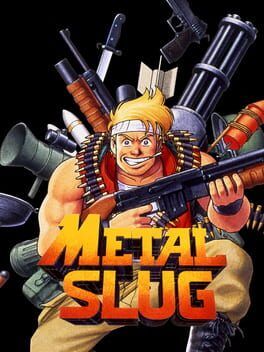

SNK has finally confirmed a Metal Slug reboot as part of the series’ 30th anniversary. Here is what’s officially teased, how the franchise evolved beyond its arcade roots, and what a modern revival must keep intact to win over veterans and new players alike.
SNK is officially putting Metal Slug back on the front line. As the series celebrates its 30th anniversary, the publisher has begun teasing what it calls a “reboot” and a “new mission” for its legendary run-and-gun franchise. For a series that has spent years as a nostalgia staple and compilation filler, “Mission Reboot” reads like a clear statement of intent: Metal Slug is not done yet.
What SNK Has Actually Teased
As part of the 30th anniversary, SNK released a retrospective video that charts Metal Slug’s history from its 1996 Neo Geo debut to its many ports and spin-offs. The nostalgia play is obvious, but the interesting part comes at the very end. The video lingers on an arcade cabinet and flashes two messages that are doing a lot of heavy lifting: “Mission Reboot” and “A New Mission Awaits.”
Alongside the video, SNK has launched a 30th anniversary website that is more explicit in its language. The company talks about plans to “reignite and reboot the series” and mentions “new gaming ventures” as part of the celebration. There is still no logo, platform list, release window, or gameplay footage, so this is closer to a mission statement than a full reveal. But taken together, the messaging is unambiguous: Metal Slug is being positioned as an active franchise again, not just a retro brand.
SNK’s own framing focuses on what it believes made Metal Slug special in the first place. The anniversary material repeatedly calls out the detailed pixel art, expressive animation, simple controls, and fast arcade action. That highlight reel is not accidental. It reads like a checklist for whatever “Mission Reboot” turns out to be.
30 Years of Metal Slug: From Neo Geo Darling to Cult Survivor
Metal Slug began in 1996 as a Nazca Corporation passion project built for the Neo Geo ecosystem, where coin-operated arcade cabs and home consoles essentially shared the same hardware. The original game was a straightforward proposition: a side-scrolling run-and-gun where two soldiers, Marco and Tarma, sprint through war-torn stages, blow up tanks, rescue POWs, and occasionally hop into the titular Metal Slug super-vehicle.
What set it apart even in the crowded 90s arcade scene was personality. Backgrounds brimmed with tiny visual jokes, enemies panicked and scrambled in hand-animated cycles, and even the explosions seemed to have character. Metal Slug’s animation was dense and intricate, yet the action stayed readable. It played like a tight arcade shooter but looked like a fully animated war cartoon.
Sequels on Neo Geo came fast and often. Metal Slug 2 and X doubled down on enemy variety and set-piece spectacle. Metal Slug 3 ballooned into a maximalist tour of everything the series could do with branching paths, aliens, zombies, and ridiculous boss fights. Each entry refined a formula of responsive movement, instant-death danger, and constantly escalating chaos.
By the 2000s, though, the arcade market that birthed Metal Slug had faded. SNK itself went through bankruptcy and restructuring. Metal Slug found a second life through compilations and ports on PlayStation, Xbox, PC, and handhelds. The core games became retro staples more than headliners, kept alive through the love of fans and the low overhead of re-releasing 90s classics.
SNK experimented with taking the brand outside pure arcade shooters. There was the tactical RPG spin on mobile with Metal Slug Attack, earlier experiments like Metal Slug Defense, and countless collection reissues, but none of this felt like a fully fledged new chapter for the mainline series. It kept the name in circulation, without the sense that Metal Slug was driving SNK’s future in the way King of Fighters has.
That context is what makes a 30th anniversary “reboot” feel significant. After three decades and multiple industry cycles, SNK appears ready to stop treating Metal Slug strictly as a retro evergreen and start treating it like a flagship again.
Beyond the Arcade: How Metal Slug Has Evolved
Even before this reboot tease, Metal Slug had quietly become more than its arcade roots. The basic template of moving left to right and shooting everything never disappeared, but the ways players interacted with it changed.
On consoles and PC, Metal Slug shifted from a short-session, credit-driven design to something closer to a score-chasing, mastery-focused experience. Infinite continues on home releases turned the games into sightseeing tours for newcomers, while veterans tried to one-credit-clear stages or optimize score routes. Online leaderboards, rewind features, and save states in modern reissues reinforced that split audience of casual nostalgia and high-skill challenge.
The series also absorbed elements from modern content models. Mobile titles stretched Metal Slug’s characters and enemies into a framework of unit collecting and mission grinding. They were far from perfect, but they revealed how flexible the aesthetic and tone could be. The familiar soldiers, rebels, aliens, and vehicles could slot into genres beyond pure run-and-gun without losing their identity.
Culturally, Metal Slug’s influence has turned up in indie run-and-guns, pixel art showcases, and even in the way modern shooters think about visual clarity. Its mix of slapstick humor and gritty war imagery feels surprisingly contemporary next to today’s genre-bending, meme-aware action games. Even when Metal Slug itself was quiet, it never really left the conversation.
What “Mission Reboot” Must Preserve
If SNK wants “Mission Reboot” to land with both longtime fans and players discovering the series for the first time, it cannot just throw modern systems at the name and hope nostalgia does the rest. The anniversary messaging hints that SNK understands this by spotlighting four core pillars: pixel art, expressive animation, simple controls, and fast arcade action.
The most immediate non-negotiable is the visual identity. Metal Slug’s pixel art is not just a retro aesthetic choice, it is how the game communicates urgency and personality. Any reboot that abandons detailed 2D animation for generic 3D models will have to fight an uphill battle with fans. There is room to modernize through higher resolutions, dynamic lighting, and more elaborate backgrounds, but the characters and vehicles should still animate with that same squash-and-stretch exaggeration and dense detail.
Just as important is the feel of the controls. Metal Slug has always been approachable. Move, jump, shoot, throw grenades, and maybe hop in a vehicle. That simplicity makes the chaos legible. A modern entry can add depth through alternate weapons, character perks, or co-op synergies, but it should resist overcomplicating input schemes. The ideal reboot remains something you can pick up in seconds even if you have never touched a Neo Geo pad.
Then there is pacing and difficulty. Classic Metal Slug is ruthless in arcades, calibrated to chew through coins, but home players today expect more flexible difficulty curves. The answer is not to sand off every sharp edge. Instead, SNK could keep the punishing arcade mode intact while layering in accessibility options such as assist toggles, practice modes, or forgiving story campaigns. Longtime fans get the high-stakes one-hit-kill gauntlet they remember, while newcomers get a way to learn the rhythms without instantly bouncing off.
Finally, Metal Slug’s humor and tone need to survive the jump. This series is defined by the way it juxtaposes serious military hardware with absurd situations. Soldiers salute you as you rescue them, then immediately run off-screen. Giant crabs wear armor plating. Aliens appear mid-battle. A reboot that skews too self-serious or gritty would feel off. The world of Metal Slug should still be a chaotic cartoon war zone filled with tiny animations that reward players for watching as much as for shooting.
How a Modern Metal Slug Can Move Forward
Preserving the heart of Metal Slug does not mean ignoring modern expectations. A contemporary reboot can expand the series in ways that the old arcade hardware and business model never allowed.
Campaign structure is an obvious area for evolution. The original games are short, designed for repeat play. A reboot could introduce branching campaigns, character-specific storylines, or meta-progression that unlocks new routes and challenges without sacrificing replayability. The key is to tie any long-term progression to player expression and challenge rather than to grind.
Cooperative play is another natural fit. Couch co-op is part of Metal Slug’s DNA, but robust online co-op with drop-in matchmaking, shared challenges, and score attack events could give the series a longer tail. Seasonal challenge stages, weekly high-score modes, or time-limited boss rushes can extend the life of a tight core campaign without bloating it.
There is also an opportunity for SNK to turn Metal Slug into a visual showpiece again. In the late 90s, it was the game you pointed at to show what 2D animation could do. A reboot that pushes hand-drawn animation at 4K resolutions with modern effects could occupy that same role in a landscape crowded with retro-styled indies. If “Mission Reboot” becomes the definitive answer to the question of what a 2020s pixel-art blockbuster looks like, it will have honored the series’ legacy in a very direct way.
The risk lies in how far SNK leans into contemporary monetization trends. The anniversary language about “new gaming ventures” inevitably raises questions about mobile tie-ins, live-service hooks, or cosmetic stores. Those can coexist with a strong core game, but they cannot come at the expense of tight, self-contained stages that feel hand-crafted and replayable. A reboot that turns Metal Slug into a grind-heavy service game will run counter to why people fell in love with it.
A Comeback That Has Something To Prove
Right now, “Mission Reboot” is more promise than product. SNK has offered teases, not trailers, and a mission statement where fans would love to see gameplay. But even this careful rollout says a lot about how the company views Metal Slug at 30. It is treating the series not as a relic to be preserved under glass, but as a living property worth reimagining.
That framing matters. For veteran players who grew up feeding coins into Neo Geo cabs, the hope is simple: a new Metal Slug that looks and feels like the games they remember, with just enough fresh ideas to justify its existence. For newcomers raised on modern shooters, the reboot is a chance to discover why a 1996 arcade run-and-gun still commands this much affection.
If SNK can truly match its anniversary rhetoric and craft a reboot that respects the original’s artistry while embracing thoughtful modernization, Metal Slug’s 30th birthday might mark something more than a nostalgic milestone. It could be the start of a second tour of duty for one of gaming’s most beloved action series.